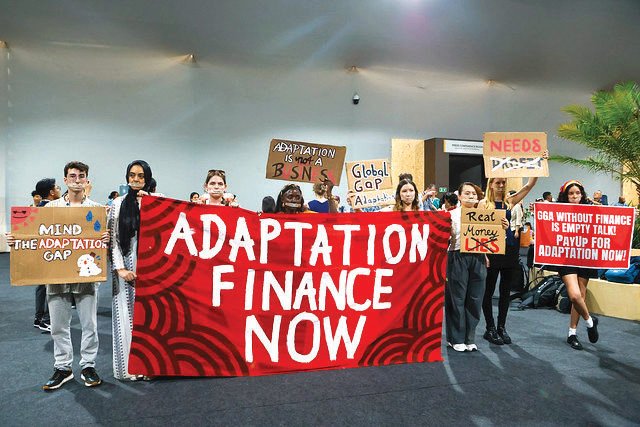
COP30 in Belém has passed its midpoint with negotiations intensifying, tensions rising, and political divisions deepening. After six days of talks, delegates have shifted from opening statements to the heavy lifting of drafting options texts across multiple tracks — mitigation, finance, adaptation, carbon markets, and the Loss and Damage Fund. Despite the flurry of activity, countries remain sharply divided on the core issues of finance and fossil fuel language, raising doubts about whether the summit can deliver a meaningful package before closing.
Outside the conference halls, political pressure is mounting. Indigenous groups, civil society networks, and youth activists have amplified their demands through visible demonstrations, calling for stronger protection of forests, climate justice, and a rapid phase-out of fossil fuels. Their actions have injected urgency into a process that many believe remains too slow and too cautious, given the escalating climate crisis.
Meanwhile, the geopolitical environment surrounding the talks has shifted dramatically. With the United States absent from the summit for the first time in three decades, China has stepped into the leadership vacuum, projecting influence through high-level diplomacy and showcasing its dominance in renewable energy. This shift has reshaped negotiations and underscored the broader global transition now playing out in Belém.
With draft texts circulating and political consultations set to intensify, the COP30 Presidency is urging countries to move from placeholders to real decisions. The next phase will determine whether Belém becomes a turning point for implementation or another summit marked by deferred ambition.
Negotiations Stall as Protests Erupt Outside
UN climate negotiations are in full swing in Belém, Brazil. The 12-day summit opened last Monday, and nearly a week later, countries remain deeply divided on key issues — raising doubts about whether a unified agreement is achievable.
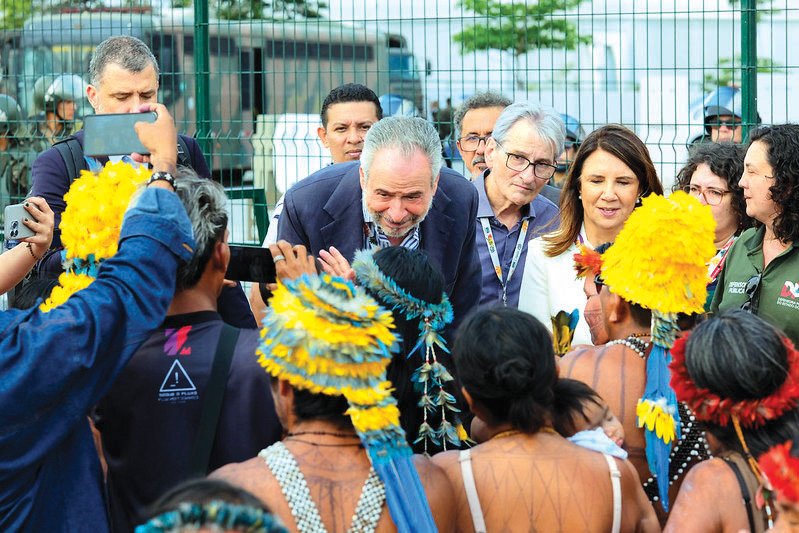
Outside the venue, protests are gaining strength. Indigenous groups from across Brazil have staged peaceful demonstrations against corporations and development projects they accuse of destroying forests and destabilizing the climate. On Friday, the Munduruku people, who occupy about 24,000 square kilometers in northern Brazil, held a sit-in at the summit’s main entrance, demanding a meeting with COP30 President André Corrêa do Lago. Organizers agreed to the request.
“We are the protectors of the climate. We cannot allow the Amazon to be destroyed any further for corporate profit,” the Munduruku said in a statement.
President Luiz Inácio Lula da Silva has repeatedly emphasized Indigenous leadership at COP30. However, Indigenous representatives questioned why they were brought to Belém without meaningful roles in negotiations. Environment Minister Marina Silva responded that many of their concerns target domestic policies and must be resolved within Brazil.
Below is a summary of major developments, what draft texts reveal, which side-events shaped the political debate, and how the Presidency is framing the work ahead.
1) What’s Come Out of Negotiations
• Draft texts circulated: Over recent days, negotiators have produced “zero-draft” and options texts across multiple tracks — mitigation and fossil fuels, Article 6 carbon markets, adaptation and Loss and Damage, and the post-2025 finance goal. These texts clarify fault lines but remain fully bracketed.
• Fossil fuel language remains the core divide: Vulnerable and developing nations demand explicit “phase-out” language, while several major emitters and fossil fuel producers prefer “phasedown” or softer language tied to carbon capture and technological solutions.
• Finance is the master issue: Options range from several hundred billion to over a trillion dollars annually. Disagreements center on the balance of grants vs. loans, public vs. private flows, and how historical responsibility should shape the New Collective Quantified Goal (NCQG).
2) What the Draft Texts Actually Say
• Mitigation / MWP: The text calls for accelerated action but remains split on “phase-out” versus “phasedown,” the definition of “unabated” fossil fuels, and the role of carbon capture. Key sections on timelines and sectoral commitments remain in brackets.
• Article 6 (carbon markets): Informal notes push for stricter integrity rules, transparency, and controls to prevent double counting — but deep disagreements persist over offset quality and flexibility.
• Adaptation & Loss and Damage: Operational rules for the Loss and Damage Fund continue to be debated; vulnerable countries warn that without real capital, the Fund risks being symbolic. The adaptation text adds measurable indicators, but financing arrangements remain unresolved.
• NCQG / Finance: Options include pathways ranging from roughly $600 billion to more than $1.3 trillion per year in combined public and private finance. Developing countries are calling for predictable, grant-based public finance and debt relief tools.
3) Side-Events that Shifted the Debate
• Climate Finance Reset Dialogues: Discussions on debt relief, new levies (e.g., shipping, aviation, fossil windfall profits), and the role of grants vs. loans placed finance at the center of the political debate, strengthening Global South demands for systemic reform.
• Amazon & Indigenous Forums: Indigenous leaders pushed for stronger recognition of rights and increased finance for forest protection, expanding pressure for Brazil’s proposed Tropical Forests Forever Fund.
• Cities, Youth, and Civil Society Events: Subnational leaders showcased implementation pathways, while youth groups staged actions demanding stronger fossil fuel phase-out language and real adaptation financing.
U.S. Absence Leaves a Leadership Void, China Steps in
For the first time in three decades, the United States is missing from the UN’s annual climate summit, creating a diplomatic vacuum that China has quickly moved to fill.
At COP30 in Belém, China’s expansive and centrally located pavilion dominates the venue entrance. Executives from major Chinese renewable energy firms are presenting their visions for a green future, while Chinese diplomats play an active behind-the-scenes role in steering constructive negotiations. This influence was previously associated with Washington, but the center of gravity appears to have shifted.
Francesco La Camera, Director-General of the International Renewable Energy Agency (IRENA), described China’s rise succinctly: “Where there is a vacuum, water flows. Diplomacy works in much the same way.” He added that China’s global leadership in renewables and electric vehicles has strengthened its diplomatic standing.
Last year, China’s pavilion was modest and primarily academic. This year, its expanded presence alongside Brazil’s signals a clear bid for global climate leadership. Speaking at the pavilion, CATL Vice President Meng Xiangfeng urged nations to “advance climate cooperation and build a cleaner, more beautiful world together.”
4) COP Presidency: Tone and Public Messaging
COP30 President André Corrêa do Lago has stressed the need to move from rhetoric to delivery, calling for political engagement to close remaining gaps. The Presidency plans to convene ministerial consultations and release consolidated text iterations this week to force political choices.
“We now move from exploration to negotiation. Drafts are on the table. The political choices cannot be delayed any longer,” the Presidency stated.
5) What this Means for the Final Phase
• Technical drafts are ready; the battle is political. The next 48–72 hours will determine whether ministers can convert bracketed text into a coherent package.
• Finance and fossil fuels will shape the outcome. Agreement on a credible, grant-heavy NCQG and a political mandate for a fossil-fuel roadmap could make COP30 a turning point. Failure risks a weak, procedural outcome and further loss of trust.
• Civil society and Indigenous pressure are significant. Their presence has shaped the narrative and may influence ministerial-level decisions in the coming days.
Fossil Fuel Lobbyists Spark Controversy at COP30
A record number of fossil fuel lobbyists, more than 1,600, have registered for COP30, triggering widespread concern. According to the coalition Kick Big Polluters Out (KBPO), fossil lobbyists now outnumber nearly every national delegation except Brazil’s.
One in every 25 participants at COP30 represents fossil interests, a 12% increase over last year.
KBPO reports that lobbyists received nearly two-thirds more badges than the 10 most climate-vulnerable nations combined. The International Emissions Trading Association alone sent 60 delegates, including staff from ExxonMobil, BP, and TotalEnergies.
Civil society warns that such disproportionate representation risks overshadowing communities most affected by climate impacts.
Brazil has touted COP30 as a turning point for Paris Agreement implementation, but advocates fear the heavy corporate presence could obstruct progress.
Concerns over the Summit’s Ambition
Brazil has emphasized that COP30 should focus on implementation rather than new pledges. To avoid early conflict, Corrêa do Lago separated several contentious items, including climate finance and national climate plan gaps, into parallel tracks.
Under the official agenda, negotiators from 195 countries are working to advance adaptation frameworks, measure climate impacts, and strengthen support for vulnerable countries.
Still, several delegates warn that outcomes may fall short of what the moment demands — or that negotiations could collapse.
Andrew Wilson, Deputy Secretary-General for Policy at the International Chamber of Commerce, cautioned, “If we continue at this pace, the outcome will be very weak.”
Brazil and others seek to reaffirm COP28’s call to transition away from fossil fuels and strengthen that commitment. Whether COP30 can turn that aspiration into implementation remains uncertain.
Download COP30_Special As PDF/userfiles/EP_23_11_COP30_Special_1.pdf