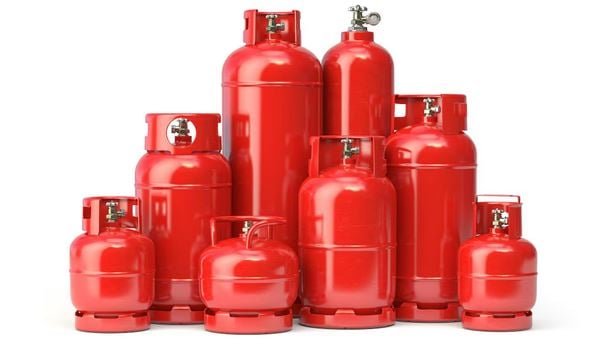
It was in 1997 when Bangladesh first started importing Liquefied Petroleum Gas (LPG) amid declining availability of natural gas. Laugfs Gas Bangladesh, a company of Sri Lanka-based multinational Laugfs Holdings, was given the first permit to import and distribute LPG in cylinders to meet the growing demand in energy-starved Bangladesh. Since then, the LPG sector has witnessed an exponential increase in consumption –from 2.5 lakh tonnes in 2009 to the current 1.5 million tonnes a year. The clean-burning fuel has earned popularity for a number of reasons. In rural areas, it has made cooking easy and comfortable by replacing the smoke-causing wood and tree leaves. LPG is environmentally friendly too. The more LPG is used, the greater the saving of trees and woods.
LPG’s growth in Bangladesh is also attributed to the declining supply of natural gas, whose reserves (currently at 8.5 TCF) may be empty next five or six years at the current rate of use unless discoveries are made. In the urban areas, many households with piped gas connections suffer the hazards of low or no pressure during peak cooking hours. This has led many such households to look for alternatives to the LPG cylinders. They depend on both types. And those with no piped gas have no choice but to go for LPG in the urban areas. LPG is also widely consumed in restaurants.
The state of the LPG business and its use came under discussion at a conclave organized by Bonik Barta daily at a city hotel recently. At the seminar, some relevant questions were raised by government leaders, experts, academics, businesspeople, importers, and distributors. Is LPG getting enough attention, given its importance? Are consumers getting a fair price for the product? Has the government built enough infrastructure (terminals) for the smooth import and distribution of LPG? Are all cylinders safe for use?
LPG is the only energy product that grew without any subsidy, and it is a very competitive energy source compared to the price of other fuels and their availability, M Tamim, vice-chancellor of the Independent University, Bangladesh, told the event titled "LPG in Bangladesh: Economy, Environment and Safety".
The energy expert who once served as the energy adviser of a caretaker government argued in support of LPG, saying, "Its cost-effectiveness, cleaner burning, ease of transportation, and secured supply have increased the industrial usage by nearly 15 percent in the last two years.”
Speaking at the conclave, Muhammad Fouzul Kabir Khan, adviser to the Ministry of Power, Energy and Mineral Resources, rightly highlighted the virtues of LPG. It’s easy to import by lighterage vessel, he said, pointing to the advantage it holds and slamming the traders for the high price of the product.
"But the major problem lies in its price -- it needs to be reduced. The entire LPG sector is controlled by private companies, and prices remain too high," he said, adding the price of a 12-kg cylinder should be below Tk 1,000, but it is more than Tk 1,200.
Khan warned of drives under mobile courts to monitor whether selling rates exceed the rates fixed by the Bangladesh Energy Regulatory Commission.
He stressed the need to promote LPG use in industries by reducing prices, given the ongoing crisis in piped gas supply.
"We have limitations in LNG [liquified natural gas] import as we are nearing utilizing our full regasification facilities. But it is easier to import LPG."
A section of politicians and their allied businessmen, working together, have created the ongoing crisis in the gas sector.
"In the private sector, many industries were promised gas connections. Even knowing there was no gas, lines were given, unjustly, through corruption," he added.
Azam J Chowdhury, former president of the LPG Operators Association of Bangladesh, however, disagreed with Khan's comment about LPG pricing.
If the government can ensure a 7.0 percent profit for importers on each 12kg LPG cylinder sales, the private sector operators would hand over their businesses to the government.
"Everyone in the business is struggling to survive, while some are selling LPG at a loss. All of the licensees are barely breathing. Some have even been forced to shut down their operations."
Note: Quotes have been taken from The Daily Star.
Download Column As PDF/userfiles/EP_23_09_Column.pdf