With the main objectives of creating a competitive energy market, ensuring transparency in management, operation, and tariff determination, fostering a favorable environment for private investment, and safeguarding consumer interests, the Bangladesh Energy Regulatory Commission (BERC) was established as an independent and quasi-judicial autonomous body through the enactment of the Bangladesh Energy Regulatory Commission Act, 2003, passed by the National Parliament on March 13, 2003.
As an impartial and quasi-judicial statutory organization, the Commission is committed to ensuring fair rights, good governance, and justice for all stakeholders in the electricity and energy sectors. Since its inception, the Commission has held regular open meetings and public hearings to determine rational tariffs, prevent customer harassment, introduce prepaid and EVC meters, mobile billing systems, online customer services, and annual bill payment certificates, as well as ensure proper redress for disputes related to unfair and monopolistic practices. BERC carries out its activities in accordance with Section 22 and other relevant provisions of the Bangladesh Energy Regulatory Commission Act, 2003.

Activities Related to Energy Audit
As per Section 22(a), the Commission has the legal responsibility to assess the efficiency of energy-using entities, evaluate the quality of their machinery and equipment, conduct regular verification, inspection, and analysis of fuel consumption through energy audits, and ensure improved energy efficiency and conservation. To this end, the Bangladesh Energy Regulatory Commission's Power Plant Energy Audit Regulation 2022 is under process. Despite the importance of this responsibility, no specific activities had been undertaken in this regard previously.
However, to establish a Testing Institute under the BERC, the Rajdhani Unnayon Kartripakkha allocated Plot No. 1 (one bigha) on Road 203, Sector 1 of the Purbachal New Town Project. The establishment has been delayed due to the non-handover of the allocated plot. A stakeholder workshop for establishing the testing laboratory has already been completed. The process of assessing the efficiency of captive license-holding entities has also begun.
Activities Related to Tariff
According to Section 22(b), the Commission is legally responsible for determining reasonable tariffs, improving efficiency, and ensuring safety in electricity generation, transmission, marketing, supply, storage, distribution, and service quality. The Commission determines wholesale (bulk), transmission (wheeling), and retail tariffs for electricity. It also sets transmission and distribution tariffs for gas and determines consumer-end gas prices. Additionally, the Commission determines the tariff for LPG and Jet A-1 (aviation fuel) and has initiated tariff determination for furnace oil supplied by BPC. In April 2025, tariffs for new, promised, and existing (excess load users) consumers under the industrial and captive power categories were revised.
Activities Related to Licensing
As per Section 22(c), the Commission has the legal obligation to issue, cancel, amend, or modify licenses, set licensing conditions, and grant or revoke exemptions from licensing requirements. Under Section 27 of the Act, BERC issues licenses for various categories. Captive generators with capacities exceeding one megawatt are required to obtain a license, while generators of one megawatt (1,000 kW) or less must obtain a waiver certificate.
In FY 2024–2025, the Commission issued a total of 221 licenses and waivers in the electricity sector, 273 in the gas sector, and 408 in the petroleum sector, totaling 902 licenses and waivers across all three sectors.
Activities Related to Scheme Approval
According to Section 22(d), BERC is legally mandated to approve new investment or project proposals of licensees such as Petrobangla, BPDB, and BPC, considering their financial capabilities. No previous commissions had exercised this authority or received approval requests under this provision. The present Commission, however, took steps in this regard and, on May 7, 2025, issued letters to all government licensees requesting lists of their current and planned projects. Several licensees have already submitted their lists, and the approval process has commenced.
Activities Related to Codes and Standards
Under Section 22(e), the Commission has the legal duty to develop and enforce codes and standards to ensure quality assurance. Accordingly, the Bangladesh Energy Regulatory Commission (Electricity Grid Code) Regulations, 2023 have been enacted. The formulation of the Electricity Distribution Codes and LPG Codes, and Standards is ongoing.
Activities Related to Uniform Accounting
As per Section 22(f), the Commission must determine a uniform accounting system for all licensees. With BERC’s funding, a web-based uniform accounting software for gas sector organizations and companies was completed on February 28, 2025. Implementation of the software in gas companies will begin soon. In 2024, the Uniform System of Accounts (Electricity) 2024 was developed for electricity sector organizations and companies.
Activities Related to Dispute Resolution
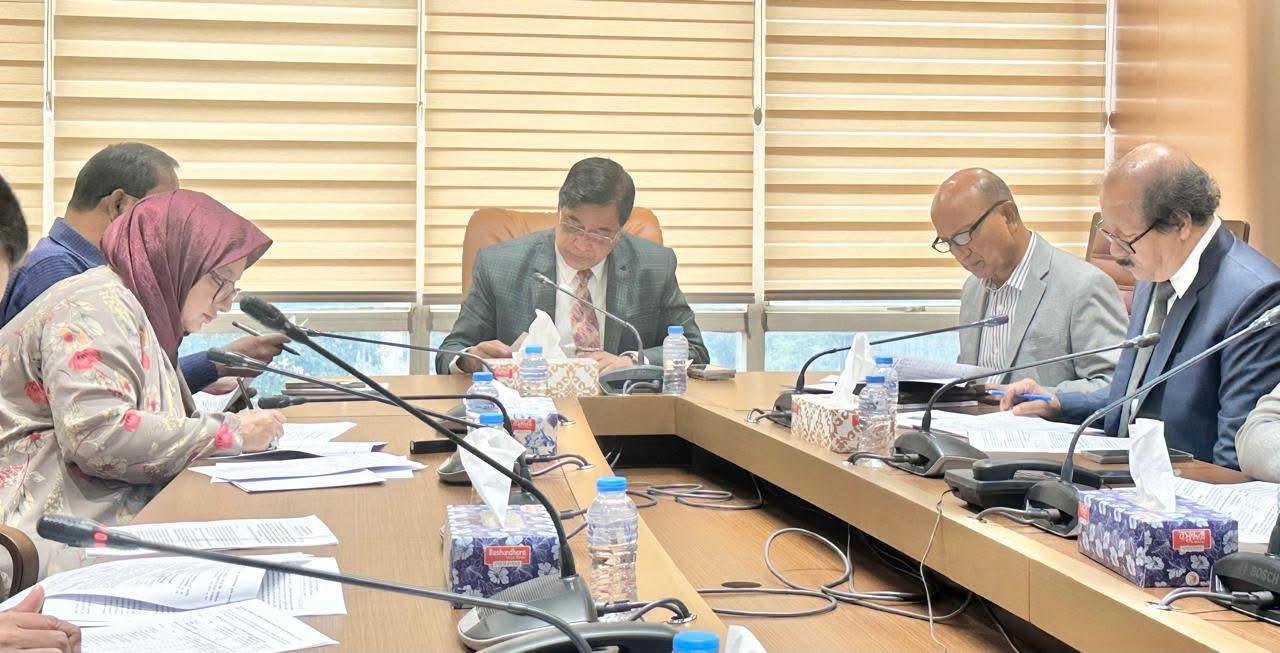
Under Section 22(g), the Commission is legally responsible for resolving disputes between licensees and between licensees and consumers and, if deemed necessary, referring them to arbitration. According to Section 40 of the Act, notwithstanding anything in the Arbitration Act, 2001, or any other law, disputes between licensees or between licensees and consumers must be referred to the Commission for resolution.
During FY 2024–2025, the Commission received 49 dispute applications, of which 42 were resolved through hearings and orders issued. Additionally, under Section 56 of the Act, consumer complaints against licensees are resolved following prescribed procedures.
Participation in the South Asia Forum for Infrastructure Regulation (SAFIR)
To enhance regional cooperation in the energy sector among South Asian countries, the South Asia Forum for Infrastructure Regulation (SAFIR) was established in 1999. However, due to limited activity within SAARC, SAFIR’s achievements remain modest. On December 12, 2024, Mr. Jalal Ahmed, Chairman of BERC, attended the 27th Executive Committee Meeting (ECM) and the 30th Steering Committee Meeting (SCM) held in Delhi, India.
Internal Training, Seminars, and Workshops
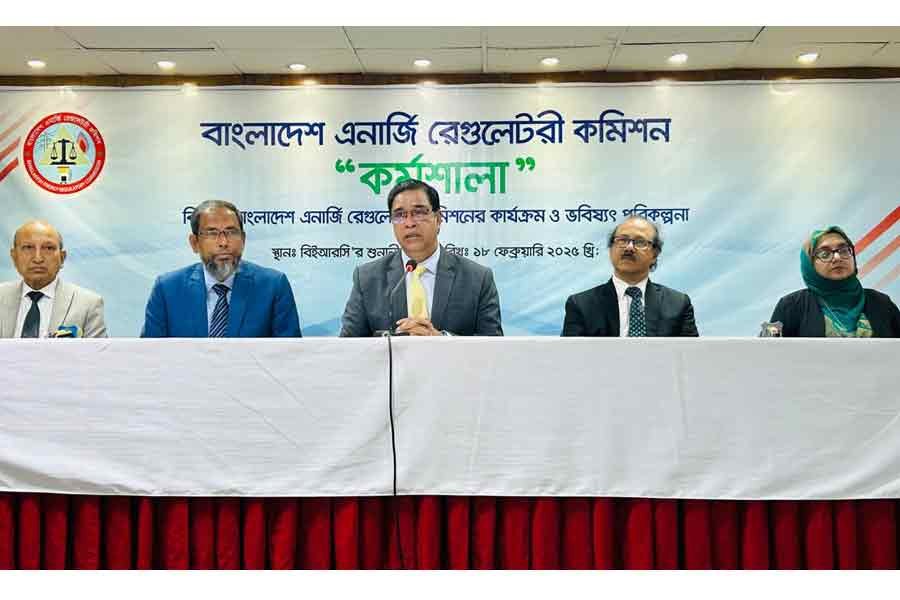
To enhance the skills of BERC’s officers and staff, 14 internal training sessions and 5 workshops/seminars were organized during FY 2024–2025. It has been decided to hold at least one seminar/workshop every month. In June 2025, the BERC signed an MoU with the Energy Centre of the Texas Agricultural & Mechanical University, USA. Under this MoU, the BERC is in the process of holding a symposium in January 2025.
Initiative to Introduce ERP Software
To digitize office operations and establish a paperless environment, BERC has taken an initiative to introduce ERP software for its overall administrative management.
Relocation of the Commission Office
To ensure improved customer service and a more conducive work environment, the BERC office was relocated from the Trading Corporation of Bangladesh (TCB) building to the IEB Building, Ramna, Dhaka, on June 22, 2025.
Jalal Ahmed, Chairman, Bangladesh Energy Regulatory Commission (BERC)
Download this Article As PDF/userfiles/EP_23_09_Anni_Jalal.pdf