Bangladesh cannot make its power and energy sector entirely import-free. However, there are opportunities to gradually reduce import dependence by expanding exploration, extraction, and utilization of domestic gas and coal. At the same time, curbing corruption and mismanagement at every stage—from production to supply to consumption—must be given the highest priority to control subsidies and prevent further price hikes. Ensuring efficient use of electricity and energy at the consumer level is equally essential.
.jpg)
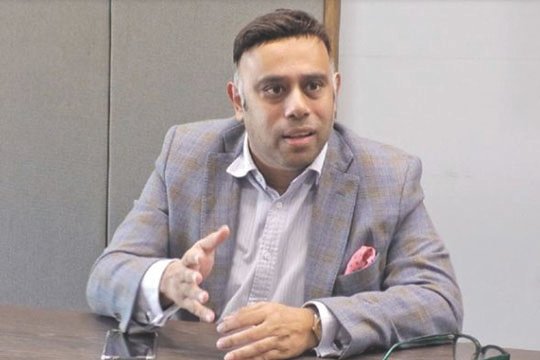
These were the observations of Dr. Masrur Riaz, Founder and Chairman of Policy Exchange Bangladesh, in a conversation with Energy & Power Editor Mollah Amzad Hossain.
Bangladesh is facing the most severe energy crisis in its history. The interim government has continued day-to-day functions, but the real challenge of overcoming the crisis will fall on the party or coalition that comes to power after the upcoming election. What preparations should political parties make before the election?
Energy and power cannot be viewed only as infrastructure—it is the driving force of the economy. Production, employment, and exports are all directly tied to it. Bangladesh is now a country of 190 million people, 68 percent of whom are of working age. Labor-intensive industrialization is therefore critical. Agriculture and the service sector alone cannot absorb this workforce. Yet every sector—industry, services, and agriculture—depends on energy. For the economy to move forward, and even to simply keep industry, services, and agriculture running, there is no alternative to a reliable, quality power and energy supply. That means the foremost challenge for the next government will be ensuring energy and electricity supply. Political parties must finalize their strategies and preparations now. Their priority should be to further stabilize the economy, accelerate growth, and expand production, employment, and income. Among the key enablers of that is energy. Therefore, parties must develop strategies and action plans for this challenge before the election.
Many industries are reporting 25–40 percent production disruption due to inadequate gas supply and unreliable electricity. Meanwhile, Bangladesh is at the threshold of LDC graduation, though there are calls to delay it. Once tariff privileges are withdrawn, industries will face new challenges. What is the way forward?
Simply extending the timeline will not be enough. Success after graduation will depend on improving infrastructure, particularly power and energy. When Bangladesh graduates from LDC status in November 2026, tariff-free access to the European market will end three years later. At the same time, we will lose similar privileges in markets like Japan, Australia, and Canada. Cost increases will raise costs by 8–13 percent, depending on the product. But we cannot survive in competitive markets by raising prices. The only way is to improve efficiency and control costs. And when we talk about efficiency, the first issue is the uninterrupted supply of gas and electricity.
Even if we secure an additional three years of transition, we must sustain growth. That means ensuring uninterrupted production in services and industry—and that requires a guaranteed power and energy supply, which we currently do not have.
Like other Asian countries, Bangladesh is heavily import-dependent for energy, currently at about 55 percent. Yet, we lack sufficient infrastructure for coal and LNG imports. The government has also canceled projects initiated under special legislation to build LNG import facilities, but no new tenders have been issued yet. How do you assess this situation?
After the student–mass uprising of August 5 last year, the interim government faced the difficult task of restoring good governance across many sectors, including power and energy, one of the most politically influential sectors. Dependence on LNG imports will inevitably increase to meet gas demand. Yet one LNG contract and three ongoing negotiations were canceled. Similarly, 37 LOIs (letters of intent) for solar projects were scrapped. If these were granted to unqualified developers, then canceling them after proper review was the right decision. Good governance is essential.
However, we learned that many contracts and LOIs involving competent domestic and foreign firms were also canceled without proper scrutiny. Canceling them without review is unacceptable. Moreover, both the solar and LNG projects that were canceled are vital for Bangladesh’s energy security and long-term economic sustainability. It is urgent to restart the process under a framework of good governance, selecting technically and financially capable investors, but this has not happened. That is a major shortcoming.
In my view, this entire process has significantly damaged investor confidence. Even if cancellations were necessary, proper due diligence and transparent justification could have helped reduce the erosion of trust. It must be remembered that investors considering long-term energy projects place high importance on trust and predictability when making decisions.
Bangladesh’s domestic energy resources are insufficient compared to demand. Yet, even the available gas and coal have been neglected in terms of exploration and utilization for over two decades. Moreover, there is no planned and realistic initiative to harness the renewable energy potential. What is your view?
Unlike the Middle East or other countries, Bangladesh does have some natural resources, though limited. Experts argue that we have enough natural energy resources to last for several more years, but in recent decades, no effective measures have been taken for exploration or extraction. This applies to both gas and coal. In fact, the previous Awami League government failed significantly in this regard. There are even allegations that this was done intentionally to benefit certain groups involved in imports. Since 2011, there has been virtually no initiative for gas and coal exploration. Exploration requires a lead time of 4–6 years to move from discovery to supply. Because no steps were taken for 13–14 years, we are now facing today’s crisis. On the other hand, although offshore oil and gas exploration tenders were invited, the interim government received no response last year.
Although no domestic coal is being extracted, nearly 7,000 MW of coal-fired power plants are in operation. Yet, no initiative has been taken to utilize local coal instead of imports. Ahead of the election, what kind of commitments do you expect from political parties on coal?
Civil society and environmentalists have valid concerns regarding coal. Environmental considerations must be taken seriously. However, given the current state of primary energy supply, from an economic standpoint, we must use our domestic coal. If shortages of primary energy reduce exports and foreign currency reserves, the economy will not be able to cope. Therefore, we cannot afford the luxury of completely moving away from coal and coal power. Industries must run, and employment must be ensured. If coal power can help achieve that, then for the sake of the economy, it must be pursued. At the same time, local coal extraction must be ensured to reduce reliance on imports. However, environmental damage from coal extraction and coal power generation must be minimized as much as possible.
Despite sporadic efforts over the past two decades, Bangladesh has failed to attract foreign investment in oil and gas exploration, both onshore and offshore. Although 150 wells are currently being drilled or refurbished domestically, foreign investment has not come through. What initiatives do you expect to see in this regard?
Oil and gas exploration, whether offshore or onshore, requires massive investment and advanced technical expertise. While BAPEX and Petrobangla have developed some basic capabilities, the pace of progress needed cannot be achieved with domestic resources alone. Therefore, we must invite foreign companies with technology and capital to join this effort. This will reduce investment risks and maximize chances of success. In some cases, joint ventures between BAPEX and foreign firms can be considered. Otherwise, the current gas crisis will only deepen. On the other hand, we do not have the financial capacity to continue meeting demand through LNG imports.
Over the past three years, the Taka has depreciated by 40 percent against the US dollar, which has significantly increased the cost of electricity and energy. What measures do you think are needed to control this?
Since 2022, the 40 percent depreciation of the Taka against the dollar has largely played out. Major fluctuations are unlikely, though minor increases or decreases could occur, and further depreciation cannot be ruled out entirely. At the same time, it is impossible to eliminate reliance on imports in the power and energy sector. The key question is how to reduce unnecessary imports. That requires initiatives to enhance exploration, extraction, and utilization of domestic gas and coal. While rising energy costs could be passed entirely onto consumers, the current inflationary environment does not allow for that. There are many inefficiencies, leakages, and corruption in the power and energy sector. These must be reduced to the lowest possible level through proper management, from production to distribution. This could help offset some of the cost increases caused by currency depreciation. At the same time, subsidies could be reduced without raising prices further.
Over the past two decades, irregularities and corruption have been among the country’s most talked-about issues, particularly in the power and energy sector. The interim government has now been in office for a year, but no specific initiatives are evident regarding corruption investigations or accountability. What is your assessment?
The interim government has demonstrated goodwill in reducing corruption and inefficiency, and that is important. The practice of awarding projects to special groups at the highest level, common under the previous government, has also been stopped. However, at the institutional level, little success is visible in tackling corruption or ensuring transparency and accountability.
Download Interview As PDF/userfiles/EP_23_6_Interview.pdf