1. Preamble
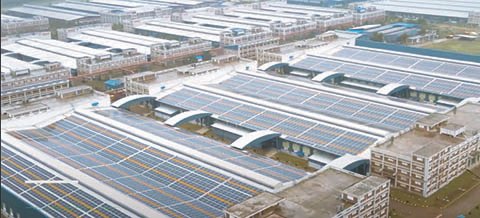
The global shift towards renewable energy is fast-tracking. However, the traditional model of large-scale solar production is often hindered by limited land availability. Bangladesh is also facing similar challenges in its quest for sustainable energy, as a land-scarce country branded by dense populace nation. Here, rooftop solar could become the best strategy and viable for the country’s energy transition. This approach effectively transforms existing buildings (vertical infrastructure) into a source of power.
Bangladesh can learn from effective and successful international rooftop solar models to improve its energy strategy. For example, China follows a state-led ‘Whole-county’ program, while Vietnam experiences an incentive-driven ‘Solar Rush’. These examples help Bangladesh to move ahead from its humble beginning. This can grow from a small trend into a basic lifestyle upgrade. The change can do successfully through new laws, net metering, and lower import taxes. The ultimate benefits of rooftop solar could be cooler, healthier, and more prosperous future for the citizen.
2. Present Outlook and Market Scope
Bangladesh is in the beginning stage of new energy transition. The country is moving away from its world-famous Solar Energy System (SHS) in rural areas. Now, it is switching to large-scale rooftop solar systems in all big cities (like Dhaka, Chittagong, Rajshahi, Khulna, Cumilla, Sylhet, Rangpur, Bogura etc). This changeover marks a new stage in the country’s renewable energy growth.
As of April 2026, Bangladesh's solar capacity has reached approximately 1,409.98 MWp (megawatt-peak, rated peak capacity in optimal condition), according to the statistics of the Sustainable and Renewable Energy Development Authority (SREDA). This is about 80-83% of the total renewable energy capacity and consists of about 1,027 MWp on-grid and 383 MWp off-grid. Within this, the rooftop solar capacity has crossed the 500 MWp milestone, driven by industrial adoption and net-metering. Here, installation price varies based on panel type (mono/bifacial), inverter brand, and structural requirements.
2.1 Key Drivers and Challenges
Bangladesh is shifting towards a ‘Greener Future’ by focusing on rooftop solar energy. This is becoming more practical as prices drop and new rules begin. However, high taxes and quality concerns are still major problems. By using rooftops instead of farmland, the country can grow its solar energy capacity without creating land disputes, as stated in Table: 01.
|
Driver |
Related Information |
Value-driven Change |
|
Regulations |
Government Orders 2024 dictate solar for new residential and industrial buildings wef July 2025 |
Capacity needs to match building's exact electricity use |
|
Cost-effectiveness |
Cost ranges from Tk 80,000-1,70,000 per killo-watt (kW) in urban areas |
Reduced solar panel price makes more affordable |
|
Land-energy Trade-off |
Uses vertical space rather than agricultural land |
Skips land-grabbing conflicts for large solar projects |
|
Challenges |
Slow progress due to high import duties and lack of quality control |
Aims to generate 3,000 MWp of electricity from rooftop by 2030 (out of total solar generation of 10,000 MWp) |
3. Environmental and Comfort Aspects
Rooftop solar provides benefits beyond electricity; it deeply changes the building and urban environment.
3.1 Building Integrated Shield Effect (BISE)
Every kW of solar power lessens the need for fossil fuel-based electricity. This is critical for Bangladesh, where approximately US$ 11 billion are spent on fossil fuel imports in recent years. By shifting to solar energy, the country reduces carbon-di-oxide (CO2) emissions and local air pollution. The biggest challenge is to manage high heat for people living directly under a roof. Because, concrete or metal roofs absorb heat all day, and releases into the home at night. Vis-a-vis, the solar panels at the rooftop act as a shield, helping to keep the rooms directly below much cooler.
- Shading Effect: Solar panels act as a physical shield. These seize the sun’s energy before it reaches the building top and form a ‘shading effect’ that prevents the roof from overheating.
- Ventilation for Cooling: Panels are typically installed with a small gap between the modules and the roof. These gaps allow natural ventilation, through which moving air carries away trapped heat.
- Temperature Reduction: The rooftop solar setup can lower the temperature of the ceiling by 3-5 degree C(Celsius) in Bangladesh tropical urban setting. A cooler roof keeps the rooms below colder. It helps protect elderly people and children from heat exhaustion. This also reduces the need for air conditioning (AC) by approximately 11.85%.
- Reduce Urban Heat Island (UHI): In a suburb, solar-equipped buildings get relatively cool naturally. Thus, it reduces the dependance on heavy air conditioning. Traditional AC system dumps waste heat outside and into the streets. Therefore, less use of AC helps lower the overall outdoor temperature of the neighborhood.
· Benefits of BISE at a Glance
The BISE achieved by rooftop solar system has advantages, ranging from individual household comfort to national economic stability (Table: 02).
|
Category |
Benefits |
Impact Details |
|
National Economy |
Reduces Fossil Fuel Dependance |
Reduces need for imported fossil fuels; Critical for Bangladesh spends US$ 11 billion on imports recently |
|
Ecological |
Deceases Emission |
Lowers CO2 emissions and reduces local air pollution |
|
Heat Management |
Shading Effect |
Panels act as a physical shield; Seizes sun energy before it reaches the structure to prevent overheating |
|
Thermodynamics |
Ventilation Cooling |
Gaps between panels and roof allow natural air movement to carry away trapped heat |
|
Indoor Comfort |
Reduces Temperature |
Lowers ceiling temperatures by 3-5 degree C; Protects elderly and children from heat exhaustion |
|
Energy Efficiency |
Lowers AC Demand |
Reduces need for AC by approximately 11.85% |
|
Urban Environment |
UHI Mitigation |
Reduces UHI effect by lowering ‘waste heat’ dumped into streets by AC units |
3.2 Public Health: Clean Urban Atmosphere and Acoustic Welbeing
Rooftop solar helps city dwellers breathe healthier air by reducing local pollution.
- Improving Survival Rates: Data from China shows that placing solar panels in crowded urban areas is more effective than placing those on large farms in the countryside. By lowering air pollution (fine particulate matter), installing rooftop solar panels in cities can stop thousands of early deaths from heart and lung disease every year.
- Reducing Household Pollutants: Reliable rooftop solar power with battery storage eliminates the need for diesel generators during power outages. This prevents toxic carbon monoxide and soot inside the home, leading to cleaner indoor air.
- Noise Reduction: The dense layers of glass and silicon in solar panels act as a sound barrier. In cities and countrysides, the panels dampen the loud noise of rain on metal roofs in rainy season. This creates a quitter home and helps sleep better.
- Economic Relief: In Vietnam, the surge in rooftop solar has reached closely 7 GWp. This reduces electricity bills and provides economic comfort. Families can afford to run fans and cooling systems without financial stress. The redirected income could be spent for better nutrition and healthcare, indirectly improving the family's overall health.
- Psychological Security: A personal, reliable energy source gives resident power and security. It reduces anxiety about blackouts, particularly in rural areas.
4. Individual Financial Benefits
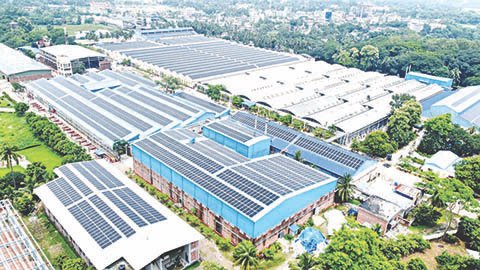
Rooftop solar is no longer just a ‘Green Choice’ for a homeowner or business; it is a profitable investment.
- Net Metering: Bangladesh's Net Metering Policy allows individuals to sell excess electricity back to the national grid. Accordingly, the extra energy produced during the day is credited to the owner’s electricity bill.
- Lower Electricity Bills: Switching to solar helps users save money. The levelized cost of electricity (LCOE) for rooftop solar is approximately Tk 5.00-5.50 per kWh, offers savings against high-use residential electricity presently costs between Tk 9.94-11.46 per kWhand industrial/commercial grid tariffs between Tk 8.45-10.55 per kWh. Residential systems can achieve cost recovery within 20 years (considering life cycle of solar panel), with costs potentially dropping further through green financing.
- Payback Period: In Bangladesh, residential rooftop solar systems usually pay for themselves in 8-10 years through lower bills and net-metering. After that, the system lasts for 20 years lifecycle, providing over a decade of substantially reduced energy cost.
- Comparison of Bangladesh Reality with Global State: Shown in Table: 03.
|
Issue |
Global State |
Bangladesh Reality |
|
Grid Cost |
High, Rising |
Lower, Subsidized |
|
Payback Time |
05-07 Years |
08-10 Years |
|
Maintenance |
Low |
Higher, Dust and Pollution Requires Cleaning |
|
Net-metering |
Common |
Available, Requires specific DPDC/DESCO Approval |
5. Case Studies
Case Study 1: China (The Industrial Leader)
China has initiated the ‘Whole-county’ rooftop solar model and is the global leader in adding total output of 200 GW in 2023 alone, as shown in Table: 04.
|
Parameters |
Details |
|
Scale and Scope |
By early 2026, China leads the world in distributed solar energy. The urban growth is driven by Government rules requiring solar panels on a set percentage of roofs include government building, school, homes and hospitals. |
|
Public Health Impact |
China prioritizes rooftop solar system in cities to get health benefits. Putting panels in crowded areas reduces air pollution and prevents respiratory illnesses. Data shows that city-based solar power saves 20,000 lives annually by replacing coal use. |
|
Installation Cost |
China controls the global supply chain, which makes installation cost the lowest in the world. |
|
Strategy |
Local Governments are working with developers to install solar panels on all available roof in villages or districts. |
|
Outcome |
Clean energy drove 40% of China's economic GDP growth in 2023. They lowered costs for everyone by using rooftops as national resource to achieve large-scale production. |
Case Study 2: Vietnam (The Incentive Boom)
Vietnam is recognized as one of the most competitive solar markets outside of China. She saw a massive ‘Solar Rush’ between 2019-21, having a 25-fold increases in solar capacity within a decade, as shown in Table: 05.
|
Features |
Details |
|
Scale and Scope |
Vietnam employs aggressive Feed-in Tariffs (FiT) to encourage citizens to install solar. By 2025, rooftop capacity reached approximately 7 GW. |
|
Public Health Impact |
In cities like Ha Noi, Ho Chi Min, Ha Nam etc, solar power helps solve ‘Energy Poverty’. Savings from solar energy allow middle-income families to run cooling systems during heatwaves. This reduces indoor temperatures in urban homes by 3-5 degree C ensuring comfort to the elders and children. |
|
Installation Cost |
Vietnam has become a major manufacturing hub, reducing its reliance on imports and keeping local costs competitive. |
|
Strategy |
Government offers FiT (US Cents 8.40-9.40 per kWh) for 20 years to anyone for installing solar panels. |
|
Outcome |
By 2025, Vietnam reached 17 GW of solar capacity by 2025, including 46% from rooftop installations. This quick growth overloaded their power grid. Bangladesh can learn that infrastructure upgrades must happen simultaneously with solar incentives. |
Case Study 3: Jolshiri Abashon Prokolpo (JAP), Narayangonj
Implementing rooftop solar at JAP at Rupganj Narayangonj, G+8 structured buildings offer a huge opportunity for energy independence. With nearly half the township dedicated to open green space, the project is perfectly positioned to become a ‘Green Township’.
Project Potential
- Total Area: 2,133 acres (where, 48% vast open spaces) with 6,000 residential plots (each 5-katha).
- Solar Capacity Calculation: For a 2,535 square feet (sq ft) rooftop for each G+8 building, assuming 60% (70% as per BPDB calculation) of the area is usable (accounting space for water tanks, lift rooms, and walking paths), it has roughly 1,521 sq ft of effective rooftop space. As per Dhaka Electric Supply Company’s (DESCO) assessment, modern high efficiency panels produce 1 kWp electricity per 70 sq ft solar panel. This results approximately 21 kWp electricity per building. The conservative approach could be 17.5 kWp per building.
- Collective Impact: Collectively, this creates a 105 MWp ‘Virtual Power Plant’ at JAP that could support the national grid and local substations.
- Strategic Planning: Building heights must be managed to prevent shading (one building blocking another's sunlight) to maintain yield.
· Benefits for Residents at JAP (Table: 06)
|
Category |
Benefits |
How Does it Work (for G+8 Buildings) |
|
Financial |
Lesser Monthly Bills |
Offsets costs for elevators, water pumps, and area lighting |
|
“ |
Net Metering |
Sell extra daytime power back to the grid and earn credits for night use |
|
“ |
Price Protection |
Locks in energy costs for 20 years, avoiding frequent 5-10% tariff hike |
|
“ |
Higher Property Value |
‘Green Buildings’ attract higher rent and resale value in Dhaka |
|
Comfort |
Cooler Top Floors |
Panels act as a ‘second skin’, dropping top-floor heat by 3-5 degree C |
|
“ |
Less Air Conditioning |
Lesser building temperatures mean ACs don't have to work as hard for long |
|
“ |
Power Backup |
Provides clean, silent backup power for lights and Wi-Fi during outages |
|
Health |
Cleaner Air |
Reduces the need for diesel generators, lowering harmful smoke and dust |
|
“ |
Quiet Living |
Solar systems are silent, unlike loud generators or old backup batteries |
|
“ |
Better Well-being |
Living in a sustainable community reduces stress and promotes ‘Green Living’ |
Here, Bio-solar is recommended for JAP, as the project emphasizes ‘Green Township’. This combines solar panels with rooftop gardens. The plants help cool the solar panels (making those more efficient), while the panels provide shade for specific plant species, creating a perfect urban ecosystem.
5.1 Comparative Study: Rooftop Solar in Bangladesh, China, and Vietnam (2026)
Table: 07 compares the current status, policy frameworks, and success drivers of rooftop solar energy across the three nations as discussed above.
|
Feature |
Bangladesh (Emerging) |
China (Industrial Leader) |
Vietnam (Incentive Model) |
|
Installed Capacity |
Rooftop: Approximately 370 MW+ |
Total: 1000 GW+; Rooftop: 400+ GW |
Total: 17-20 GW; Rooftop: 9 GW |
|
Policy |
Net Metering, Credits for Excess Power; 2025 Mandate |
‘Whole-County’ Program: State-led Mass Installation |
Fixed ‘FiT’: Market Guaranteed Prices for 20 years |
|
Main Growth Driver |
High Retail Tariffs and Demand for Thermal Cooling in UHI |
State Planning and Dominance in Global PV Manufacturing |
Time-bound ‘Solar Rush’ Incentives Triggered Massive Private Investment |
|
Economic Incentive |
Energy Savings and Protection Against Fuel Import Costs |
Clean Energy as Primary Driver of National GDP and Manufacturing |
Rapid Industrialization and Avoid Power Shortages |
|
Component Costs |
Highest due to Import Duties on Inverters and Specific Parts |
Lowest in the world and Internal Production |
Highly Competitive; World’s Leading PV Hub Outside China |
|
Goal |
3,000 MWp by End of 2025; 5 GW by 2030 (SREDA Targets) |
1 TW by 2026 |
Sustaining Growth and Modernizing National Grid |
|
Primary Impact |
Public Health: Reduction in Fine Particulate Matter (PM2.5) |
Economic Comfort: Resident Sell Excess Power to Grid, Reduce ‘Energy Poverty’ |
Energy Security: Reduce Grid Pressure and Achieve Self-reliance |
|
Manufacturing |
Import Dependent: Affected by Global Supply Chain; Local Assembly is Growing |
Controls the World’s Solar Supply Chain; Lowest Costs Globally |
Local Hub: Global Manufacturing Center, Very Low Local Prices |
|
Urban Temperature |
Shading Effect on Structure |
Nascent Benefit: Currently Felt Mostly in Industrial and Large Commercial Sectors |
Direct Relief: Reduction of Indoor Temperatures by 3-5 degree C |
6. Core Insights of Rooftop Solar in Bangladesh
Rooftop solar in Bangladesh is more than just a source of power; it is a strategic tool for financial and personal comfort. The following insights (Table: 08) highlight how economic shifts and smart cooling benefits are driving this change.
|
Insights |
Details |
|
Cost Versus Incentive |
China and Vietnam use large subsidies to keep solar costs low. On the contrary, Bangladesh uses a different approach of switching to solar power to avoid expensive electricity from the national grid. Here, rooftop solar power has become a tool for businesses and homes, when grid prices are rising and reaching as high as Tk 11.46 per kWh. It helps protect finances against rising costs and inflation. |
|
The ‘Duty Paradox’ |
Vietnam and China have made solar energy easy to adopt by lowering barriers; but Bangladesh still charges high taxes on certain solar parts., The time needed to earn back the investment could drop from 5-7 years to less than 4 years, if these taxes are reduced to the suggested 10-15% range. |
|
Urban Utility |
Residents in Dhaka, Chattogram or big cities get a special benefit from rooftop solar; it helps keep their homes cool. This thermal comfort is a unique advantage that isn’t usually the main focus in China’s large industrial solar projects. Therefore, installing solar panels is not just a way to save money, but also a way to improve a person’s quality of life. |
7. Conclusion
The scope for rooftop solar in Bangladesh is enormous. High costs and import taxes on inverters are still hurdles. However, the combination of tax incentives, cooling technology, and new installation laws makes using rooftop solar system a smart move. Bangladesh can secure its energy future by following China’s organized rollout and Vietnam’s incentive models. This approach will keep cities cooler and save citizens money ensuring public health and comforts.
Colonel (retd) Engineer A R Mohammad Parvez Mazumder, afwc, psc
Download Analysis As PDF/userfiles/EP_23_23_Analysis.pdf