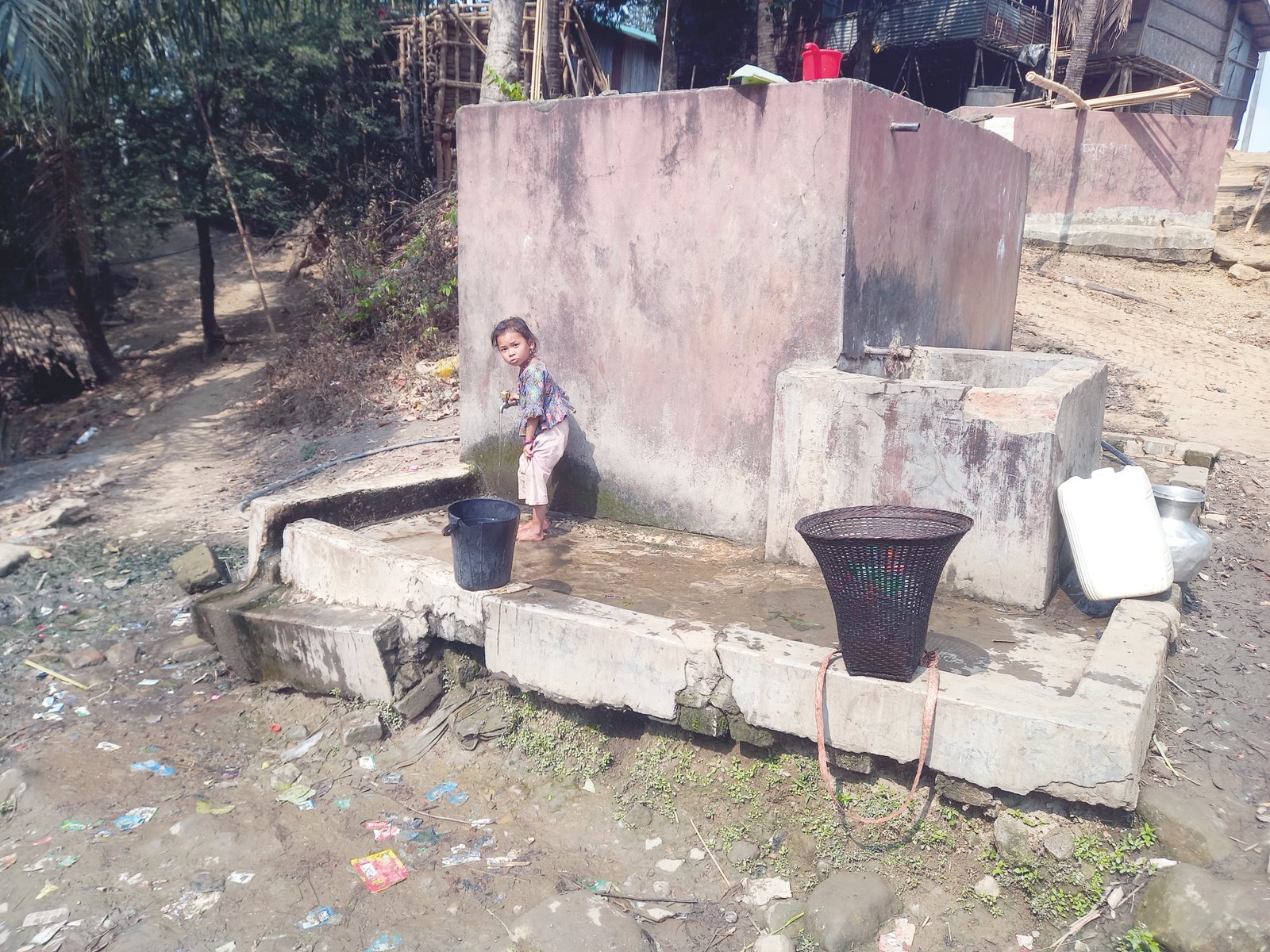
In many remote hill communities in Bangladesh, access to safe, reliable water remains a daily struggle. Conventional water supply systems that depend on electricity, fuel, or mechanical pumping are often impractical in these areas due to difficult terrain and limited infrastructure. However, nature itself offers a powerful and sustainable alternative. By harnessing the natural force of gravity, communities can access water without using any external energy.
A small settlement of the Mro Indigenous community in Bandarban Sadar Upazila demonstrates how this approach works in practice. Located under Tongkaboti Union and about 1,700 feet above sea level, the para (cluster of a village) is home to 85 households with around 510 residents. The community lives across steep hills surrounded by forests, where access to basic services is limited.
Dependence on Traditional Water Sources
For generations, the residents depended on a nearby natural stream, locally known as a “chara”, for their daily water needs. Women and girls walked long distances along narrow and steep hill paths carrying containers and traditional baskets to collect water for drinking, cooking, washing, and other household activities.
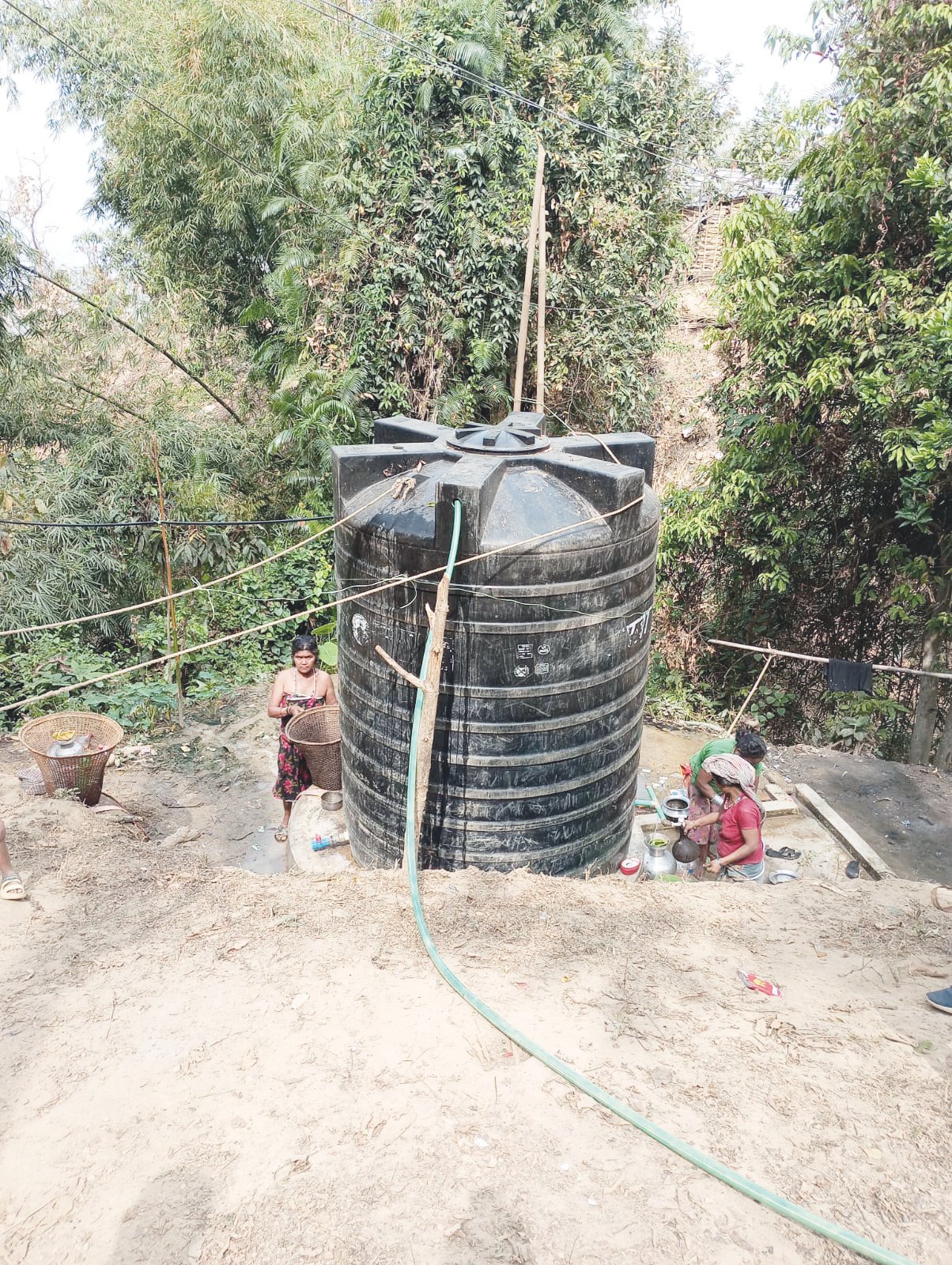
This daily task required several trips and often consumed several hours each day. The physical burden of carrying water uphill made the routine exhausting and sometimes risky, especially during the rainy season.
Environmental Changes and Water Scarcity
Over time, environmental changes began to affect the availability of water. Deforestation, the cutting of large “mother trees,” increasing population, and shifting rainfall patterns gradually reduced the landscape’s natural capacity to retain water. As a result, the once reliable chara began to dry up during the dry season.
During these months, women had to travel even farther to collect water, and the available sources were not always safe. Waterborne diseases became more common, underscoring the urgent need for a reliable, sustainable water supply solution.
Harnessing Gravity as a Natural Energy Source
To address this growing challenge, the Christian Commission for Development in Bangladesh (CCDB) supported the installation of a Gravity Flow System (GFS) in the community. The system collects water from a natural spring located about two kilometers away in the higher hills.
Through a network of pipelines stretching approximately 3,500 feet, water flows naturally from the higher elevation to the settlement using gravitational force. This simple principle allows water to move without pumps or external power sources.
The Gravity Flow System, therefore, operates entirely without electricity, fuel, or mechanical pumping, which makes it an energy-efficient and environmentally friendly solution for remote hill areas.
Reliable Water Supply without Electricity
The infrastructure includes three storage tanks, each with a capacity of 5,000 liters, strategically installed to ensure water distribution across different clusters of households. The stored water then flows through gravity pressure to households within the community.
Today, all 85 households have improved access to water close to their homes. The gravity-based system provides a reliable source of water for drinking, cooking, and other daily activities throughout the year.
By eliminating the need for energy-intensive pumping systems, the Gravity Flow System demonstrates how natural energy can be used effectively for essential services in remote regions.
Community Participation and Local Ownership
A key factor behind the success of the system was strong community participation. Residents voluntarily contributed labor during the installation process, carrying construction materials through steep hills, digging trenches for pipelines, and assisting in building the storage tanks.
To ensure long-term sustainability, the community has also created a small maintenance fund. Each household contributes 50 taka for repairs and equipment replacement. This approach has strengthened community ownership and responsibility for maintaining the system.
Reducing the Burden on Women
The benefits of the Gravity Flow System are particularly significant for women. Previously, women spent several hours each day collecting water from distant streams. Carrying heavy containers uphill required considerable physical effort.
With water now available close to their homes, women experience less physical hardship and greater safety. The time saved allows them to focus more on childcare, household activities, and small livelihood opportunities.
Safe Water for School Children
The local school in the para, which serves 108 students, now has access to safe drinking water from the Gravity Flow System. This ensures that children can drink clean water during school hours, improving health, hygiene, and the learning environment.
Improving Health and Hygiene
Reliable water access has also improved sanitation and hygiene practices within the community. Families can now maintain cleaner homes, wash regularly, and use safer water for drinking. As a result, the occurrence of waterborne diseases has declined.
Water Supporting Livelihood Opportunities
Beyond household use, overflow water from the storage tanks is being used productively. Some households use the excess water for small-scale irrigation in fruit gardens and for biofloc fish cultivation. These activities help improve food security and create small income opportunities.
Expanding Climate-Resilient Water Solutions
The initiative is part of a broader effort by CCDB to improve water access in remote hill areas. So far, 30 Gravity Flow Systems have been installed across Bandarban Sadar, Ruma, and Rowangchhari upazilas.
These systems demonstrate how simple technology and natural energy can address water scarcity while supporting climate adaptation in vulnerable communities.
A Model for Sustainable Development
The experience of this hill community shows that effective development solutions do not always require complex infrastructure or large energy inputs. By harnessing the natural power of gravity, communities can secure reliable water supplies without electricity while strengthening resilience to climate change.
As Bangladesh continues to pursue sustainable and low-carbon development pathways, gravity-based water systems offer a practical model for energy-efficient infrastructure in remote and climate-vulnerable regions.
Engr. Md. Ashrafuzzaman Khan, Interim Coordinator - Resilience Building, Climate Change Program, Christian Commission for Development in Bangladesh (CCDB)
Download Water War As PDF/userfiles/EP_23_20_Water.pdf