The escalating conflict involving the United States, Israel, and Iran is sending shockwaves through global energy markets, and countries like Bangladesh are feeling the strain. As oil prices climb and gas supplies tighten, the situation is exposing just how vulnerable Bangladesh remains to external shocks. The pressure is mounting on policymakers to respond quickly and decisively.
In response, the government has moved to put oil and gas exploration at the top of its immediate agenda. Reducing reliance on imports is now a pressing priority, and attracting foreign investment is seen as key to achieving that goal. A 180-day action plan is already in motion, aimed at speeding up reforms, clearing long-pending approvals, and restarting bidding rounds to unlock both onshore and offshore energy resources.
Meanwhile, the broader global picture continues to deteriorate. In just 25 days of conflict, nearly 40 energy facilities across the Middle East have reportedly been damaged. Iran’s move to halt shipping through the Strait of Hormuz has further unsettled markets, creating a major bottleneck in global energy flows. The result has been a sharp spike in prices, with oil rising to around $110 per barrel and gas markets also tightening significantly.
The International Energy Agency (IEA) has described the situation as more severe than the oil shocks of the 1970s, warning of potentially far-reaching consequences for the global economy.
Bangladesh is already feeling the impact. The country is struggling to maintain its energy supply while coping with rising import costs. Around 75% of its LNG imports depend on Qatar, but disruptions linked to the war, including damage to the Ras Laffan facility, have led Qatar to declare force majeure and suspend long-term gas supply contracts until at least mid-April, with a possible extension.
In this context, the Energy Division has begun preparations to invite bids to attract foreign investment in oil and gas exploration. Alongside ongoing domestic exploration efforts, new initiatives aim to bring in international investors. This time, simultaneous bidding for both onshore and offshore exploration under Production Sharing Contracts (PSCs) has been prioritized in Petrobangla’s 100-day plan and the government’s 180-day agenda.
However, the three districts of the Chattogram Hill Tracts are again being excluded from this initiative. Officials say this is due to a lack of approval from the Ministry of Chattogram Hill Tracts Affairs, which has delayed finalizing a PSC draft for the region. Nevertheless, it is believed that the issue can be resolved quickly, and Petrobangla has already completed its preparations.
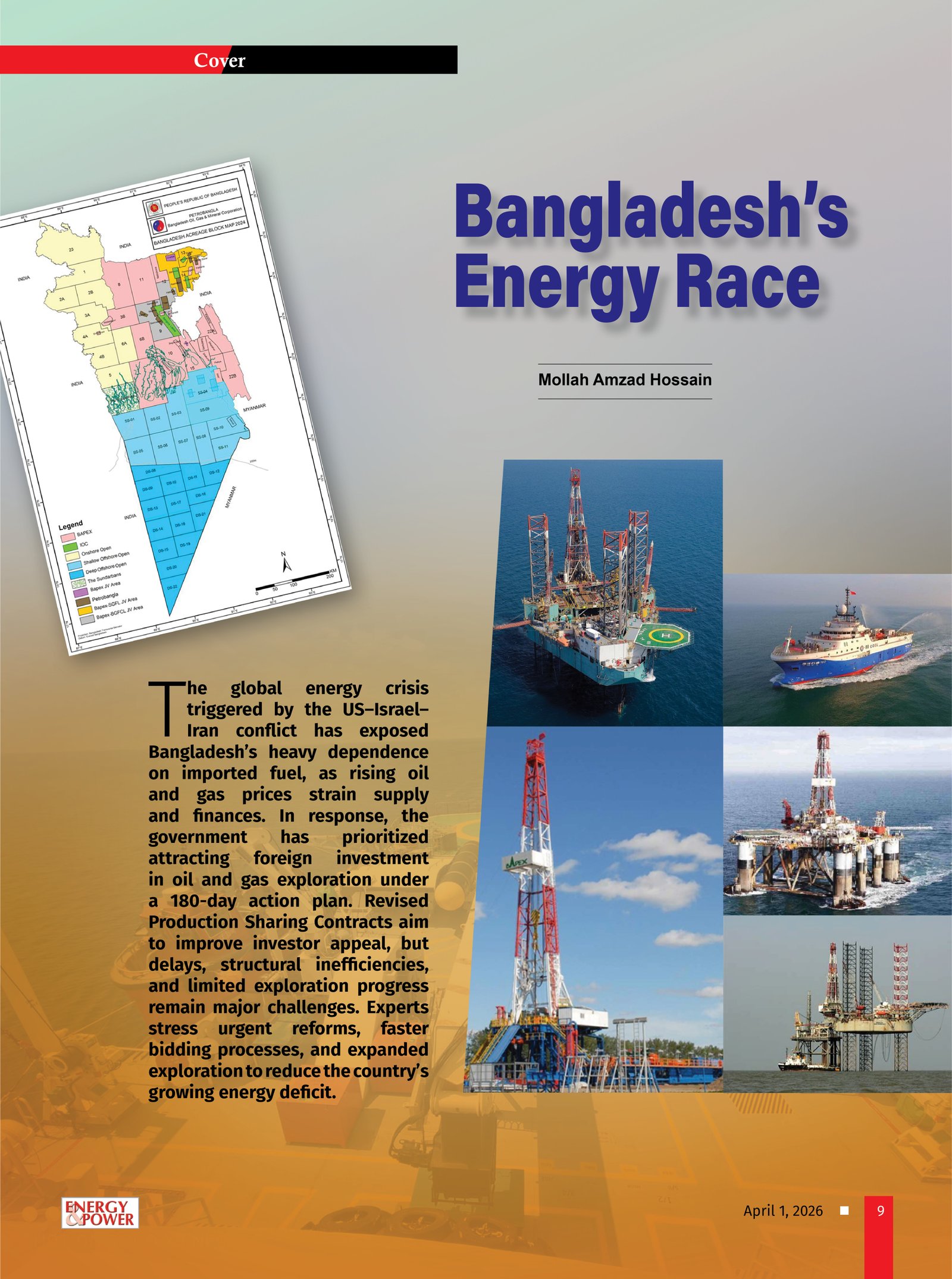
According to Petrobangla sources, Bangladesh has a total of 48 oil and gas exploration blocks—22 onshore and 26 offshore. Of the onshore blocks, only 9 are currently open, while the remaining 13 have been allocated to BAPEX, including 2 in the hill tracts. Offshore, 15 blocks are in deep waters and 11 in shallow waters—all of which are open for bidding.
An official noted that relying only on open onshore blocks will not yield success, as they are relatively risky and less promising. To attract investment, blocks allocated to BAPEX and reserved structures must also be included in the bidding process.
Currently, Chevron produces gas from three onshore blocks. While Chevron has relinquished other areas, it has expressed renewed interest in working in some of those regions under a new PSC and is continuing negotiations with Petrobangla. Meanwhile, India’s ONGC recently withdrew from shallow offshore exploration under a PSC. Although oil and gas bidding has been prioritized under the government’s 180-day plan, the PSC documents have not yet been approved by the cabinet.
.jpg)
After the failure of the 2024 bidding round, Petrobangla updated the offshore PSC and finalized a draft PSC for onshore exploration, submitting both to the Energy Division. Although these were submitted during the interim government period, work on them has only recently resumed. Legal queries raised by the Ministry of Law have been addressed, and the final drafts of the two model PSCs are now with the Energy Division. Once political approval is secured, they will be sent to the cabinet for final approval.
State Minister for Power, Energy and Mineral Resources, Anindya Islam Amit, said: “We will complete the necessary preparations and invite tenders within our 180-day action plan. There is no alternative to increasing domestic gas supply through both local and foreign investment. We are continuously working on this.”
Key Changes in the New PSC Draft
According to Energy Division and Petrobangla sources, several significant changes have been made in the revised model offshore PSC:
• In the 2024 PSC, gas prices were set at 10% of Brent crude for both deep and shallow offshore.
• In the revised draft:
• Deep offshore gas price: 11% of Brent crude
• Shallow offshore gas price: 10.5% of Brent crude
• Floor and ceiling prices have been set at $70 and $100 per barrel, based on the five-year average Brent crude price, with provisions for adjustment every five years.
Previously, while pipeline investment costs could be recovered, there was no provision for profit. The new draft introduces a wheeling charge, allowing companies to earn returns on pipeline investments. This charge will be determined when gas purchase and sales agreements are signed between IOCs and Petrobangla.
Onshore PSC Adjustments
The onshore (plain land) PSC draft has also been revised:
• Earlier (2019 PSC), gas prices were linked to high-sulfur fuel oil benchmarks.
• In the new draft, gas prices will be set at 8% of Brent crude.
• Floor and ceiling prices remain $70 and $100 per barrel (based on five-year averages).
• Cost recovery limits have been increased from 55% to 70%.
Overall, while the government is moving to accelerate oil and gas exploration and attract foreign investment, delays in PSC approval and structural challenges in the bidding process remain key obstacles.
Petrobangla has not yet finalized a separate draft Production Sharing Contract (PSC) for the Chattogram Hill Tracts, but it has already determined the pricing structure. Under the proposed framework, the gas price will be set at 8.5% of Brent crude oil. This higher pricing is considered necessary because international oil companies (IOCs) will be required to pay royalties to district councils in the three hill districts for resource extraction. The additional gas price will allow the contracted companies to adjust and cover these costs.
Recently, the government reduced the Workers’ Participation Fund for company profits—from 5% to 1.5%—for IOCs. This change has been incorporated into both draft PSCs.
According to Petrobangla, after no bids were submitted in 2025, the government contacted individual companies to identify the reasons. Based on their feedback, revisions were made to the PSC drafts. However, companies had also complained that the cost of multi-client survey data and Petrobangla’s data packages was too high. A decision is now required from the Energy Division to make these prices more competitive and affordable.
Another key issue is whether only open blocks will be offered for bidding onshore, or whether blocks already allocated to BAPEX will also be included. Clear guidance from the Energy Division is needed.
Furthermore, a final decision must be made on whether to invite tenders for Blocks 22A and 22B in the Chattogram Hill Tracts. If approved, three promising structures—Patiya, Jaldi, and Sitapahar—will need to be opened for exploration. Officials believe that if PSCs can be signed for these hill tract blocks, there is strong potential for quick success.
When asked about opening BAPEX-held blocks and reserved structures, former Managing Director Murtaza Ahmed Faruque said that no response will come from investors if all promising blocks are reserved exclusively for BAPEX. He emphasized that all 22 onshore blocks should be brought under bidding.
He suggested that BAPEX could still be allowed to participate jointly with the winning bidders. At a time when large-scale exploration is urgently needed, reserving blocks solely for BAPEX is not a viable option. However, ongoing projects under domestic investment should continue.
He also noted that issues related to the Chattogram Hill Tracts should be resolved before inviting bids, but reserving key structures exclusively for BAPEX would likely discourage investor interest.
Highlighting the government’s priority to attract foreign investment in oil and gas exploration, the Energy Division Secretary told journalists that work is ongoing to finalize and approve the two draft model PSCs. Once approved, tenders will be invited under the 180-day action plan, with both the Energy Division and Petrobangla preparing for the process.
Commenting on the government’s initiative, Professor Dr. Ijaz Hossain, former dean of BUET, said that the lack of response in the last offshore bidding round was due to investor distrust in the interim government and limitations within the PSC framework.
He added that with an elected government now in place, investor confidence has improved. Therefore, the PSCs should be updated, approved, and bidding launched as quickly as possible. With the gas deficit increasing, there is no alternative to accelerating exploration efforts.
Bangladesh is currently heavily dependent on imported energy and electricity, with import dependency reaching about 56% and rising over time. Last year, the country spent approximately $13.2 billion on energy and power imports, along with an additional $7 billion for debt servicing (including interest) in the sector—bringing total expenditure to $20.2 billion.
It was projected that this cost could rise to $24 billion this year. However, due to war-driven increases in global energy prices, the actual cost may be significantly higher. In particular, LNG imports cost about $800 million last year, but this could double or even triple. Fuel oil imports, which cost $4.8 billion, may also increase if market instability continues. To manage the additional burden, the government has already begun discussions with development partners to secure at least $2 billion in loans.
Reducing import dependence is therefore one of the biggest challenges at present. Experts emphasize that there is no alternative to rapidly increasing investment in domestic gas and coal exploration and production. At the same time, urgent steps must be taken to expand renewable energy.
Historically, Bangladesh has prioritized domestic resource development during global energy crises. During the global oil shocks of the 1970s, Bangladesh became the first country in the region to begin offshore oil and gas exploration in the Bay of Bengal. Following the Indonesian model, PSCs were introduced to attract foreign investment, and 6 PSCs were signed for offshore oil exploration. However, after failing to find oil, the IOCs withdrew.
At that time, efforts were also made to increase domestic gas production, despite objections from Royal Dutch Shell. The newly independent country acquired five gas fields, which are still in production today and remain a major source of energy supply.
During this period, Sheikh Mujibur Rahman initiated policies for developing domestic coal resources. These efforts were later advanced under President Ziaur Rahman and continued until 1980. However, after Hussain Muhammad Ershad came to power in 1982, the momentum for domestic energy exploration and development lost priority.
Following the mass uprising of the 1990s, Hussain Muhammad Ershad was removed from power. The Bangladesh Nationalist Party (BNP) won the subsequent election and formed the government. The party’s chairperson, the late Khaleda Zia, assumed office as Prime Minister.
At the outset, her government focused on ensuring the use of domestic resources to meet energy demand. Initiatives were taken to begin coal extraction in collaboration with a Chinese state-owned company. Due to the lack of domestic capacity, efforts were also made to attract foreign investment in oil and gas exploration.
To accelerate the process, alternative approaches were considered to shorten the time required for signing Production Sharing Contracts (PSCs). A model PSC was finalized, under which investment was sought for oil and gas exploration, both onshore and in the Bay of Bengal. As part of this effort, the Houston bidding round was launched in 1993, attracting major international oil companies (IOCs).
Based on interest and priority, PSCs were signed through negotiations. This became one of the most successful PSC initiatives in Bangladesh’s history, as it led to the discovery of the Sangu gas field offshore (now depleted). Onshore, the Jalalabad gas field was developed, while Occidental Petroleum and later Unocal Corporation discovered the Moulvibazar and Bibiyana gas fields. Together, these three fields have supplied more than 60% of the country’s total gas production to date.
Under PSCs signed during that period, exploration was also conducted in the Chattogram Hill Tracts, where several promising structures were identified. However, the company involved later withdrew without making further investments.
In subsequent years—1988, 1997, 2012, and 2018—several PSCs were signed. However, after exploration, international companies either failed to achieve major discoveries or lost interest due to low gas prices.
Most recently, in 2024, a tender was invited under a newly formulated offshore PSC, but no company participated. After reviewing the reasons behind the lack of response, the offshore PSC has been updated again. The Model Offshore PSC 2026 and the Model Onshore (plain land) PSC are now awaiting final approval.
According to the Energy Division, once these drafts are approved by the cabinet, tenders will be invited under a 180-day action plan.
However, a key challenge remains: international oil companies interested in investing in Bangladesh have expressed dissatisfaction with the lengthy tender process. They have raised this issue in multiple meetings with Petrobangla.
Before the 2024 bidding round, ExxonMobil submitted an unsolicited proposal expressing interest in working in 15 deep offshore blocks in the Bay of Bengal. The proposal was not accepted. It is reported that an ExxonMobil delegation is scheduled to meet with Petrobangla at the end of this March, and they may again express interest in those blocks.
Former and current officials of the Energy Division and Petrobangla told Energy & Power (on condition of anonymity) that the entire process—from tender invitation to proposal submission, evaluation, contract signing, and project commencement—takes at least two years.
As a result, changes in global and domestic energy prices, demand, and market conditions often render initial bids impractical. Even after signing contracts, companies face challenges, sometimes seeking renegotiation or withdrawing due to altered financial realities.
They emphasized that reducing this timeline is crucial for attracting investment. Two senior officials suggested that adopting the 1993 model—through Houston and London bidding meetings—could enable investor selection and PSC signing within 9 to 12 months, allowing exploration work to begin much faster.
When asked about the issue, State Minister Anindya Islam Amit said the current government is also keen to accelerate oil and gas exploration. “We want Bangladesh to become self-sufficient in meeting its energy demand with domestic gas within the tenure of this government. LNG import pressure should decrease. If adopting the 1993 model helps select investors and sign contracts more quickly, the government will certainly consider it,” he said.
Speaking on the matter, Professor M Tamim, Vice-Chancellor of Independent University Bangladesh, said attracting foreign investment in oil and gas exploration is essential but has long been neglected. He praised the initiative to finalize updated offshore and onshore PSCs as a medium- and long-term solution. However, he noted that selecting investors through competitive bidding is time-consuming. He suggested that PSCs could also be signed through negotiations on a “first-come, first-served” basis, provided transparency is ensured.
Badrul Imam, honorary professor at the University of Dhaka, said attracting foreign investment for exploration in both offshore and onshore areas has been delayed. While he welcomed the government’s prioritization of the issue under its 180-day plan, he acknowledged that the bidding process is time-consuming. He added that inviting IOCs to bidding meetings and selecting investors on the spot could help accelerate gas discoveries, though transparency and competition must be maintained.
Former Managing Director of BAPEX, Murtaza Ahmed Faruque, said it would be difficult to attract bidders, especially for deep offshore blocks. He suggested packaging at least five blocks together (out of 15) to make them more attractive. Based on proposals from interested companies, PSCs could then be finalized through negotiations, saving time and improving outcomes.
Former Petrobangla Director Md Quamruzzaman noted that exploration activities have been largely neglected over the past decade. He emphasized that the government must act immediately to attract foreign investment in offshore exploration, with the biggest challenge being to begin field-level operations quickly.
Chairman of Business Initiative for Development, Abul Kasem Khan, said that local entrepreneurs should be given opportunities to invest alongside foreign companies under PSC frameworks. This, he argued, would help develop domestic capacity in oil and gas exploration, similar to progress made in the power generation sector.
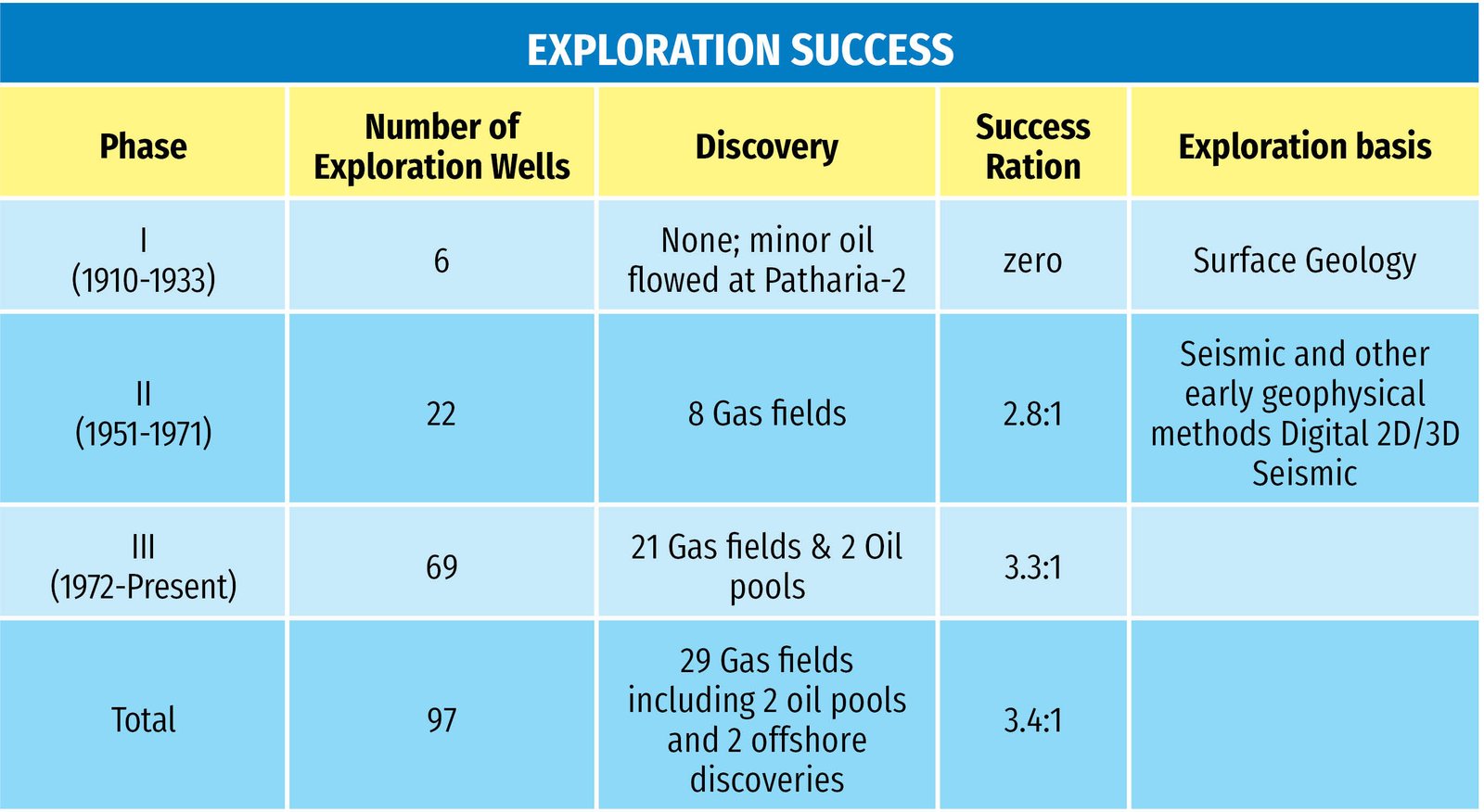
Among hydrocarbon-prospective countries, Bangladesh has conducted one of the smallest amounts of exploration. Since exploration began in this land in 1910, only about 100 exploratory wells have been drilled to date. During this period, around 160 development wells have been completed. These efforts have resulted in the discovery of approximately 28 trillion cubic feet (TCF) of gas. Of this, about 21 TCF has already been consumed, while the remaining reserve stands at around 8 TCF.
Of the total gas discoveries in Bangladesh, about 90% have been made by foreign companies, while only 10% has been discovered by Petrobangla and BAPEX. In contrast, in India’s Tripura state alone, 61 exploratory wells have been drilled out of a total of 225 wells for oil and gas exploration.
Over the past 20 years, oil and gas exploration has been one of the most neglected sectors in the country. In 2022, a plan was finally taken to drill 50 wells through domestic initiatives, with a target of completion by 2025. This was expected to add 648 MMCFD (million cubic feet per day) of new gas supply.
However, so far only 25 wells have been drilled. These have produced about 254 MMCFD of new gas, of which 193 MMCFD has been added to the national grid.
There are now plans to drill another 100 wells, to be carried out by BAPEX, Petrobangla, and contractors appointed by various companies. Initially, the project was expected to be completed by 2028, but it is now projected to finish by 2030. However, there are doubts about whether this target will be achieved. A significant portion of this investment has focused on the off-grid island of Bhola, making it essential to connect the island to the national grid through pipelines to realize the benefits.
Currently, considering a national gas demand of about 4,200 MMCFD, domestic production stands at around 1,700 MMCFD, and LNG contributes about 1,000 MMCFD, bringing total supply capacity to approximately 2,700 MMCFD. This leaves a deficit of about 1,500 MMCFD.
Therefore, there is no alternative to increasing domestic exploration to address the shortfall. Experts suggest that drilling 40 to 50 exploratory wells annually would be the most effective solution at present. This would allow Bangladesh to confirm new domestic gas reserves within the next 5–7 years, which is crucial for future energy planning.
The current government is optimistic about achieving success in oil and gas exploration within its five-year term. To realize this goal, it must accelerate investor selection and contract signing—either through the conventional tender process or by organizing international bidding round meetings abroad and selecting investors under approved Production Sharing Contracts (PSCs).
Under the traditional tender process, it takes around two years to begin field-level work. However, experts believe that by following the 1993 bidding round model or adopting alternative approaches, contracts could be finalized within 9 to 12 months, enabling exploration work to begin much sooner.
While there is a possibility of achieving results in onshore exploration within the current government’s tenure, offshore outcomes will require a longer timeframe.
International energy analysts believe that the current global energy crisis triggered by war will exert more pressure than even the impacts of COVID-19 or the Russia-Ukraine War. Countries like Bangladesh are expected to face particularly severe consequences.
Therefore, alongside crisis management, there is no alternative to rapidly attracting foreign investment for domestic oil and gas exploration. To achieve this, all onshore and offshore blocks should be opened to foreign investors.
To attract international oil companies (IOCs), data package prices should be reduced to more affordable levels. Onshore PSCs could be structured to allow joint participation between foreign companies and BAPEX, while also creating opportunities for domestic private sector participation. Bangladesh could follow successful international examples by giving priority to such joint ventures in awarding exploration contracts.
There is a strong expectation that the Bangladesh Nationalist Party (BNP) government, elected with a large public mandate, will prioritize attracting foreign investment in oil and gas exploration to ensure energy security and reduce import dependence.
For this, there is no alternative to taking immediate action.
Download Cover As PDF/userfiles/EP_23_20_Cover.pdf