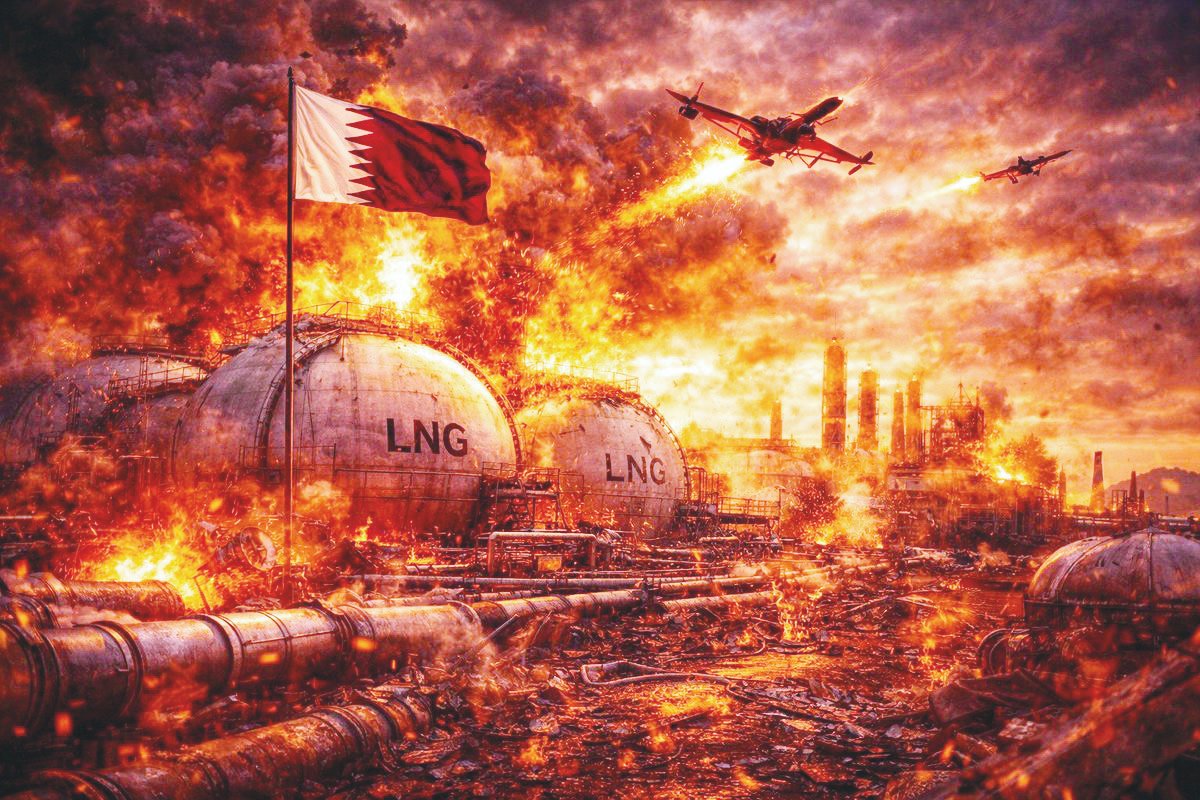
The war in the Middle East and the Gulf region has taken an alarming turn as Iran and the Israel–US alliance have begun targeting oil installations and pipelines. Several refineries in Iran, as well as facilities in Bahrain and Saudi Arabia, have reportedly caught fire. LNG infrastructure in Qatar has also been targeted. Fires at oil refineries have triggered acid rain in Tehran and surrounding areas. Oil prices have already jumped to around $110 per barrel and could rise to $150 or beyond if the conflict intensifies further. Global stock markets have tumbled, and the energy sector worldwide is now facing a major crisis.
The Middle East and Iran play a crucial role in the global energy market. Iran is the fourth-largest producer of oil and the third-largest producer of dry natural gas. Meanwhile, Saudi Arabia, the UAE, and Kuwait are among the world’s leading crude oil exporters, while Qatar is the largest exporter of liquefied natural gas (LNG).
Strikes and damage across the Arab Gulf region indicate a rapidly escalating risk. Fires at Ras Laffan and Ras Tanura, along with reduced shipping traffic through the Strait of Hormuz, have already pushed oil prices higher. While an intentional or accidental attack on major infrastructure could cause significant casualties and damage, several factors suggest that the current intensity of the conflict may be difficult to sustain for long.
Now that the conflicting parties have chosen the self-defeating path of attacking oil and LNG infrastructure, the consequences are already affecting the energy security of major fuel-importing countries. The Arab and Persian Gulf states are not direct participants in the conflict, yet they are bearing the consequences for hosting U.S. military bases that are used to launch operations in the region.
For obvious reasons, the present pace of strikes cannot continue indefinitely. U.S. and Israeli forces claim they are steadily degrading Iran’s missile and drone capabilities. At the same time, interceptor missile stocks in Gulf countries are reportedly declining. The United States and Israel also claim to have established air superiority over Iran, which could allow them to rely more on aircraft-delivered munitions and more precise targeting of drones and other aerial threats.
Iran’s strategy appears to involve striking as many targets as possible, including air bases, embassies, hotels, and other locations associated with American presence. The reported assassination of Ayatollah Ruhollah Khomeini has further strengthened Iranian resolve, and the country may continue fighting with determination. Reports suggest that field commanders have been given authority to launch attacks without centralized coordination. In a conflict spread over such a wide area, this decentralized approach may explain the scattered and sporadic nature of Iran’s attacks.
Iran has not completely closed the Strait of Hormuz, largely because its own oil exports to China depend on that route. However, Tehran has declared that ships carrying cargo destined for the United States, Israel, or Western countries will not be allowed passage. Meanwhile, attacks on refineries and LNG infrastructure threaten to severely weaken the region’s ability to maintain energy exports.
Arab countries and China have already begun diplomatic discussions aimed at persuading the conflicting parties to agree to a ceasefire.
The crisis has also complicated the task of OPEC+, which was already facing mounting fiscal pressures on key producers such as Saudi Arabia. With the U.S. and Israeli attacks on Iran and Tehran’s retaliatory strikes across the region, the short-term balance between global supply and demand has become far more uncertain.
Volatility and price swings in crude oil markets are therefore likely to persist for months—even if the conflict ends quickly. A prolonged or unstable outcome, marked by intermittent violence over months or years, would make energy markets even more unpredictable. This year will test OPEC+’s ability to manage global oil markets.
The impact is already being felt worldwide. In Australia, for example, fuel prices are rising sharply. Diesel prices have increased from about AUS$0.90 to AUS$2.20 in cities, and up to AUS$3.50–4.00 in remote areas. The situation is even more concerning for Asian countries that rely heavily on energy supplies from the Middle East.
The ongoing conflict has also created new uncertainty around Qatar’s massive LNG expansion projects. The North Field expansion, designed to increase LNG export capacity from 77 million tonnes per annum (mtpa) today to 110 mtpa by 2027 and potentially 126 mtpa by the end of the decade, has been central to expectations of abundant LNG supply later in the decade.
LNG megaprojects depend on tightly managed engineering schedules, and smooth supply chains. Even temporary disruptions around Qatar’s export hub at Ras Laffan, or heightened security risks in the Gulf, could delay the commissioning of new liquefaction trains. Rising insurance costs and shipping “war premiums” for vessels passing through the Strait of Hormuz could also delay deliveries of critical equipment.
QatarEnergy has already announced a delay in its 33 mtpa North Field East project, now expected to start operations toward the end of 2026 rather than mid-2026. A delay of six to twelve months would remove substantial LNG volumes from global markets at a time when buyers had expected lower prices in 2027–28.
The conflict also raises concerns about the future management of the massive gas reservoir shared by Qatar and Iran. The field contains about 51 trillion cubic meters of gas in place, including roughly 25 trillion cubic meters of recoverable reserves in Qatari waters and about 14 trillion cubic meters in Iranian waters. Effective reservoir management requires coordination between the two countries because production on one side can influence pressure and gas migration on the other.
Political instability in Iran or a shift toward resource nationalism could complicate this cooperation and create uncertainty for long-term development of the field. The current conflict therefore threatens not only present fuel supply chains but also future energy investments and expansion projects.
The immediate impact of attacks and counterattacks on oil and LNG infrastructure is already visible in rising prices and supply disruptions. Countries such as Japan, South Korea, China, and Taiwan, which rely heavily on Middle Eastern energy supplies, have already expressed concern.
India has received temporary relief after the United States allowed it to continue purchasing oil from Russia. Bangladesh could also benefit if it manages to increase fuel imports from India and China. However, it remains unclear what provisions were included in contracts recently concluded by Bangladesh’s interim government with Japan and the United States.
It is hoped that effective diplomacy will soon bring the conflicting parties back to negotiations.
For Bangladesh, the priority is managing the situation prudently. The country may have no choice but to significantly reduce the use of petroleum products, particularly diesel, and manage with limited LNG supplies. The government has already imposed restrictions on the sale of petroleum products to automobiles, which appears to be a sensible step.
However, there is no reason for panic yet. The irrigation season has already ended, and irrigation pumps are the largest consumers of diesel. If fuel use in transportation is carefully managed, the situation may remain manageable.
India has resumed supplying diesel through the cross-border pipeline, and several ships carrying crude oil and LNG have already reached Bangladesh. The government must therefore focus on managing demand through strict monitoring. At a time resembling a fuel famine, luxurious or wasteful use of electricity and fuel cannot be justified.
Gas supply should also be restored soon to at least two efficient fertilizer plants—KAFCO and the modern fertilizer plant at Ghorashal. While people can survive without electricity for limited periods, prolonged shutdown of fertilizer plants would harm agriculture and threaten food security.
As Arab and Persian Gulf countries are major suppliers of oil, LNG, and fertilizers, Bangladesh must pursue aggressive diplomacy to identify alternative sources. At the same time, it must recognize that every new strike on oil and gas infrastructure is pushing global prices higher.
Bangladesh may therefore have to cut costs in other sectors in order to allocate more resources for fuel imports. Ultimately, everyone hopes that the conflict will end soon and that normal global energy trade can resume.
Engr. Khondkar Abdus Saleque, Former Director (Operation), GTCL & Energy Expert
Download Cover Article As PDF/userfiles/EP_V_23_19_Cover_Article.pdf