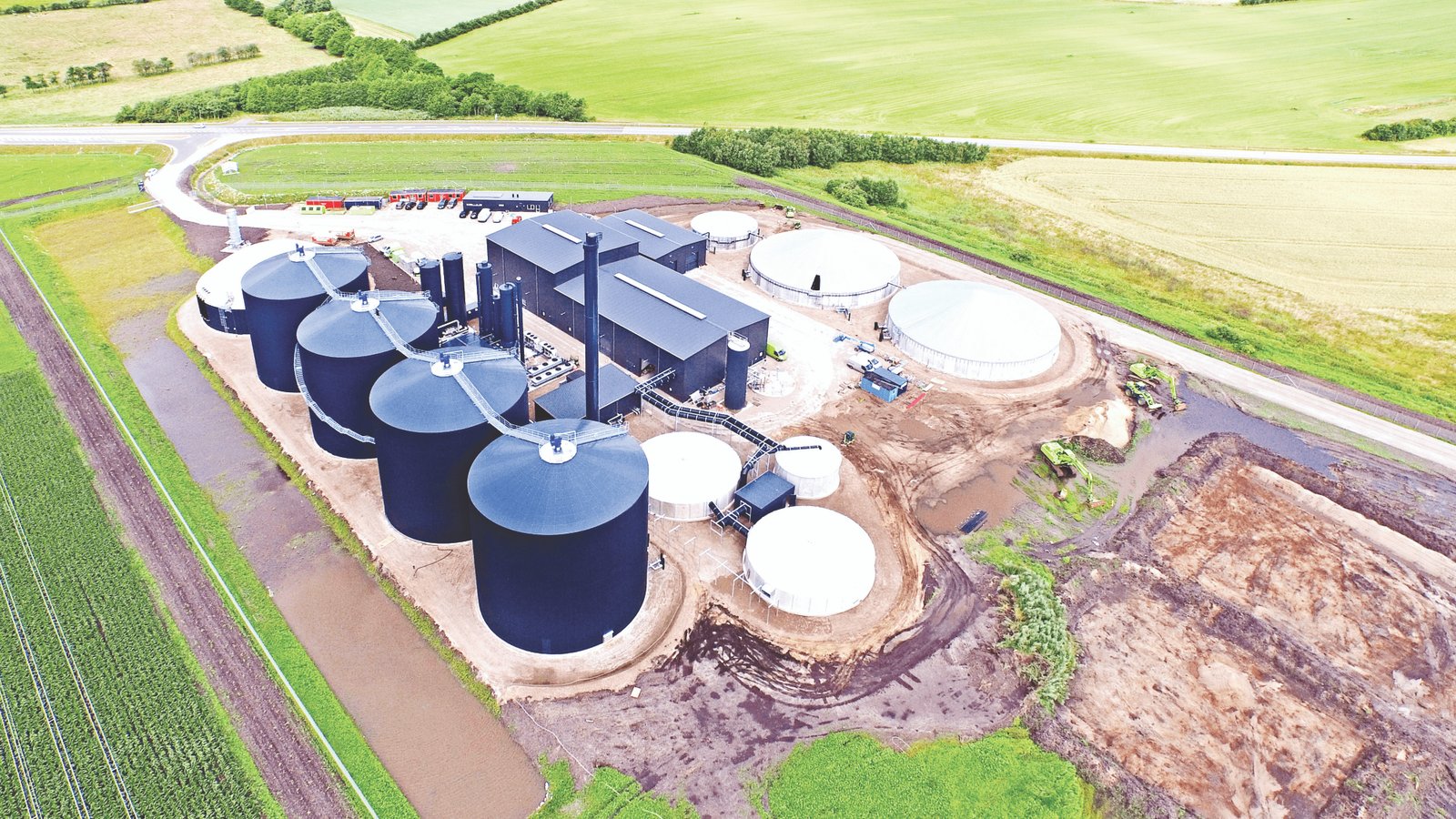
Bangladesh has been experiencing a worsening energy trauma. Widespread power shortages are affecting households and businesses alike. Local gas resources are depleting rapidly, forcing power plants to switch to imported liquefied natural gas (LNG) despite its sharply rising spot market prices. Although the crisis has eased somewhat in recent months, the energy sector continues to suffer from excessive reliance on highly volatile and costly imported LNG, coal, and oil.
Growing dependence on imported fossil fuels for power generation has intensified volatility in the energy sector while significantly increasing the country’s fiscal burden. Foreign exchange reserves have come under pressure, and subsidy requirements have risen sharply. The expanding intrusion of LNG into the energy sector is therefore dangerous and must be halted at the earliest opportunity.
Bangladesh’s LNG import prices have fluctuated since 2019, with a dramatic spike in 2022 due to global market disruptions. Initially, prices were relatively moderate, as several contracts were signed based on a percentage of Brent crude oil prices. However, spot market prices surged sharply, substantially increasing Bangladesh’s import costs. The country had long-term LNG supply contracts with Qatar and Oman, with prices linked to Brent crude. For example, one agreement with OQ Trading priced LNG at 11.90% of the three-month average Brent crude price plus US$0.50 per MMBtu. In 2022, spot LNG prices soared due to global events, with some cargoes purchased at US$35.89 per MMBtu and US$36.95 per MMBtu. Although Bangladesh continued importing LNG under long-term contracts and, to a limited extent, from the spot market, overall prices remained high.

Given the severe gas shortage—particularly affecting industries and fertilizer plants—it has become essential to reassess gas utilization priorities. Areas where gas can be substituted with alternative fuels must be identified so that the gas saved can be redirected to higher-value sectors. Continued operation of compressed natural gas (CNG) stations and the supply of piped gas to residential kitchens, even if limited to selected areas, require careful review. While CNG offers environmental benefits and domestic gas use reduces foreign exchange spending on cooking fuels, the current crisis demands prioritization of essential sectors. Balancing the needs of transport and residential consumers with those of industry and fertilizer production has become critical.
In 2001–02, it was widely claimed that Bangladesh was “floating on gas.” At least that was the view of some experts and oil companies. A few years earlier, US-based Unocal had discovered the Bibiyana gas field and argued that Bangladesh lacked sufficient domestic demand to justify developing such a large resource. Unocal even sought government approval to export gas to India. At the same time, the Asian Development Bank (ADB) was supporting a government initiative—the Clean Fuel Project—to promote the use of compressed natural gas in the transport sector.
The CNG program proved immensely successful after its launch in 2002–03, largely because it was far cheaper than alternative fuels and created lucrative business opportunities in vehicle conversion and refueling infrastructure. Hundreds of CNG stations were established, and hundreds of thousands of vehicles and three-wheelers were converted within a few years. By the end of that decade, CNG use was reportedly saving Bangladesh around US$800 million annually in petroleum imports.
However, the rapid expansion of the CNG network significantly destabilized gas supply pressure by 2010. By then, the Bibiyana gas field was producing substantial volumes for the domestic market, yet Bangladesh was already facing gas shortages. The country was never truly “floating on gas.” The CNG sector alone was consuming about one-tenth of the total daily gas supply of roughly 2,000 million cubic feet per day (mmcfd), while the domestic sector accounted for approximately 12.1% of total natural gas sales. Despite this, there was already a demand shortfall of 400–600 mmcfd.
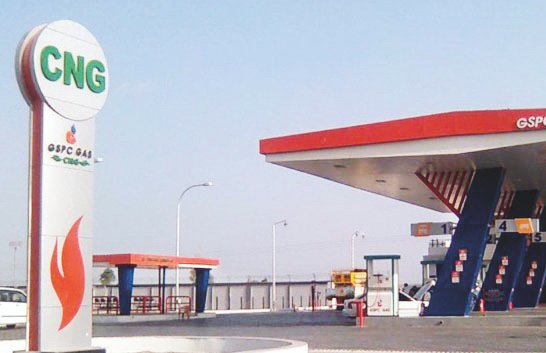
This situation compelled the government to halt new gas connections for all categories of consumers, although some industrial connections were approved under special arrangements. These restrictions largely remain in place today, as demand has never been fully met amid steadily declining supplies. At the same time, demand continued to grow rapidly due to the country’s fast-paced economic development.
This widening supply-demand gap ultimately forced the government to begin importing LNG at high cost from 2018–19 onward. Imported LNG has since been blended with domestic gas and supplied through the national grid to keep gas-dependent industries, power plants, and other consumers operational.
Over the last decade, there has been no significant new discovery of oil or gas. As a result, the domestic share of gas supply has been steadily declining over the past four years. At present, the government can supply a maximum of around 3,000 million cubic feet per day (mmcfd) of gas, of which 600–800 mmcfd comes from imported LNG. Gas demand in 2010–11 stood at about 2,400 mmcfd. Given an annual demand growth rate of roughly 10%, total demand should have exceeded 5,000 mmcfd by now. This has created a severe gas deficit, directly affecting power generation, which is vital for the national economy.
Despite the crisis, the use of compressed natural gas (CNG) continues to grow. CNG is no longer cost-effective, involves long waiting times, and, most importantly, there is not enough gas even for industries that generate export earnings and provide the largest number of jobs. Yet, policy inertia has allowed the continued expansion of CNG vehicles, as if the gas shortage does not exist.
A similar situation exists in the domestic use of gas. In the early days of gas distribution, household kitchens were the primary customers of gas companies. Various incentive schemes were introduced to encourage residential adoption of natural gas. Initially, uptake was limited, but changes in fuel prices and consumer behavior eventually drove demand to levels that became difficult to manage. Domestic consumers became increasingly aggressive, and gas companies and related stakeholders became entangled in widespread illegal practices.
Titas Gas has been actively disconnecting illegal gas connections—including industrial, commercial, and residential lines—as part of a broader crackdown on unauthorized gas use. Between September 2024 and April 2025, the company disconnected 29,617 illegal connections, removed 67,120 burners, and dismantled 144 kilometers of illegal pipeline. The disconnection drive has targeted unauthorized connections across multiple regions and customer categories. Its objectives include preventing gas theft, ensuring lawful usage, and recovering outstanding dues. In one operation alone, Titas Gas disconnected 400 illegal connections in Savar, including one commercial establishment, and removed 1.5 kilometers of illegal pipeline.
Alongside enforcement, Titas Gas has conducted public awareness campaigns to inform consumers about the consequences of illegal connections and to encourage cooperation in preventing gas theft. Individuals involved in illegal gas connections have faced fines and, in some cases, imprisonment. These efforts have resulted in significant gas savings, with estimates suggesting that millions of cubic feet of gas are being conserved daily.
Energy Adviser Muhammad Fouzul Kabir Khan recently stated that, if given the opportunity, he would disconnect all domestic gas connections in Dhaka to curb wastage. According to him, “Providing gas to households is a waste, especially when industrial sectors are struggling with shortages. There will be no new residential gas connections going forward—this option should be permanently closed.” This underscores the urgency of reconsidering existing policies.
It may now be time for the government to seriously consider phasing out CNG vehicles and replacing natural gas in household kitchens with alternative fuels. The country must adjust to the hard reality of having limited gas resources. Unless policy direction changes, the continued use of gas for CNG and unrestricted domestic consumption—the merry burning of blue flames in kitchens—will only worsen shortages for high-value users.
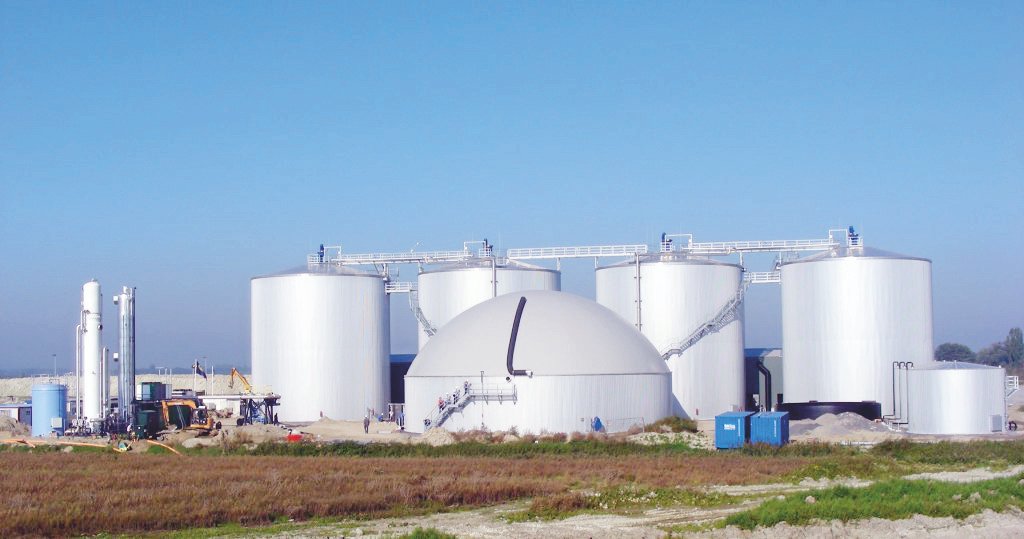
Given the energy crisis arising from the rapid depletion of natural gas reserves, with no clear signs of adequate replenishment through new discoveries, it is imperative to explore innovative solutions that can extend the availability of gas for priority sectors of the economy. One such option could be the introduction of biogas as a substitute, produced in and around existing town gas distribution systems, using current infrastructure to supply households that now depend on piped natural gas.
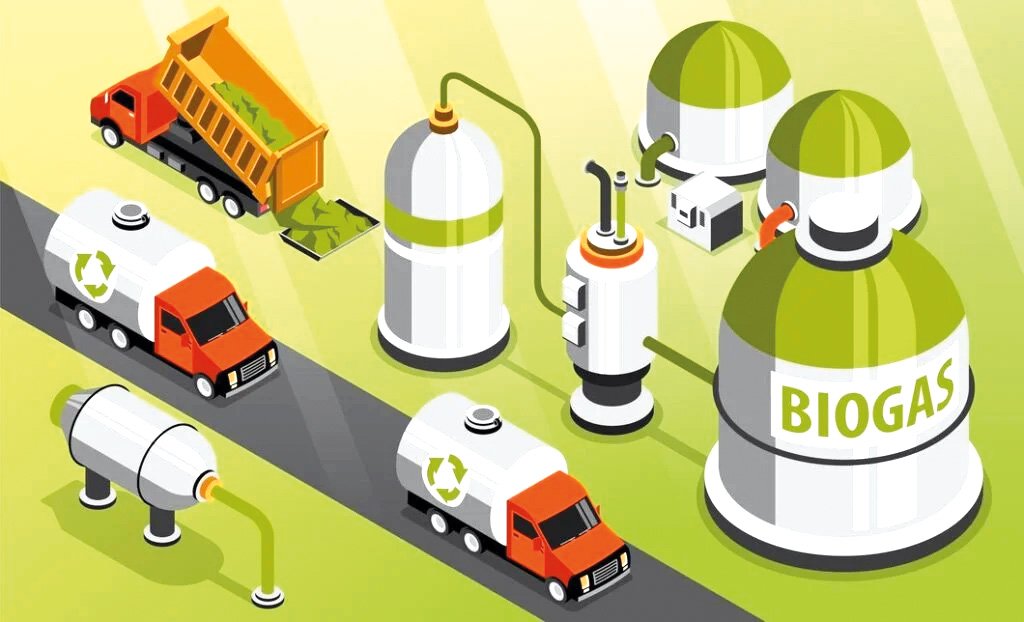
An innovative biogas production project could be designed to establish commercial biogas generation facilities near city gate stations, operated using cow dung sourced from surrounding suburban and rural areas. A complementary incentive-based scheme could encourage households outside city limits to keep a small number of cows, ensuring a steady supply of milk and cow dung. Cow dung could be sold to milk processors and biogas production units operated by gas distribution companies.
Under this model, a ring main could be constructed around the city, with gas compressors installed near existing city gate stations to raise pressure to predetermined levels for distribution. Biogas plants would collect cow dung from surrounding areas, where families could be encouraged to maintain herds of four to six cows, generating both milk and dung for income. Gas companies would appoint specialized agents to collect cow dung from households at scheduled times using mechanized vehicles. Each agent would issue receipts indicating the volume collected.
The collected cow dung would be transported to centralized receiving stations at biogas generation facilities. Agents would be paid for collection and delivery services, while households would receive digital payments for the supplied cow dung. A transparent financial mechanism would be established to manage payments and reconciliation among households, agents, and gas companies. With a sufficient number of collection agents, the system could operate without supply bottlenecks.
The cow dung will be digested through an established process, and the biogas generated will be transferred to a chamber from which it can be compressed to a predetermined level. The compressed gas will then be supplied to the city gate station for onward distribution through the city gas pipeline network.
In this way, a portion of the current gas supply for domestic use could be replaced by cow dung–based biogas, while the natural gas saved could be redirected to industrial and commercial users that generate higher value addition for the national economy. This project would create substantial employment opportunities and support the development of the cattle, agricultural, and dairy sectors. It would also open significant income-generating avenues for households located near biogas production facilities operated by existing gas distribution companies. Initially, a limited number of pilot biogas units could be established within gas franchise areas. If successful, the model could be replicated across all gas distribution companies, thereby diversifying gas input sources and expanding the role of renewable energy in the country’s energy mix.
A feasibility study on this concept should be initiated as a joint venture involving gas distribution companies or Petrobangla, along with the relevant agricultural and livestock departments. Such coordinated efforts would help ensure optimal use of existing infrastructure while promoting a cleaner environment—providing households with cleaner kitchen fuel on one hand and new income-generating opportunities on the other.
The proposed project is not without precedent. Similar initiatives have already been launched at the corporate level in neighboring India. Mumbai-based natural gas distribution company Mahanagar Gas Limited, a well-known public sector unit of GAIL, is investing approximately Rs 1,323 crore with partners to establish a battery manufacturing unit and a compressed biogas production facility over the next two years as part of a diversification strategy. In line with government policies promoting clean mobility, the company aims to expand into non-fossil fuel segments. Currently, about 70 percent of Mahanagar Gas’s revenue comes from CNG, prompting the company to seek long-term growth by entering at least one non–fossil fuel business. It has already formed a joint venture with the US-based International Battery Company to set up a gigafactory in Karnataka.
In another example, the Indian state of Uttar Pradesh has rolled out the Gram-Urja model to enhance energy self-sufficiency and create employment opportunities for rural households. According to a state government statement issued on July 15, 2025, the initiative promotes local production of organic fertilizer and aims to reduce domestic LPG consumption by 70 percent. The program is being integrated with the Mahatma Gandhi National Rural Employment Guarantee Act (MGNREGA) scheme and is designed to directly benefit farmers. Under the model, biogas units will be installed near individual households or farms, enabling farmers to produce cooking gas and organic fertilizer for personal use. This will reduce farming costs, improve productivity, and create new income streams. Rural households will also benefit from the construction of personal cattle sheds, with dung used in biogas units to generate kitchen fuel. Additionally, the government plans to establish biogas and organic fertilizer plants in 43 selected cow shelters, each expected to produce up to 50 quintals of slurry per month – a valuable resource for nearby farmers engaged in organic farming.
.jpg)
.jpg)
.jpg)
It must be recognized that electricity is the backbone of all economic activity in a country. Scrutiny reveals that the progress Bangladesh achieved from the late 1990s through the early 2020s owed much to the largely continuous availability of electricity across key economic sectors. This, in turn, was made possible by a relatively seamless and uninterrupted supply of natural gas to the power sector. If gas supplies are disrupted, the country’s outlook will be bleak. Without access to gas at an affordable price for power generation, national economic stability will be at risk.
After gas, coal remains the most viable alternative for large-scale power generation. Bangladesh possesses substantial coal reserves that have remained largely untapped to date due to various political, environmental, and social pressures. Under the current circumstances, it may be prudent to reconsider coal mining as a means of supporting power generation. Coal could continue to serve as a primary fuel for electricity generation during a transition period, until acceptable and scalable renewable energy sources – possibly including kinetic energy from river flows – can be developed to meet the country’s full electricity demand.
At the same time, the government must continue more robust financial and technical programs for oil and gas exploration. An integrated Energy System Master Plan addressing all critical issues, including biogas development and coal mining, should be initiated without delay to ensure long-term energy security and economic resilience.
Download Special Article As PDF/userfiles/EP_23_15_SA_Moshaffar.pdf
Mohammad Mosharraf Hossain, former Chairman of Petrobangla and BERC