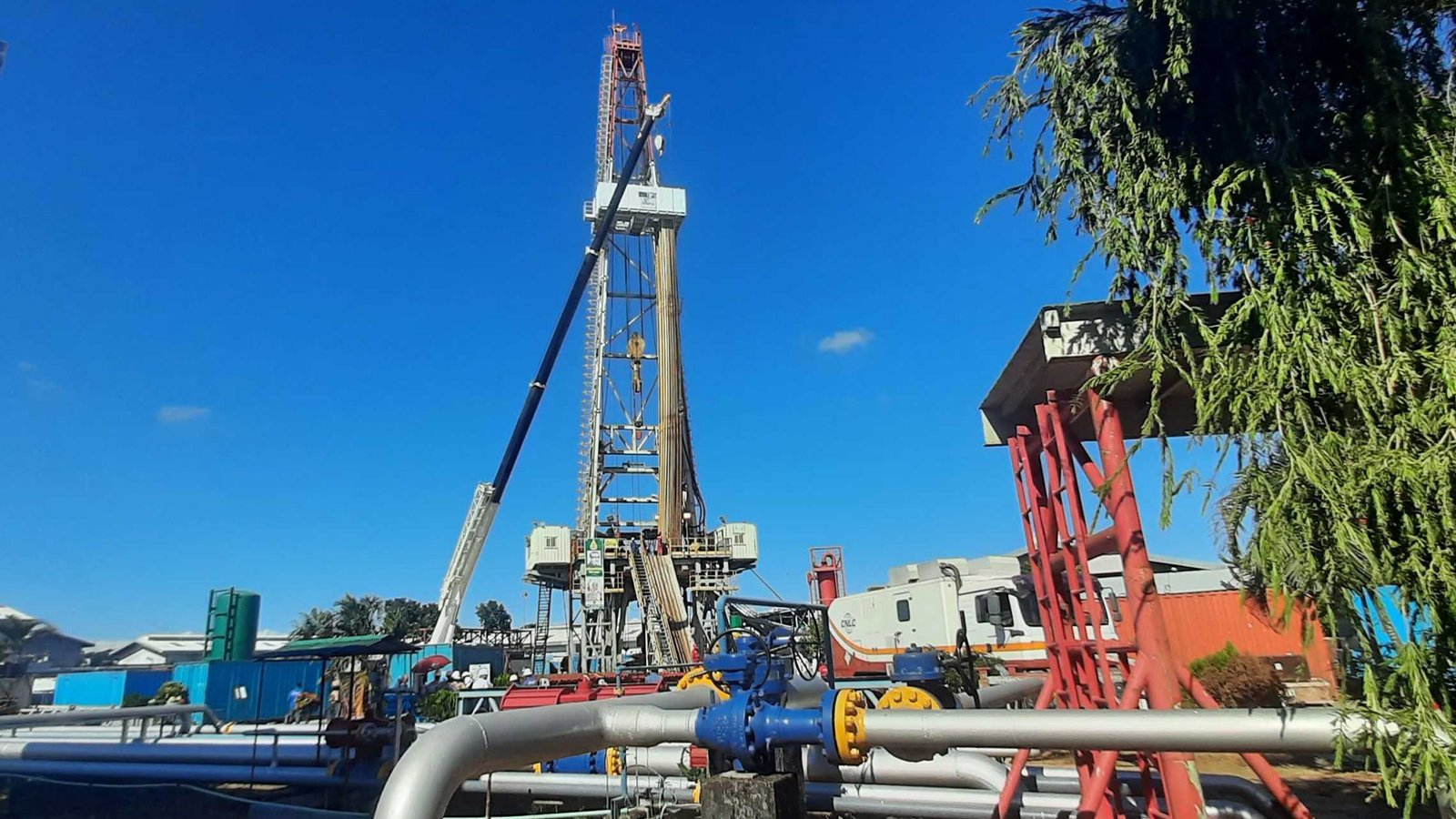
All concerned realize now that the sustainable supply of primary fuel is the major challenge in Bangladesh. Policymakers remain confused over mining local coal resources. Since 2000 successive governments hibernated in the exploration of petroleum resources offshore and virtually did very little onshore. Leaving potential resources buried underground, the government preferred going for imported coal and LNG risking global market price volatility and supply disruptions from regional and global geopolitics. The consequence is the government sweating to consistently meet the 16,000 MW peak and 14,000 MW average electricity demand despite possessing 27,791 MW grid-connected generation capacity. Gas and imported LNG dominate the fuel mix. The cause of concern is that the proven recoverable gas from the gas fields is depleting. The daily production and supply as of 21 October 2024 was 2,785.6 MMCFD. The coincident peak demand is 4,200 MMCFD. Two FSRUs supply 1,100 MMCFD if Bangladesh can purchase RLNG on time from the spot market to supplement LNG supply under long-term contracts. Production from local gas fields has depleted below 2,000 MMCFD. The government recently canceled a contract with Summit Energy to set up a new terminal at Maheshkhali. The government has also suspended negotiations with Excelerate Energy for RLNG supply from a deep-water LNG infrastructure 70 KM off the shore of Kuakata. The government has also suspended negotiations with H Energy and Saudi Bangla Pipeline Company to supply RLNG through a pipeline from India. Under these circumstances, increasing gas supply from own fields through successful implementation of two Petrobangla/BAPEX appears the only way forward at this stage for maintaining the production at the present level or increasing it as any other initiative for increasing LNG supply may take 3 years at least going through the formal bidding procedure. It is also not certain whether foreign investors will risk investing in this politically uncertain situation in Bangladesh. The only other option is to evacuate the stranded gas of Bhola Island to the national grid. This may also take three to four years if an appropriate decision is made now. The government has also canceled the contract with Gazprom to drill the Bhola gas field. This write-up will discuss the issues and challenges of Petrobangla/ BAPEX.
Gas Production Scenario: 16-17 October 2024
|
Gas Company |
Gas Fields |
Producing Wells |
Capacity MMCFD |
Production in 24 Hours MMCFD |
|
BGFCL |
05 |
44 |
851.00 |
541.40 |
|
BAPEX |
08 |
15 |
145.00 |
106.80 |
|
SGFL |
04 |
14 |
118.00 |
129.70 |
|
IOCs |
04 |
43 |
1615.00 |
1150.60 |
|
RPGCL |
2 FSRUs |
|
1100 |
741.90 |
|
5 Suppliers |
21 GF +2 FSRUs |
|
3829.00 |
2713.40 |
Note: Petrobangla must review the capacity of gas fields. Wells of BGFCL and IOCs do not have the capacity now as appears in the Petrobangla daily report. Bibiyana Gas Field alone produced 992.10 MMCFD during the 24 hours depleting from 1200 MMCFD. Due to the lack of LNG supply, the full capacity of FSRUs could not be utilized.
We know that BAPEX is now implementing 50 50-well drilling programs set to be completed by 2025. It has also taken up another 100 wells for completion in 4 years from 2025 to 2028. Given the past proven track records, this sounds highly optimistic. Experts have logically expressed skepticism. But when you have your back to the wall you have no choice but to try your best. Government agencies must provide all-out assistance to Petrobangla/BAPEX to achieve as much as possible in expeditiously approving DPP, allocating funds on time, creating special provisions for land acquisition, and providing other assistance to the executing agencies as and when necessary.
Summary of 50 Wells Drilling and Workover Project By 2025
The project target is to add 648 MMCFD new gas to the supply chain by the end of 2025 after the completion of the project. The project comprises 34 wells drilling and 16 workovers. Till 20 October, the drilling of 15 wells has been completed. These are Bhola North 2, Tobgi1, Ilisha 1, Srikail North 1, Shariatpur 1, Titas 24, Beanibazar 1, Koilashtila 2, Sylhet 10, Rashidpur 2, Sundalpur 3, Titas 14, Rashidpur 5, Koilashtila 8 and Begumganj 4 west. Nine new wells and 6 workovers have already added 176 MMCFD new gas to the reserve. 76 MMCFD new gas has already been added to the national gas supply.
Petrobangla and BAPEX have refreshed their strategy for executing the remaining drilling and workovers utilizing their rigs and outsourcing in a planned manner. BAPEX rigs will drill 11 wells and carry out 1 workover. 19 wells drilling will be outsourced. Among these, there are 4 deep wells. The success rate so far is very encouraging 86 percent. The work will be executed under 18 projects. Of these, 9 will be done by BAPEX. For the others, 9 drilling contractors will be engaged through the open tendering process. 9 DPPs have already been approved and 9 other revised DPPs are under the approval process. The interim government for the greater national interest must expedite the DPP approval process. This will enable BAPEX to initiate the tendering process as soon as practicable.
While talking with concerned Petrobangla officials, it was heartening to know that all 5 rigs of BAPEX are in operation now.
Status of BAPEX Rig Operation (14 October 2024)
|
Sl |
Rig |
Location |
Expected Completion |
Next Location |
|
1 |
Bijoy 10 |
Begumganj 4 West |
October 24 |
Jamalpoor 1 |
|
2 |
Bijoy 11 |
Titas 14 |
Completed |
Titas 10 |
|
3 |
Bijoy 12 |
Zakiganj 1 |
October 24 |
Srikail 3 |
|
4 |
Bijoy 18 |
Sylhet 7 |
October 24 |
Koillashtilla 1 |
|
5 |
IPS |
Kasba |
|
Sundalpoor |
It was heartening to note that all 5 BAPEX rigs were up and running. A well-planned rig engagement schedule has been worked out. At present BAPEX can organize 2 full drilling crews for exploration and engaging some former workers can also run a third well drilling operation simultaneously. BAPEX needs to recruit technical staff to organize additional crew.
Judging from the above and after intensive discussion with concerned Petrobangla officials, we are optimistic that BAPEX may complete the 50 wells drilling program if not in 2025 by the end of 2026 if everything goes according to the plan. But BAPEX /Petrobangla will require special government support and assistance in the approval of DPP, release of money, approval of contracts, acquisition of land, and other administrative support.
Summary of 100 Wells Drilling and Workover Program
BAPEX conducted 2D/3D seismic surveys across wide areas of Bangladesh a few years back. The data and information obtained from the surveys led to the preparation of resource mapping. However, the follow-up process was stalled for the reasons best known to the policymakers of the previous government. Only at the last stage of the past regime, the Petrobangla management realized the potential to launch the ambitious project, which many think is highly optimistic.
However, BAPEX, BGFCL, and SGFL identified 410 leads and prospects through interpreting the acquired seismic data. After a thorough examination, Petrobangla selected 100 wells for drilling and workover. An enthusiastic team of Petrobangla, BAPEX, BGFCL, and SGFCL encouraged Petrobangla to formulate the project and take the brave initiative.
Of the 100 wells, 69 will be new wells and 31 will be workovers. Of the wells, 52 were selected by BAPEX (14 in Bhola, 17 in Noakhali, Chandpur, and Feni, 6 in Chattogram Hill Tracts, 3 in Hinze Zone, 6 in Surma Basin, and 6 in Blocks 8 and 11.)
BGFCL selected 9 wells (6 in Brahmanbaria, 1 in Cumilla, and 2 in Habiganj). SGFL selected 8 Wells (1 in Koilashtila, 1 in Rashidpur, 4 in Beanibazar, and 2 in Sylhet).
The new drilling works will be executed under 15 projects. Of these BAPEX will execute 10, BGFCL 3, and SGFL 2. Of the 31 work overs BAPEX that will conduct 16 wells will be in BAPEX fields, 12 of BGFCL, and 3 of SGFL in 5 phases.
Of the 15 projects, 13 will be drilled through 5 projects on a priority basis within December 2027 in appreciation of their potential and proximity to the existing gas transmission grid.
BAPEX will drill 33 wells using its rigs, 10 wells will be drilled by hiring rigs along with required manpower and 26 wells will be drilled through outsourcing contractors through open tendering. Petrobangla and BAPEX expect to add 985 million new gas through the drilling of 69 new wells. 31 workovers can also sustain the present level of production from the wells.
Had such an initiative taken at least 5-6 years before, the energy supply situation could have been much better. Experts kept on suggesting expediting the exploration campaign utilizing the full capacity of BAPEX. But senior policymakers paid no heed. Petrobangla and BAPEX have thought of some innovations. They have identified correctly the issues that impede the progress of work. They need generous support and assistance from the government in the speedy approval of DPP and release of funds. They have also planned to engage competent organizations for land acquisition and drilling materials supply under a framework agreement. Engagement of internationally accredited organizations through competitive bidding will assist in executing the project on time.
Views and Opinions
One must appreciate the commendable initiative taken to expedite the exploration of petroleum resources. In Bangladesh, the reality is a huge challenge. Fortunately, the present interim government is positively motivated with no ulterior motives experienced during the previous regime. Achieving 100% within 2028 will still be a huge challenge. Even if the project is completed by 2030 that will be a huge bonus. The government will be relieved of exclusive dependence on imported fuel LNG and coal. Hope, in the meantime, some good news will come from offshore exploration and some major contribution will come from clean energy. Experts are requested to provide positive suggestions to Petrobangla for improving the project execution strategy.
Download Article As PDF/userfiles/EP_22_10_Article.pdf