Mollah Amzad Hossain with Afroza Akther Pervin, From Antalya, Tukey
ANTALYA, November 14, 2026: The first week of COP31 negotiations in Antalya has ended with limited progress towards bridging the long-standing divide between developed and developing countries over climate finance and a just transition. Although draft texts and informal negotiating notes have emerged across several agenda items, the central questions of who should provide climate finance, how much should be delivered and whether developing countries will receive additional support remain unresolved.
The negotiations have exposed a familiar divide: developing countries are demanding predictable, accessible and predominantly grant-based finance from developed nations, while developed countries are seeking broader approaches that include private investment, existing financial arrangements and contributions from a wider range of sources.
The publication of draft texts has brought these differences into sharper focus. The coming week will be crucial in determining whether COP31 can translate its ambition of becoming an implementation-focused summit into concrete decisions.
Climate finance: disagreement over responsibility and delivery
Climate finance has emerged as one of the most contentious issues of the first week. Developing countries have pressed for the Climate Finance Work Programme (CFWP) to focus on Article 9.1 of the Paris Agreement, which establishes developed countries’ obligation to provide financial resources to developing countries.
The G77 and China has called for a formal, structured process capable of producing practical outcomes rather than continuing discussions without clear commitments. It has stressed that public and grant-based finance must remain at the center of the climate finance agenda.
In its opening statement, the group expressed concern over the “insufficiency, inaccessibility and very low availability of climate finance” for developing countries. It also argued that financial support should match the needs and climate ambitions reflected in developing countries’ national climate plans.
The group wants the work program to address the scale and quality of finance, access barriers and the responsibilities of developed countries. It has also called for stronger replenishment of the Green Climate Fund, Adaptation Fund, Least Developed Countries Fund and Fund for Responding to Loss and Damage.
Developed countries, including the European Union, the United Kingdom, Canada, Norway and Switzerland, have taken a different approach. They favour a broader discussion covering different sources of climate finance, including private-sector investment and the mobilisation of capital, and argue that the existing work programme should continue under the mandate agreed at COP30 rather than being substantially reopened.
The disagreement concerns not only the source of finance but also the scope, duration and working arrangements of the program.
A first draft negotiating text circulated on November 14, running to 104 paragraphs, illustrates the differences. Its opening language reflects the developed countries’ preference for treating 2027 as the second and final year of the program. However, it also presents alternative options, including extending the process from COP31 to COP33 or leaving its duration for further discussion among parties.
The draft retains references to implementing Article 9.1 but also includes language on broadening the contributor base. These provisions remain contested.
Bertha Argueta, senior policy and advocacy officer for climate justice at Eurodad, said developing countries wanted a substantive discussion and outcome on Article 9.1 and the provision of public climate finance. She argued that the first year of the program had been an unstructured series of engagements without a clear scope or substantive outcome.
The question of adaptation finance has offered some common ground. Countries broadly support discussing the commitment to at least triple adaptation finance by 2035. However, developing countries want a clear baseline, delivery pathway and accountability arrangements.
Adaptation finance: the $120 billion question
The draft text on the Global Goal on Adaptation (GGA) has revealed another major fault line.
Developing countries, particularly African nations and vulnerable countries, want COP31 to establish a clear pathway for increasing adaptation finance to at least US$120 billion annually by 2035. They argue that the commitment to triple adaptation finance, agreed at COP30, must be translated into measurable financial delivery.
One option in the draft proposes using US$40 billion in 2025 as the baseline, with the amount rising to US$120 billion by 2035. Other options would leave out a specific financial provision or refer the issue to the separate Climate Finance Work Program.
The differences are significant. A specific baseline and target would provide a clearer basis for monitoring developed countries’ contributions. Leaving the matter to another negotiating process could delay agreement on how the commitment will be implemented.
The LDC Group and G77 and China have called for predictable, accessible and predominantly grant-based support. They argue that adaptation finance should not increase the debt burden of countries already facing severe climate risks.
AOSIS has also highlighted the chronic unpredictability of climate finance for small island developing states, calling for improved access to international climate funds and grant-based support for adaptation.
The positions of developed countries have been more cautious. Several have argued that adaptation finance should be considered in the broader context of the New Collective Quantified Goal (NCQG), rather than reopening elements of the agreement reached in Baku.
At the November 12 GGA discussions, Switzerland, the EU, Japan and South Korea stressed that the Climate Finance Work Program should not reopen or prejudge implementation of the NCQG. South Africa, meanwhile, argued that the program should provide a pathway to realize the existing climate finance goal.
The disagreement is therefore not over whether adaptation needs more resources, but over how the money should be provided, who should be accountable and where the decisions should be taken.
Just transition: mechanism without assured resources
The operationalisation of the Belém-Antalya Mechanism (BAM), established through the COP30 outcome, has become another major test of the negotiations.
Developing countries want the mechanism to become an effective institutional arrangement that provides technical assistance, technology transfer, capacity-building and access to finance for countries undertaking transitions towards low-carbon economies.
The G77 and China has called for a party-driven mechanism accountable to the Conference of the Parties serving as the meeting of the Parties to the Paris Agreement (CMA). It wants a clear governance and implementation structure capable of identifying developing-country needs and facilitating access to the resources required.
The group has also stressed that the mechanism must reflect the economic and social realities of developing countries, including poverty eradication, sustainable development and nationally determined transition pathways.
A central disagreement concerns whether BAM should function mainly as a coordination platform linking existing institutions or become an implementation mechanism capable of facilitating additional financial and technical support.
The EU, the Environmental Integrity Group and Japan have favoured using existing financial arrangements to avoid duplication. Several developing countries, however, argue that coordinating existing institutions will not be sufficient without additional, predictable and grant-based resources. South Africa has proposed a dedicated facility to improve the availability and quality of just transition finance.
The first informal negotiating note on the mechanism, released towards the end of the week, has drawn criticism from civil society groups over what they regard as its limited scope and insufficient emphasis on implementation and resources.
The review and continuation of the Just Transition Work Program (JTWP) have also generated differences. India, the African Group and G77 and China support extending the program beyond 2026, with developing countries proposing a three-year extension. The EU and UK have emphasized the need to clarify the respective functions of the work programme and the mechanism to avoid duplication.
There are also differences over the subjects that should guide future discussions. India and the Like-Minded Developing Countries (LMDCs), supported by G77 and China, have opposed the use of the term “food systems” in favour of “food production and food security”. The EU has argued for retaining the broader terminology.
The African Group has stressed support for smallholder farmers, fishers and coastal communities, while discussions on industrial transition have highlighted the importance of manufacturing capacity, employment, technology and access to markets.
Developed countries face pressure over climate obligations
The first-week negotiations have shown that developed countries have accepted the need to discuss adaptation finance and just transition, but have not agreed to the level of financial responsibility demanded by vulnerable nations.
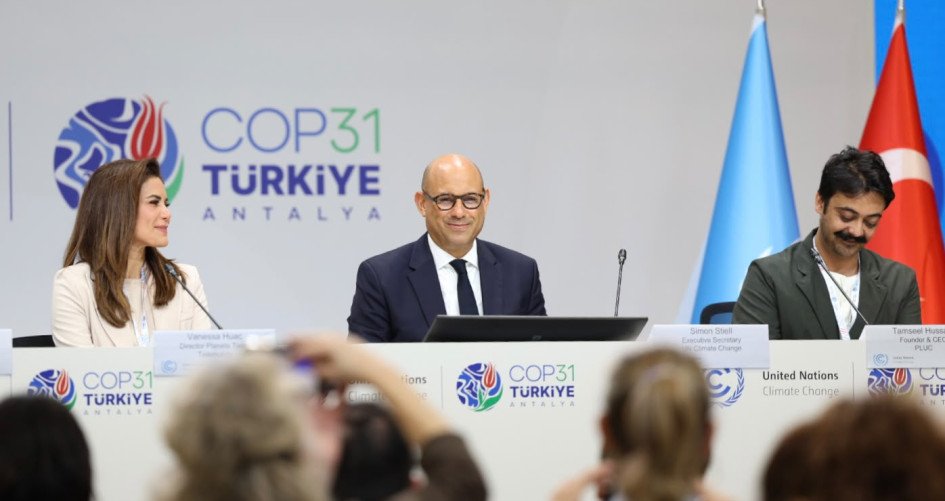
UN Climate Change Executive Secretary Simon Stiell warned that many developing countries were caught in a cycle of debt, climate disasters and high borrowing costs.
“Climate finance must help countries break free,” he said during the high-level ministerial dialogue on climate finance on November 13.
He argued that financing must reflect countries’ debt sustainability and national circumstances. While private finance, loans and guarantees would remain important, he stressed that grant-based and highly concessional finance was critical for LDCs, small island developing states and other vulnerable economies.
Stiell also called for simpler access procedures and better coordination among financial institutions, warning that developing countries faced complex administrative requirements across fragmented funding programs.
His remarks reflected growing recognition of the access problem, although they did not resolve the central disagreement over the obligations of developed countries.
LDCs and AOSIS seek stronger outcomes
The LDC Group has maintained that COP31 must deliver finance that reaches the countries most exposed to climate impacts. Its priorities include stronger mitigation ambition, implementation of national adaptation plans, accessible climate finance and adequate support for loss and damage.
The group has called for adaptation finance to be tripled to at least US$120 billion annually well before 2035. Its Chair, Ambassador Adão Soares Barbosa, said: “Our expectation for COP31 is clear: stronger action to limit warming, finance that reaches our countries, and decisions that help protect our people.”
The LDCs have also expressed concern over changes to negotiating language on their specific circumstances. During discussions on November 13, they objected that a revised text on matters related to LDCs had weakened references to the challenges they face and urged parties to return to the earlier version.
AOSIS has focused on predictable finance, improved access to funding institutions and the protection of island communities. It has also called for the replenishment of the Green Climate Fund and implementation of the outcomes of the first Global Stocktake.
At the Adaptation Fund negotiations, AOSIS, the LDCs and landlocked developing countries stressed that decisions concerning the Fund’s membership and transition arrangements should not delay its continued operation. Developing countries also raised concerns over a serious shortfall in contributions.
Civil society: ambition must come with finance and accountability
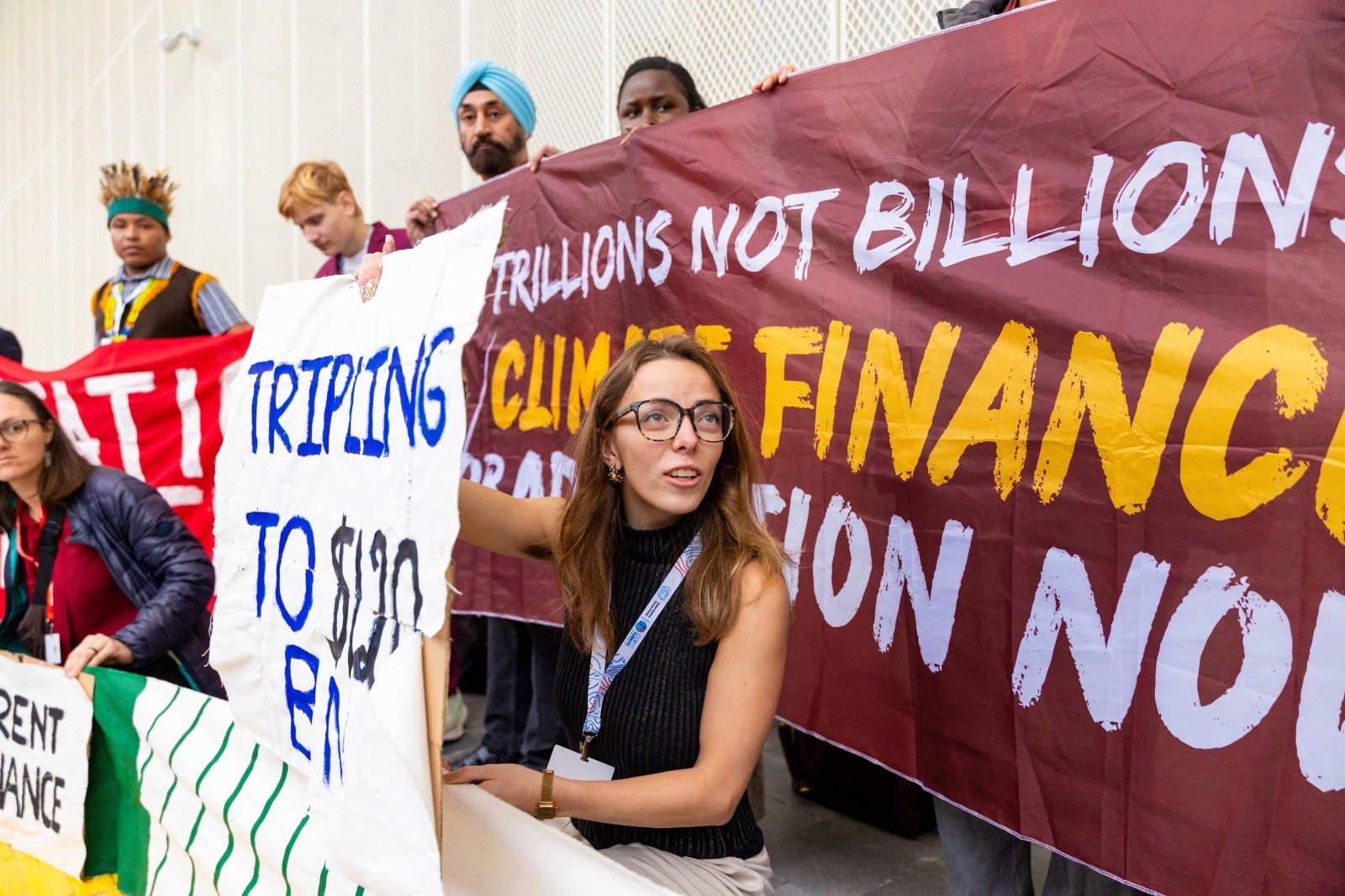
Civil society organisations have expressed frustration over the slow pace of negotiations and the limited financial commitments emerging from the first week.
Greenpeace International said the talks had been heavy on rhetoric but short on ambition, particularly on accelerating the transition away from fossil fuels and delivering climate finance.
Jasper Inventor, Head of the Greenpeace COP31 Delegation, said governments were repeating entrenched positions rather than finding ways to bridge their differences. He criticised the time spent on procedural disputes instead of decisions needed to address the climate crisis.
Climate Action Network (CAN) International has also warned that the proposed Just Transition Mechanism risks being weakened. At a press conference on November 14, Denise Cauchi, CEO of Climate Action Network Australia, said the mechanism needed a strong institutional structure capable of mobilising resources and ensuring meaningful civil society participation.
“We need a strong institution that can respond to requests for matchmaking and resource mobilisation, and that ensures meaningful participation of civil society in decision-making,” she said.
CAN’s broader demand is that workers, Indigenous Peoples, young people, women and marginalised communities must have a meaningful role in shaping transition policies.
More than 700 organisations from 88 countries have also called for a strong Belém-Antalya Mechanism, emphasising human and labour rights, decent work, gender equality, financial and technical support, and participation by affected communities.
Meanwhile, the People’s Climate Summit and other civil society groups have called for public, debt-free climate finance, a just transition away from fossil fuels and stronger accountability for countries historically responsible for emissions.
Cover decision exposes wider political divisions
The COP31 Presidency’s first “reflections” document on a possible cover decision has brought together proposals from different negotiating groups. However, it is not an agreed draft decision and does not represent consensus.
The proposals include addressing the 1.5°C temperature overshoot, mitigation gaps, adaptation, loss and damage, climate finance, electrification, methane emissions, forests and oceans.
Developing countries have called for explicit recognition of developed countries’ obligations under Article 9.1 and stronger support for adaptation and loss and damage. The LDC Group has urged the inclusion of concrete adaptation measures, replenishment of climate funds and mechanisms to track progress.
The African Group has warned against language that could weaken the principle of common but differentiated responsibilities and respective capabilities. It has also opposed electrification targets without adequate means of implementation.
The EU, on the other hand, has called for the cover decision to avoid creating new mandates and to reflect challenges in implementing the first Global Stocktake, including the transition away from fossil fuels.
The Arab Group has cautioned against top-down sectoral targets and energy pathways that could interfere with nationally determined priorities. It has also criticised developed countries for failing to meet financial pledges and called for an end to unilateral trade measures.
Second week will determine whether COP31 delivers
The first week has produced draft texts, informal notes and a clearer picture of the political divisions, but no major breakthrough on the central demands of climate-vulnerable countries.
There is some convergence on the need to increase adaptation finance, continue the Just Transition Work Program and establish a mechanism to support implementation. However, the critical questions of finance, governance, accountability and the responsibilities of developed countries remain unresolved.
For Bangladesh and other climate-vulnerable countries, the outcome will be measured not by the number of initiatives announced but by whether new and accessible resources are made available for adaptation, resilience, loss and damage and a fair transition to cleaner energy.
The second week will therefore be decisive. Ministers arriving for the high-level negotiations will have to address the differences that technical negotiators have been unable to resolve. Without clear financial commitments and implementation arrangements, COP31 risks falling short of its ambition to turn climate promises into action