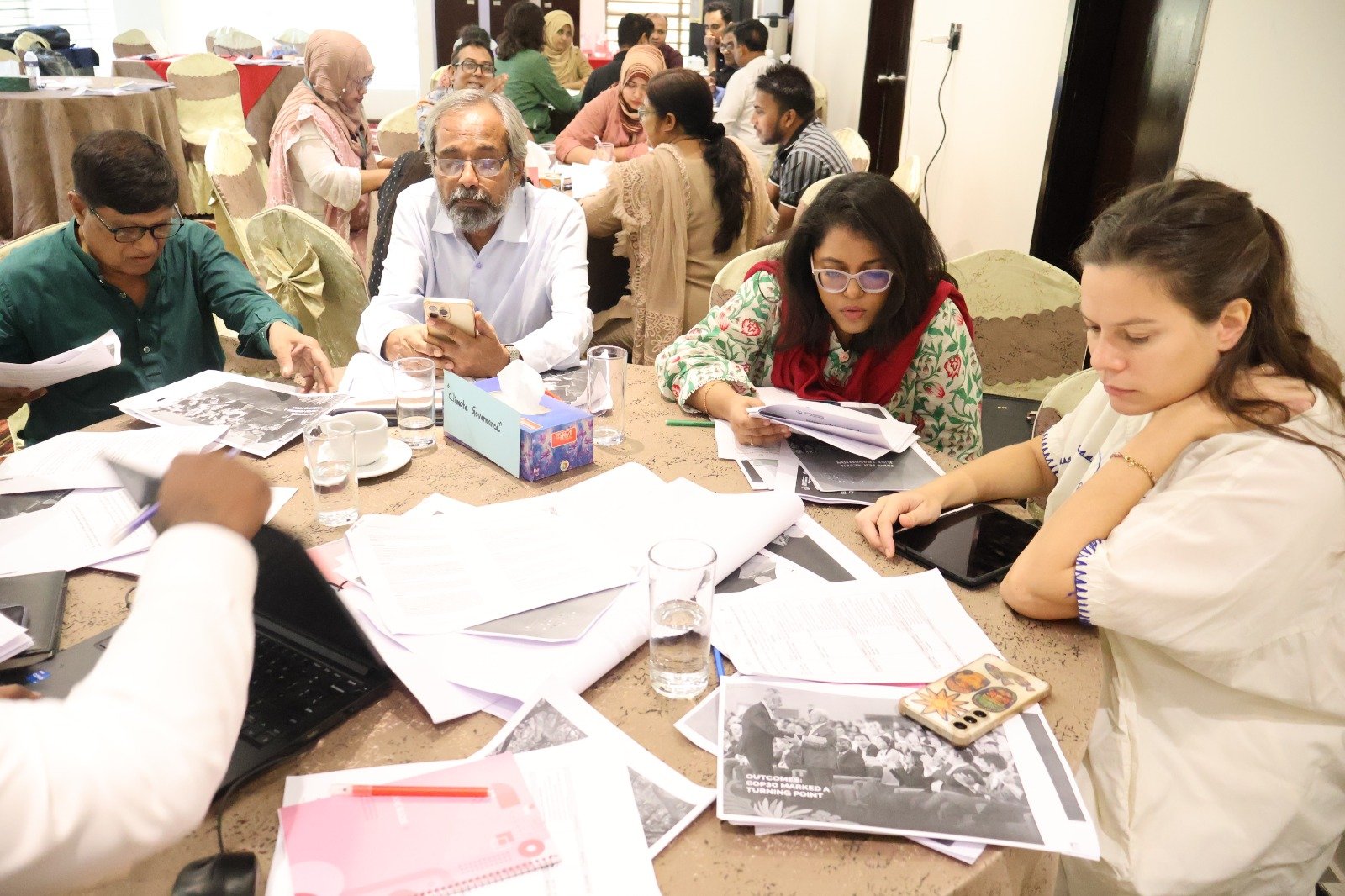
Dhaka, September 27, 2026: Bangladesh’s position for the upcoming COP31 climate conference should incorporate workers’ rights, social protection, workplace safety, decent employment, skills development and climate resilience, speakers said at a consultation in Dhaka.
They said climate change is already affecting workers through heat stress, reduced working hours, unsafe workplaces and growing livelihood risks. Workers’ priorities should therefore be reflected in the government’s country position paper for COP31 as a key component of Bangladesh’s just transition agenda.
The views were expressed at a workshop titled “Worker Position Paper for COP31” held at After Hours Residence in Banani on Sunday. The event was organised by Manusher Jonno Foundation (MJF) and the National Alliance for Just Transition Bangladesh (NAJTB), with support from Oxfam and the Bangladesh Labour Foundation (BLF), the joint Secretariat of NAJTB. Bangladesh Institute of Labour Studies (BILS), a NAJTB member, also participated.
As part of MJF’s Fashion Forward project, the organisation joined the consultation to promote a fair, inclusive and worker-responsive transition in Bangladesh’s apparel sector.
Elisa Benistant Fremigacci, Technical Officer, Just Transitions at ILO Bangladesh, said COP31 is being framed as the “COP of implementation” and stressed that workers in Bangladesh need to push for concrete policy commitments and their effective implementation.
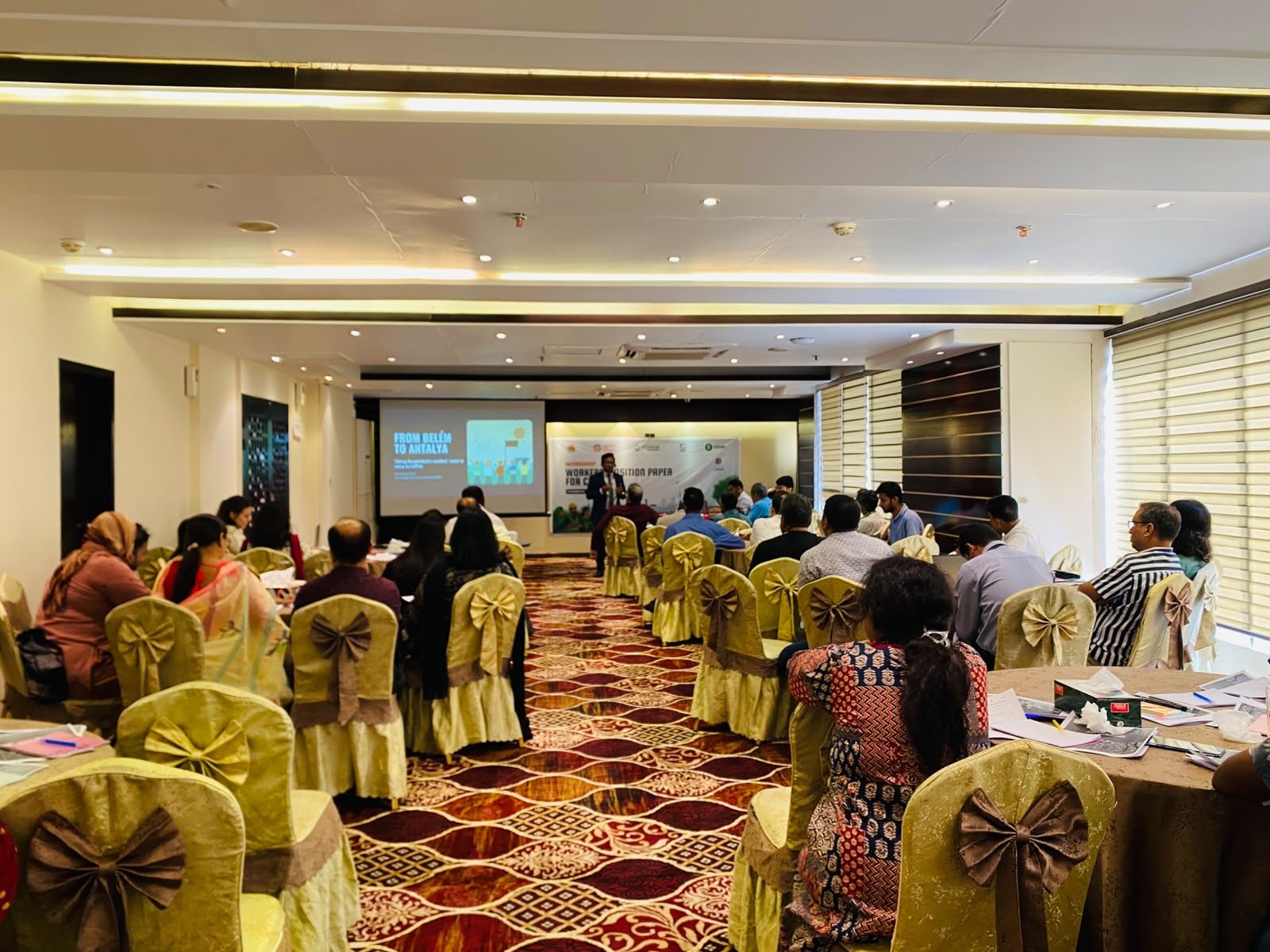
She called for dedicated financing, meaningful social dialogue, direct worker representation and accountability in implementing the just transition provisions of Bangladesh’s Nationally Determined Contributions (NDCs).
Md Muhtasim Billah, Senior Program Officer at Oxfam Bangladesh, said a just transition should not be limited to shifting energy systems. It must also protect workers’ rights, strengthen social protection and ensure decent work standards across sectors.
AKM Ashraf Uddin, Executive Director of BLF and Member Secretary of NAJTB, said the direct participation of worker and employer representatives in COP negotiations would be an important step forward. He said NAJTB, which brings together nearly 60 civil society and trade union organisations representing around 20 sectors, is preparing a unified Workers’ Charter of Demands for COP31.
Presenting the keynote paper, Mir Mohammad Ali, Assistant Professor at Sher-e-Bangla Agricultural University, said extreme heatwaves and other climate hazards are already causing significant losses for workers and the wider economy.
He recommended incorporating the Workers’ Charter into the government’s COP31 position paper, including provisions for paid heat-rest breaks, social security, skills development and worker representation in Bangladesh’s official COP delegation.
Zubaer Alam, Program Officer at BLF, said consultations with youth groups, trade unions and government committees would be conducted by mid-October to develop a Workers’ Position Paper based on workers’ experiences and priorities.
Pablo Narudha, Project Coordinator of Fashion Forward at MJF, said MJF has been working with workers for more than two decades to protect their fundamental rights and stressed that their priorities must be reflected in national climate policies.
Wasiur Rahman Tonmoy, Lead, Youth and Social Cohesion at MJF, said workers’ voices should be translated into clear, evidence-based and actionable recommendations. He said MJF would continue promoting human rights through worker-led evidence generation, youth engagement and policy advocacy.
Syed Sultan Uddin Ahmed, Executive Coordinator of NAJTB and Executive Director of BILS, also stressed the need to incorporate workers’ demands into Bangladesh’s COP31 position paper.
The workshop was part of a broader consultation process. Further consultations will be held with youth and government stakeholders, after which the recommendations will be consolidated and aligned with the government’s COP31 position paper for final submission.
Representatives of trade unions, civil society organisations, development partners and other stakeholders attended the workshop.