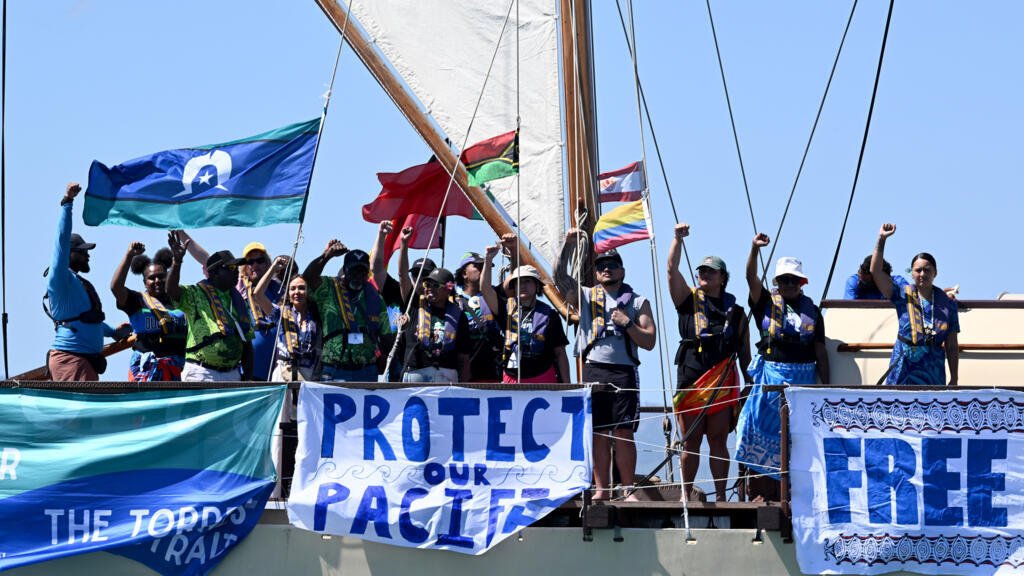
EP Desk
Nadi, Fiji, 8 October 2026: The Pacific Pre-COP concluded in Fiji on Thursday with a strong call for practical climate action, placing Pacific priorities at the center of preparations for the COP31 climate summit in Antalya, Türkiye, next month.
Held from 5–8 October and co-hosted by Fiji and Australia, the Pre-COP brought together ministers and senior officials from around the world. More than 4,000 participants from over 100 countries took part in 25 sessions, hundreds of bilateral meetings and 135 side events, alongside the Vale Ni Vanua knowledge-exchange program.
The meeting adopted the Taku Pakasoa Declaration, a Pacific-led call for unity and stronger action to keep the 1.5°C goal within reach. The declaration highlights climate resilience, finance, implementation and Pacific leadership as key priorities for COP31.
Climate finance and resilience featured prominently. New commitments to the Pacific Resilience Facility included US$10 million from Fiji, US$2.3 million from Denmark and US$1.1 million from Solomon Islands. Ireland announced its intention to nearly double its existing €3 million pledge, while the United Kingdom committed £10 million and the Netherlands €1 million to the facility.
Fiji also launched a five-year carbon market plan aimed at strengthening its capacity to participate in international carbon markets and attract additional climate finance. It also unveiled a national action plan for coral reef conservation.
Australia announced a US$7.29 million package through the Australia-Pacific Partnership for Energy Transition to accelerate renewable energy deployment across Pacific island countries, including support for grid planning, skills development and regulatory capacity. Australia and Vanuatu also signed an agreement to support Vanuatu’s renewable energy transition.
A further US$3 million was announced for the Climate Infrastructure for Resilient Coastlines and Riverbanks initiative, combining nature-based solutions with resilient infrastructure to protect communities and critical infrastructure from coastal erosion and flooding.
Access to climate finance emerged as another major concern. Despite more than US$16 billion in climate finance commitments to Pacific countries since the Paris Agreement, more than US$5 billion remains undisbursed. Australia launched an Access to Finance Statement and Action Plan aimed at making climate finance faster, simpler and more accessible to vulnerable communities.
Electrification was identified as a key pathway for reducing emissions, improving energy security and lowering energy costs. Australia backed Türkiye’s goal of increasing electricity’s share of global final energy consumption to 35% by 2035 and endorsed a new global initiative aimed at expanding rooftop solar access to at least 300 million households by 2030.
Ocean and climate action also emerged as a major priority. Türkiye confirmed it would work towards an Antalya Ocean Declaration at COP31 to strengthen recognition of the ocean-climate link and advance ocean-based solutions.
The Pre-COP also built support for a COP31 presidency-led decision focused on keeping 1.5°C within reach, accelerating implementation and strengthening international cooperation. Proposed priorities include electrification, climate finance, early warning systems, forests, oceans and waterways, alongside implementation of the Paris Agreement and the pathway towards mobilizing US$1.3 trillion in climate finance.
The outcomes of the Pacific Pre-COP provide a political and practical launchpad for COP31, with Pacific countries seeking to ensure that the experiences and priorities of climate-vulnerable communities translate into concrete decisions and financing at the Antalya summit.