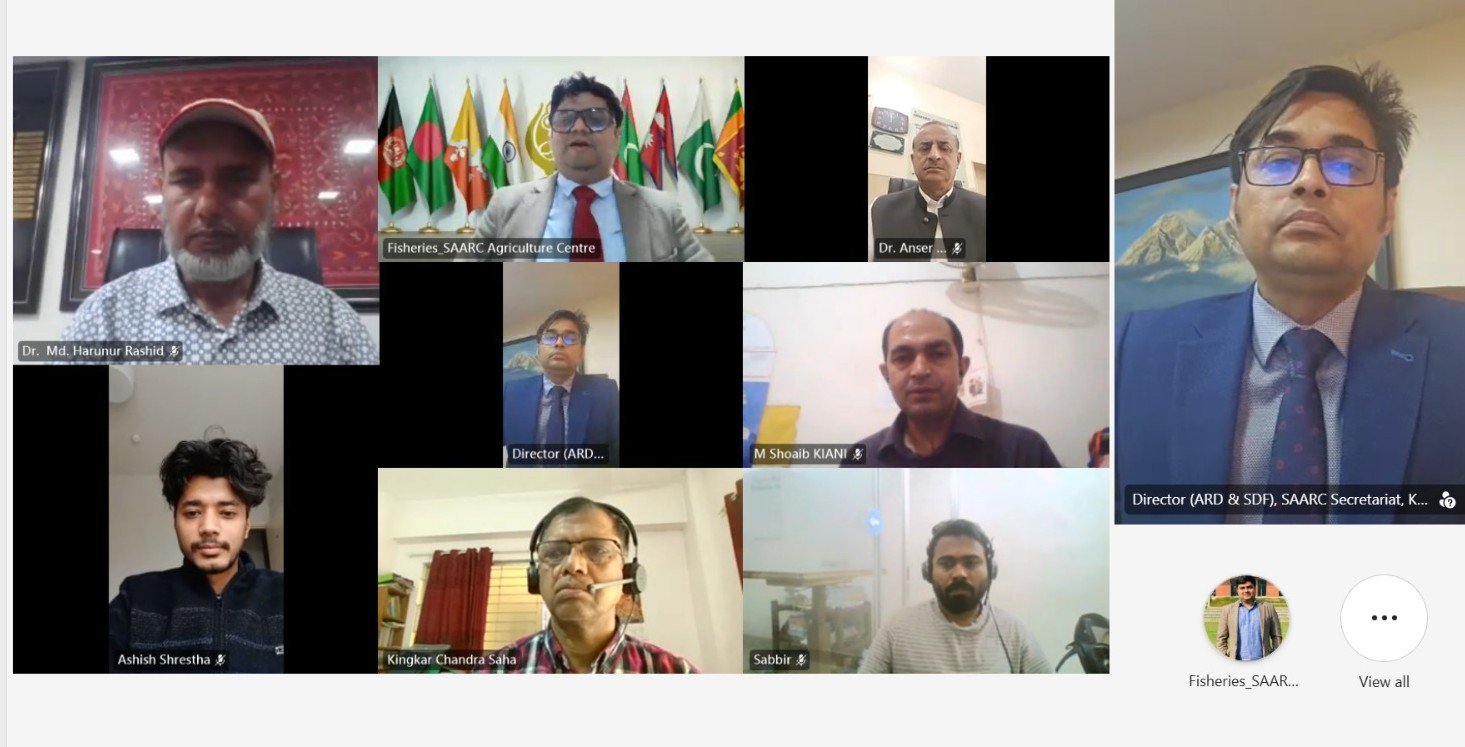
SAARC Agriculture Centre (SAC) organized a regional webinar titled Climate Change and Fisheries in South Asia on Tuesday (10 March 2026), bringing together experts from across the region to discuss the growing impacts of climate change on marine and freshwater fisheries and possible adaptation strategies.
The speakers at the event were Dr. Sevvandi Jayakody, Chair Professor in the Department of Aquaculture and Fisheries at Wayamba University, Sri Lanka and Dr B K Das, Director of ICAR-CIFRI, Barrackpore, India.
Dr. B K Das highlighted that climate variability is also impacting freshwater fisheries by altering river flow and aquatic habitats, and emphasised the importance of adaptive management and sustainable resource use. Dr Sevvandi Jayakody noted that climate change is affecting marine and coastal fisheries through rising sea temperatures and extreme weather, stressing the need for stronger research and regional cooperation.
In his welcome remarks, SAC Director Dr. Md. Harunur Rashid said climate change is increasingly affecting fisheries and aquatic ecosystems across South Asia. Rising temperatures, erratic rainfall, floods and changes in water quality are putting additional pressure on fish production and the livelihoods of millions who depend on the sector. He stressed the importance of strengthening regional collaboration, knowledge sharing and research to build climate-resilient fisheries systems.
In his concluding remarks, Mr. Tanvir Ahmad Torophder, Director (ARD and SDF) of the SAARC Secretariat, emphasized the importance of regional cooperation in addressing the impacts of climate change on fisheries. He noted that fisheries play a vital role in food security, nutrition and livelihoods across South Asia and called for stronger collaboration among SAARC member states to promote sustainable and climate-resilient fisheries management.
The webinar moderated by Dr. Md Shariful Islam, Senior Program Specialist (Fisheries), SAC.
He discussed the specific challenges faced by South Asian fisheries, including salinity intrusion in coastal areas, changing hydrological patterns and increasing climate variability. He emphasized the need for integrated management approaches and regional cooperation to support sustainable fisheries and protect the livelihoods of fishing communities.
The webinar concluded with an interactive discussion where participants from different SAARC countries and others shared experiences and perspectives on addressing climate change impacts in the fisheries sector. Experts stressed that coordinated regional efforts and climate-smart management practices will be key to ensuring the sustainability of fisheries in South Asia.