VOLUME 24 ISSUE 11
Download Link for Energy & Power Vol 24 Issue 11/userfiles/EP_24_11.pdf
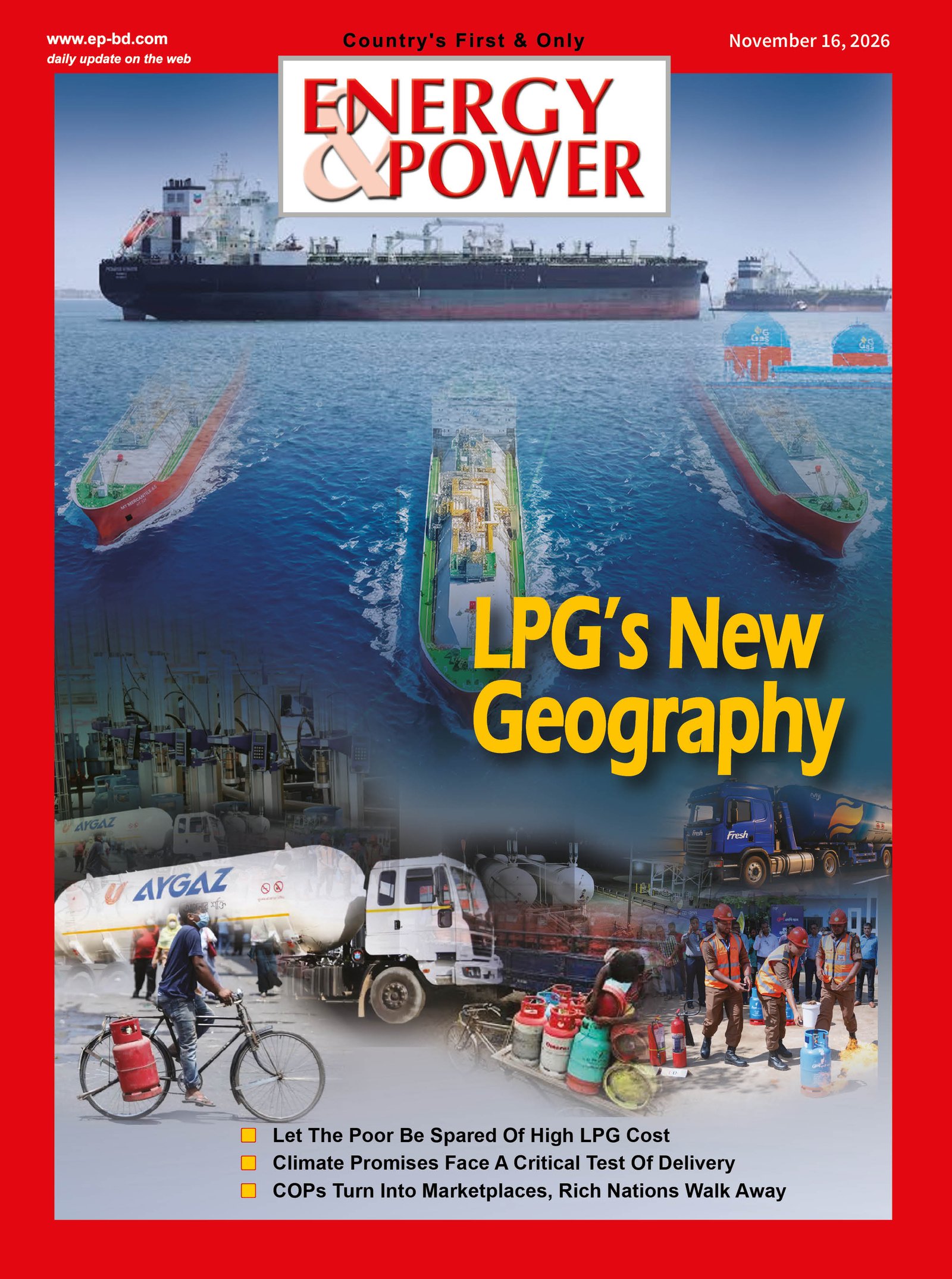
Bangladesh’s growing dependence on US LPG supplies reflects a major realignment in global energy trade. The shift has helped importers cope with disruptions in the Middle East, but it has also exposed the country to longer shipping routes, higher freight costs and greater international market volatility. For a country where nearly 12 million consumers depend on LPG, this is not merely a commercial concern; it is an energy-security challenge. The immediate priority should be to ensure uninterrupted supplies without allowing the burden of higher import costs to fall disproportionately on consumers. Diversifying sources beyond the United States, developing long-term supply contracts and expanding storage capacity would reduce exposure to disruptions. The government must also address foreign-exchange and banking constraints that prevent licensed operators from importing cargoes. Consumers continue to pay substantially more than BERC's officially fixed prices. While importers and distributors may legitimately seek margins that reflect rising operational costs, any proposed adjustment must be supported by transparent, verifiable accounts. Higher margins cannot become a substitute for improving efficiency or ensuring compliance. BERC must strengthen market surveillance, investigate artificial shortages and overcharging, and ensure that price adjustments reflect genuine costs. The government, meanwhile, needs a coherent LPG security strategy that connects international sourcing, import financing, infrastructure development and domestic market regulation.
The lesson from the current disruption is clear: securing cargoes is only part of energy security. Bangladesh must also ensure that supplies remain reliable, competition is meaningful and consumers can afford the fuel on which they depend.
For E-Book: