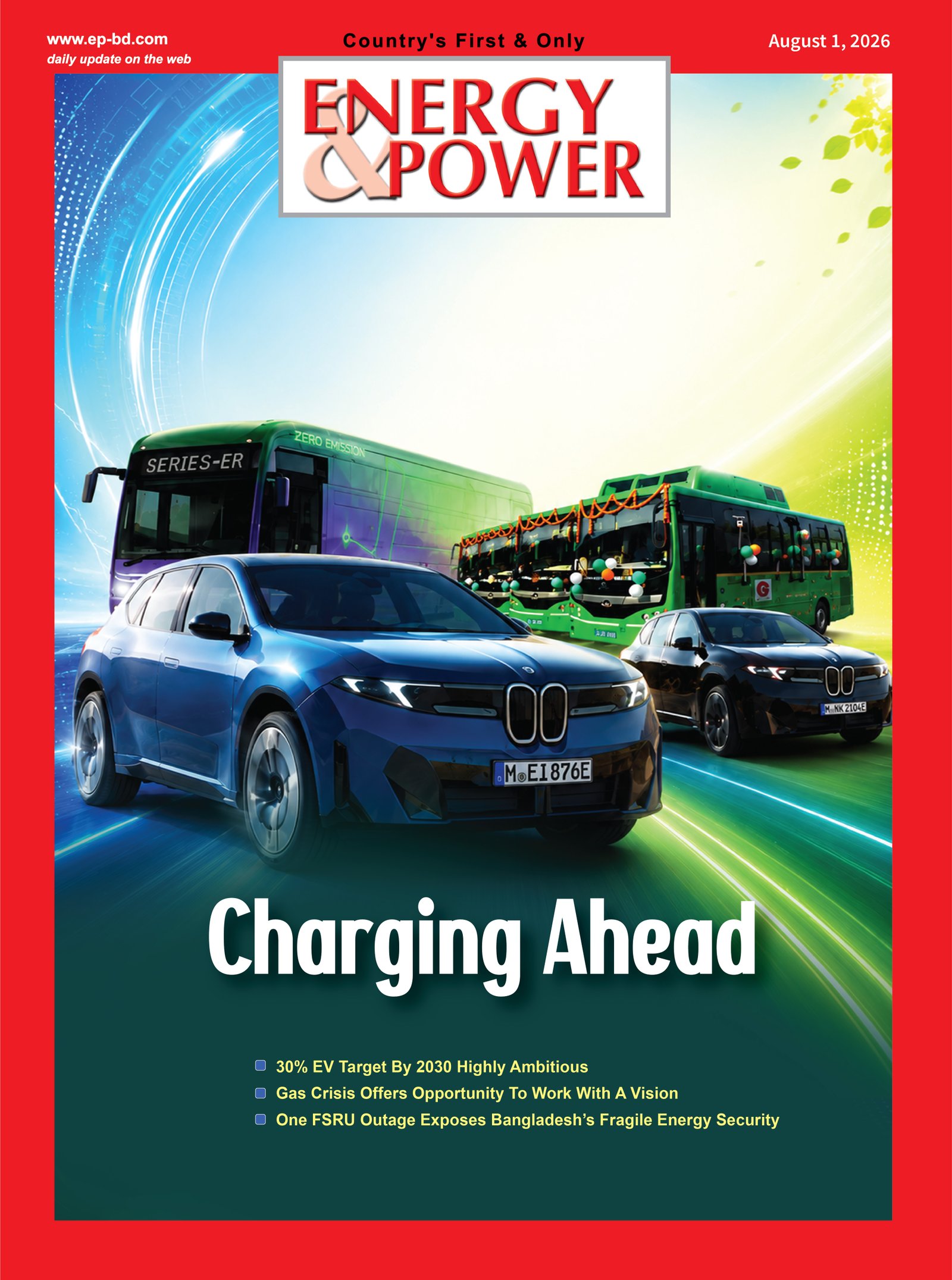
VOLUME 24 ISSUE 04
Download Link for Energy & Power Vol 24 Issue 04/userfiles/EP_24_04.pdf
The transition to electric mobility is no longer simply an environmental aspiration; it is becoming an economic necessity for Bangladesh. Every year, the country spends billions of dollars importing petroleum products while grappling with volatile global fuel prices and persistent energy insecurity. Electrifying the transport sector offers an opportunity to reduce import dependence, improve urban air quality, strengthen industrial competitiveness, and support long-term climate objectives. The recent policy initiatives—including tax incentives, plans to electrify public transport, and support for domestic manufacturing—are encouraging. Equally promising is the growing interest from local conglomerates and international investors in establishing EV assembly plants, battery manufacturing facilities, and charging infrastructure. Together, these developments could lay the foundation for a new industrial ecosystem capable of generating employment, attracting investment, and advancing technological innovation. Yet policy ambition alone will not guarantee success. The country still lacks a comprehensive charging network, affordable financing for consumers, skilled technical personnel, and an effective battery recycling system. The transition will also require a more resilient electricity grid capable of supporting increased demand without compromising reliability.
Public transport should remain the centerpiece of the country's EV strategy. Electrifying buses and government vehicle fleets can deliver immediate economic and environmental benefits while building public confidence in electric mobility. The challenge is no longer whether electric vehicles will become part of the country's transport future, but whether policymakers, industry, and investors can move quickly enough to build the infrastructure, institutions, and manufacturing capacity needed to make that future both affordable and sustainable.
For E-Book: https://enp.tiny.us/Aug1Y26