VOLUME 23 ISSUE 17
Download Link for Energy & Power Vol 23 Issue 17/userfiles/EP_23_17(1).pdf
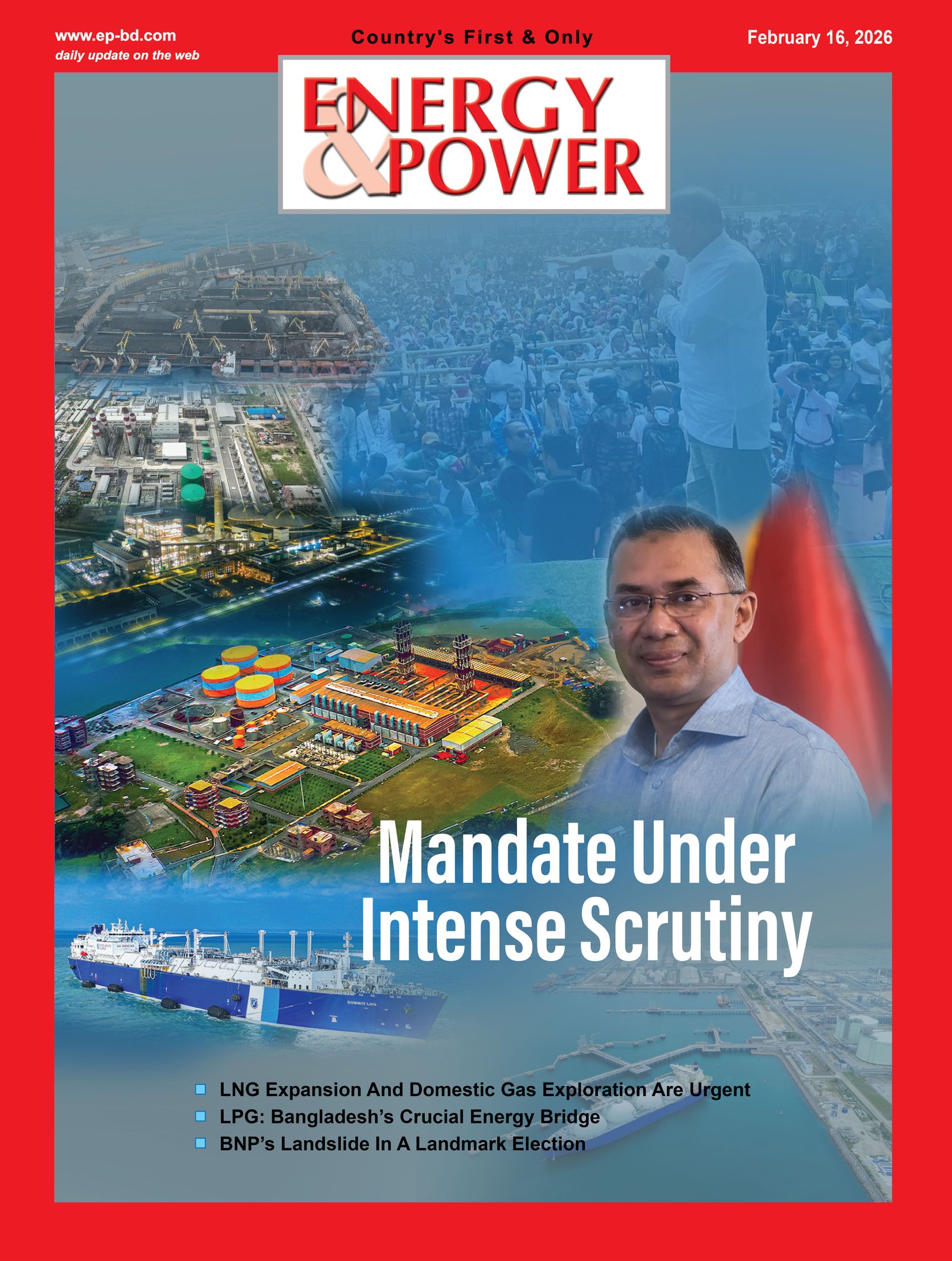
The BNP’s overwhelming electoral victory offers political stability at a time when Bangladesh’s power and energy sector stands on fragile ground. Yet a strong mandate alone will not keep the lights on. The new government inherits a system burdened by rising import dependence, declining domestic gas production, growing arrears, and subsidy pressures that strain the national budget. Installed generation capacity may exceed demand on paper, but fuel shortages, unpaid bills, and infrastructure bottlenecks threaten real-world supply, especially during Ramadan and the summer peak. Short-term firefighting will be unavoidable. Clearing arrears, securing foreign currency for imports, and ensuring uninterrupted LNG and coal supply are immediate priorities. But the real test lies in reform. Domestic gas exploration must accelerate, Production Sharing Contracts must be finalized, LNG infrastructure decisions must be revisited, and renewable expansion must be placed on a realistic but urgent footing. Subsidy reduction cannot rely solely on tariff hikes in an already high-cost environment. Instead, supply costs must fall through better fuel mix decisions, phasing out expensive oil-based generation, and maximizing lower-cost alternatives. Perhaps most critically, investor confidence must be restored. Policy reversals and uncertainty have shaken trust. Stability and predictability will determine whether new capital flows into the sector.
The government’s promise to create 15 million jobs depends fundamentally on reliable, competitively priced energy. Economic growth cannot occur in the dark. If the new administration succeeds in stabilizing and reforming the energy sector, it will lay the foundation for broader national progress.
For E-Book: https://enp.tiny.us/Feb16Y26