VOLUME 23 ISSUE 16
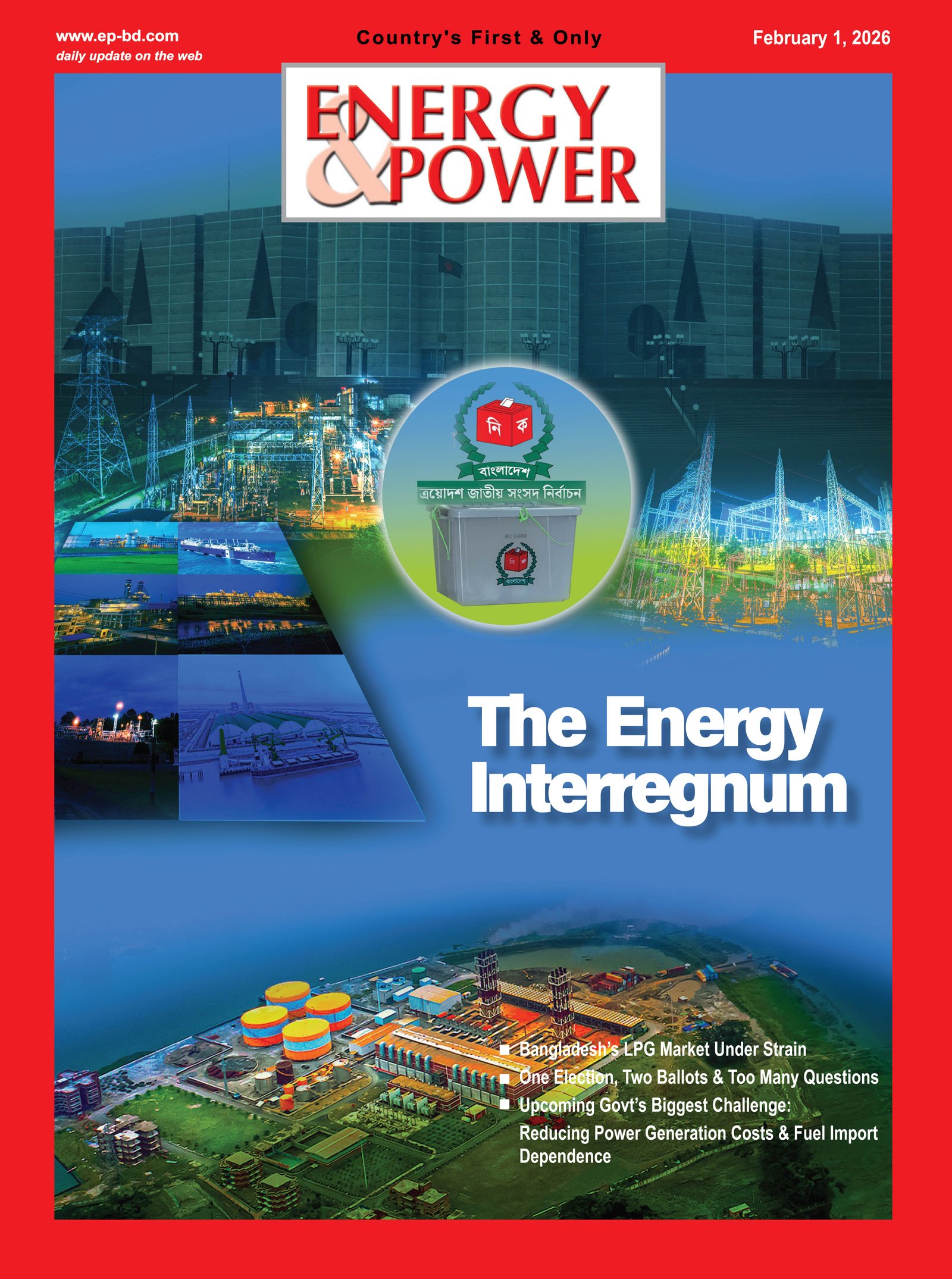
Download Link for Energy & Power Vol 23 Issue 16/userfiles/EP_23_16.pdf
Political transitions are often measured in weeks or months. Energy crises, by contrast, unfold over years—and worsen when leadership hesitates. Bangladesh now finds itself in an energy crisis: the old order has collapsed, the new one has yet to take shape, and the power and gas sector is drifting without clear direction. The sector is burdened by rising import dependence, ballooning subsidies, unpaid dues, and eroding institutional capacity. Yet election campaigns have focused more on price promises than on hard choices. Assurances of “no tariff hikes” ring hollow without a roadmap to reduce costs, boost domestic supply, or restore financial discipline. The danger of this situation is delay. Every month without decisions deepens losses, weakens public utilities, and disrupts industry. Gas shortages are already cutting industrial output, while electricity generation costs continue to climb due to overcapacity, fuel misallocation, and currency pressure. None of this will correct itself once a new government is sworn in. What Bangladesh needs is not another cycle of short-term fixes, but early consensus on long-term priorities: accelerating domestic gas exploration, using coal and gas efficiently, sharply reducing reliance on furnace oil, and scaling up renewables with urgency. Equally important is restoring transparency, ending policy exemptions, and rebuilding trust in sector governance.
Transitions can be moments of reset, or of drift. If energy policy remains hostage to political caution, this interregnum will harden into a prolonged crisis. The next government must act quickly, decisively, and collectively. Energy security cannot wait for political comfort.
For E-Book: https://enp.tiny.us/Feb1Y26