VOLUME 23 ISSUE 06
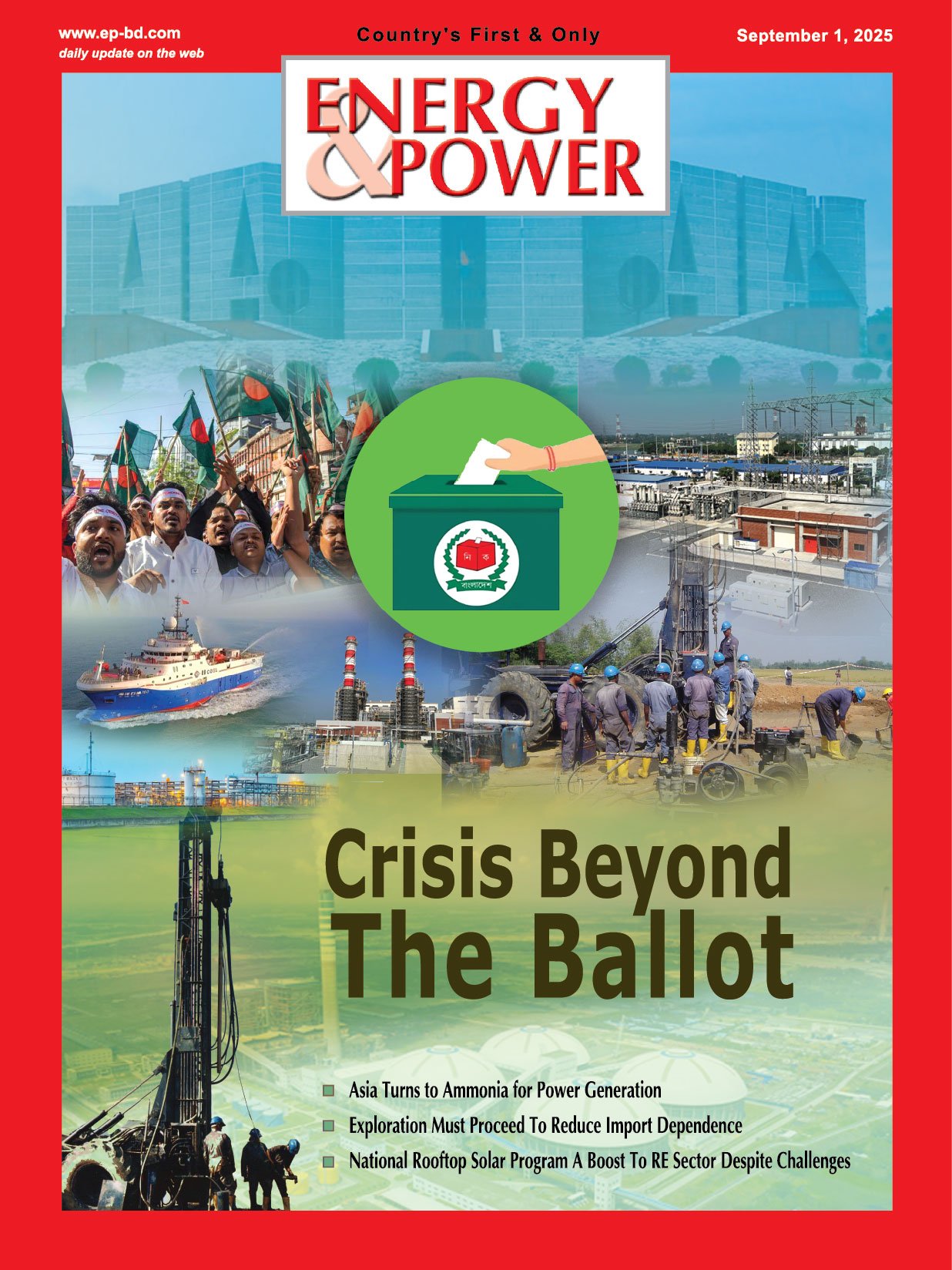
Download Link for Energy & Power Vol 23 Issue 05 (September 1, 2025) as PDF/userfiles/EP_23_06_F.pdf
As Bangladesh moves toward national elections in February, political debate has rightly shifted to campaign pledges and alliances. But beyond the ballot box lies a test that will define the country’s economic future: restoring stability to the power and energy sector. For years, successive governments have promised reforms yet failed to deliver. Generation capacity has increased, but fuel supply, transmission, and distribution have been left behind. Industries now grapple with power outages and gas shortages, while mounting subsidies have strained public finances. Corruption and ad hoc policymaking have only deepened the crisis. The interim government has managed to reduce outstanding dues and taken cautious steps toward renewables, but the sector’s underlying weaknesses remain. With electricity demand set to rise sharply and domestic gas production in decline, the next government cannot afford delays. Without reliable, affordable energy, job creation, exports, and investment will inevitably falter. This moment requires more than campaign rhetoric. Political parties must move past broad promises and present clear, workable strategies that address fuel supply, reduce import dependence, and modernize distribution systems. Transparency and accountability must be central, not optional.
Bangladesh’s economy rests on the strength of its energy system. As voters look ahead to February, they deserve not just pledges but credible plans that will ensure power for industries, households, and the nation’s growth. Whoever forms the next government must treat energy reform as the first order of business—because without it, the rest of the agenda cannot move forward.
For E-Book: