Bangladesh’s gas sector is once again at a crossroads. After decades of under-exploration, mismanagement, and missed opportunities, the country now faces a crisis that can no longer be dismissed as temporary or cyclical. With production declining and demand climbing, the question is no longer whether Bangladesh has a gas problem, but whether its institutions are capable of solving it.
Despite sitting atop one of the least explored deltas in the world, Bangladesh has failed to assess its true resource potential. Offshore prospects remain virtually untouched, onshore structures only partially explored, and several discovered fields still underdeveloped. Meanwhile, proven reserves are expected to run out by 2030, and LNG imports, costly and constrained by infrastructure, cannot fill the gap for long.
Without decisive reforms and a credible exploration strategy, the country risks sliding into a prolonged era of structural energy insecurity.
It goes without saying that the long-standing crisis in the gas supply chain is rooted in Petrobangla’s chronic lack of institutional competence. Bangladesh remains one of the least explored riverine deltas in the world. While the country is certainly not “floating on petroleum,” it is equally unscientific, and irresponsible, to conclude that the country no longer possesses significant untapped energy resources. Onshore prospects remain only partially explored, offshore areas are virtually untouched, and even many discovered fields have not been fully developed.
According to Petrobangla’s daily production report (12–13 November 2025), total gas supply stood at 2,638 MMCFD, of which 872.90 MMCFD came from re-gasified LNG (RLNG). Local production totaled 1,765.10 MMCFD. Petrobangla-operated companies produced 703.90 MMCFD from 17 fields, while IOCs supplied 1,061.20 MMCFD from four fields. Bhola’s fields remain disconnected from the national grid. Against a coincident demand of 4,200 MMCFD, the system is running a staggering deficit of roughly 1,500 MMCFD.
Petrobangla’s reports also confirm that several power and fertilizer plants remain idle due to inadequate supply, while domestic production from existing fields continues to decline at an alarming pace.
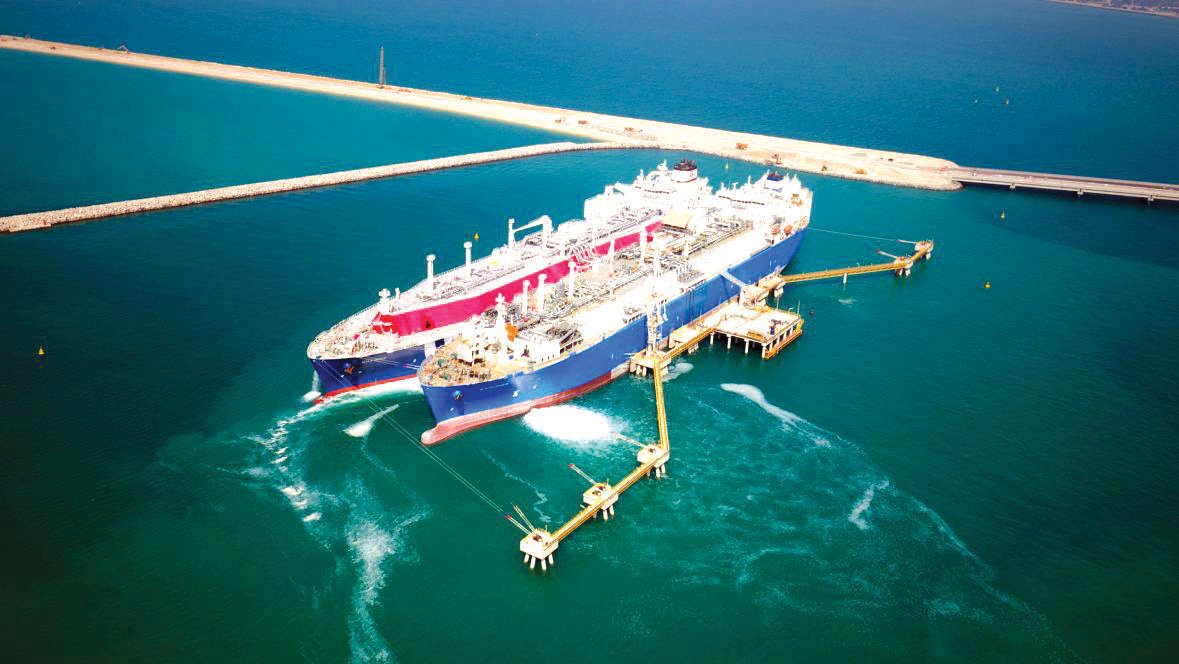
With no realistic possibility of adding new LNG-import infrastructure before 2029—and with proven reserves likely to run out by 2030 unless substantial new discoveries are made—Bangladesh’s gas supply outlook appears grim. Unfortunately, Petrobangla’s initiatives, past and present, have consistently failed to deliver meaningful relief. Even the ongoing “50 wells” (by 2026) and “100 wells” (by 2028) drilling programs do not inspire confidence. Progress in engaging IOCs offshore and onshore remains sluggish despite updated Model PSCs.
In this context, achieving energy security—particularly gas security—appears increasingly uncertain.
Energy Policy, Exploration Strategy, and Depletion Planning
Countries that have successfully leveraged natural resources for development have done so through comprehensive energy policies and long-term exploration strategies. Bangladesh, despite eight decades of gas-sector history and five decades of independence, still lacks a coherent national energy policy, a structured exploration strategy, and a depletion plan.
Most major fields were discovered by IOCs before independence. Early milestones, the creation of BOGMC (later Petrobangla) and the launch of the first offshore PSC round in 1974, were significant. Yet successive governments failed to translate these steps into sustained exploration or systematic capacity-building.
BAPEX, intended to evolve into the national flagship exploration company, was never allowed to mature into a competent E&P entity. Compared with PETRONAS, Pertamina, CNPC, CNOOC, ONGC, or Petrovietnam, Petrobangla and BAPEX fall far short. Even so, Bangladesh’s discovery success ratio in the prolific eastern basin was once an impressive 1:3.
Between the 1970s and 1990s, dynamic leadership enabled steady progress. Despite scandals (Scimitar, SAIPEM, NIKO), major fields such as Bibiyana, Shabajpur, and the Shangu offshore field were discovered.
The period from 1996 to 2001 saw significant expansion in gas and power infrastructure. But weak human-resource planning, political interference, and the rise of corrupt “energy syndicates” subsequently eroded institutional integrity. From 2001 to 2024, Bangladesh failed to undertake even the minimum required exploration efforts.
Diversifying away from a mono-fuel dependence on domestic gas was a sound decision. However, the government simultaneously failed to develop domestic coal or accelerate exploration. By the mid-1990s, dozens of IOCs participated in PSC rounds. But controversies, including the questionable award of Block 9 to Tullow and the NIKO scandal, undermined investor confidence. A High Court-imposed embargo on onshore IOC exploration further crippled the sector.
Between 2008 and 2024, bureaucratic interference and poor strategic direction prevented Petrobangla from attracting meaningful IOC interest either onshore or offshore. LNG imports, adopted as a short-term fix, saddled the country with long-term exposure to extreme price volatility. Since 2000, Bangladesh has consumed about 14 TCF of proven gas, replacing it with less than 4 TCF of new discoveries. Meanwhile, Bhola’s sizable resources remain stranded without a grid connection.
Excessive reliance on imported LNG is already straining the economy and cannot sustainably meet Bangladesh’s long-term energy needs.
Petrobangla’s Current Initiatives: Too Little, Too Late?
Awami League governments, despite more than 16 years in office, failed to plan or deliver a credible exploration roadmap. The 2009 initiative for accelerated exploration collapsed due to Petrobangla’s lack of technical and managerial capacity.
Engaging Russia’s GAZPROM to drill development wells, tasks BAPEX could have executed with proper support, proved costly and unnecessary. The ambitious “108-well program” (2016) faltered almost immediately, as experts had predicted.
In 2019, a 50-well program was approved for completion by 2025. Before meaningful progress materialized, Petrobangla launched another plan for 100 additional wells by 2028. Neither program’s current status justifies optimism.
BAPEX has made modest progress through workovers and recompletions. The Jamalpur-1 discovery in Block 8 is a positive milestone. Additional delineation wells are planned. Sylhet-10 identified crude oil traces, prompting the drilling of Sylhet-12 to assess commercial feasibility.
To unlock Bhola’s potential, Petrobangla plans to drill 19 new wells and develop a dedicated industrial hub. Drilling of four deep wells is ongoing under BGFCL and BAPEX. Parallel seismic surveys are underway. Five BAPEX rigs and three turnkey rigs are currently in operation.
While Petrobangla and EMRD now appear more proactive, concerns persist about institutional capacity and available technical manpower. Exploration carries inherent risks, but Bangladesh has no choice but to pursue aggressive exploration immediately.
To salvage the situation, the drilling campaign must receive top national priority, including:
· Increased budgetary allocations
· Temporary tax exemptions or reductions for Petrobangla
· Fast-track land acquisition for drilling sites
· Special import duty reductions for drilling equipment
· Accelerated hiring of drilling contractors and rigs
Bangladesh cannot afford “dry-hole disasters” caused by inadequate geological data. A credible new PSC bidding round, offshore and onshore, must be launched by early 2026. If 10 exploration rigs (BAPEX and IOCs) can be mobilized by the end of 2026, between 50 and 75 exploration wells could be drilled by 2030.
Political parties preparing for future governance must treat energy security as a core national security priority. A coordinated national mission, free from vested interests, is essential. Petrobangla must re-engage with IOCs to rebuild investor confidence and attract risk capital.
Download Cover Article As PDF/userfiles/EP_23_11_Cover_Article.pdf