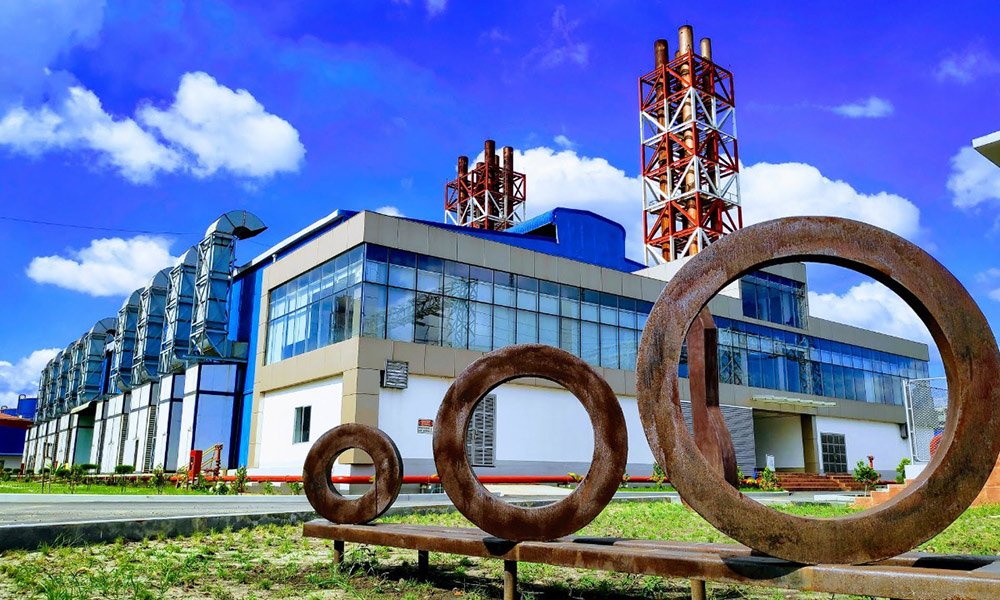
The failure of the interim government over the past 18 months has deepened Bangladesh’s power and energy crisis. The new administration, which is set to take office shortly, must immediately confront mounting challenges in managing electricity demand amid severe fuel supply constraints and limited financial resources.
The irrigation season has begun alongside Ramadan, and temperatures are already rising. Electricity demand is increasing steadily and is expected to surge from March through October. Summer 2026 may not be as mild as last year, with forecasts predicting several heatwaves. Peak demand could reach 18,000 megawatts (MW).
Although installed generation capacity appears sufficient on paper, the real constraint lies in fuel shortages and foreign currency limitations for importing coal, LNG, and liquid fuels. At present, the system cannot sustainably generate even 16,500 MW of quality power. Combined domestic gas production and imported LNG supply stand at around 2,700 MMCFD, against demand of nearly 4,000 MMCFD. Significant improvement in the short term is unlikely. The incoming government faces an urgent and complex task in stabilizing the sector.
Past 18 Months in Retrospect
After assuming office, the interim government repealed the non-transparent Speedy Supply of Power and Energy Act and restored the Bangladesh Energy Regulatory Commission’s (BERC) authority to determine fuel and electricity prices. Beyond that, however, meaningful reform was limited.
The sector remains dominated by an underperforming bureaucracy, while entrenched interests continue to influence policy and operations. The recent nationwide LPG crisis is a stark example of systemic weaknesses. Although the government initially eased pressure by clearing large outstanding payments to fuel and power suppliers, arrears have again ballooned.
Fuel supply conditions deteriorated further. Domestic gas production declined, no progress was made in utilizing local coal, and engagement with international oil companies for onshore and offshore exploration stalled. Development of the third Floating Storage and Regasification Unit (FSRU) and a land-based LNG terminal has seen frustrating delays.
.jpg)
Sweeping management changes at the Rooppur Nuclear Power Plant slowed project completion, while the cancellation of Summit Group’s third FSRU contract eliminated the possibility of adding 500 MMCFD of regasified LNG by 2027. No decision has been taken on transmitting discovered gas from Bhola Island to the national grid.
Though the interim government spoke frequently about energy transition and renewable expansion, tangible progress was minimal. A white paper alleged widespread corruption—claiming up to 30% cost inflation in power and energy projects—yet no concrete cases have been prosecuted.
The National Review Committee reported that nearly 9,500 MW of stranded capacity costs about $1.5 billion annually, largely due to one-sided contracts signed under the 2010 special act. It recommended renegotiating such agreements, including the Adani Power deal. The report argued that the sector’s distress stems more from structurally flawed contracts than global fuel price volatility.
The outgoing administration acknowledged the findings but cited time constraints for inaction, leaving the responsibility to the next government.
Challenges for the New Government
The incoming government—led by the BNP after securing a two-thirds parliamentary majority—has prior experience managing the sector. However, it will have no honeymoon period. By mid-April, demand could rise from 16,000 MW to 18,000 MW, with an expected deficit of 1,500–2,000 MW during peak months.
Petrobangla must ensure at least 1,200 MMCFD of gas supply to enable 8,500–9,000 MW of gas-based generation. Efficient plants at Meghnaghat and Sirajganj should operate in priority merit order, while facilities at Ashuganj, Ghorashal, and Bibiyana remain available for grid stability. Imported coal plants must run at full capacity, particularly in the southern and southeastern regions, securing 14,000–15,000 MW of baseload supply.
Liquid fuel–based plants, capable of generating about 3,000 MW, should remain ready for peak support. Power imports may contribute 2,000–2,500 MW. The commissioning of Rooppur’s first 1,200 MW unit would provide significant relief, though operational realities may complicate grid management. Load shedding and demand-side austerity measures may still be necessary.
Meanwhile, outstanding payments in the power sector have climbed again to around BDT 30,000 crore. These arrears must be cleared promptly to ensure independent power producers, especially furnace oil–based plants, remain operational during peak demand.
Policy Priorities
Energy security must become a top political priority. A full-time energy and power minister should oversee the sector, supported by separate state ministers for power and energy.
Key actions should include:
* Commissioning Rooppur’s first unit by mid-2026 and the second by early 2027.
* Expanding rooftop solar to at least 2,000 MW by end-2026.
* Accelerating BAPEX’s drilling program, completing 50 wells by 2026 and 100 by 2028.
* Reviewing and potentially reinstating the third FSRU project.
* Conducting extensive 2D and 3D seismic surveys and launching new exploration bids by mid-2026.
* Approving updated production-sharing contracts (PSCs) for offshore and onshore exploration.
* Deciding on construction of the Bhola-Barishal-Khulna gas transmission pipeline.
Bangladesh must finalize and adapt its Integrated Gas and Power System Master Plan to reflect domestic realities. While advancing clean energy, the country should pragmatically utilize its own gas and coal resources with modern technologies.
Currently, 56% of Bangladesh’s combined power and energy supply depends on imports, costing about $20 billion last year—including debt servicing. This year’s requirement may rise to $24 billion. Reducing import dependence through domestic resource development is therefore essential.
Conclusion
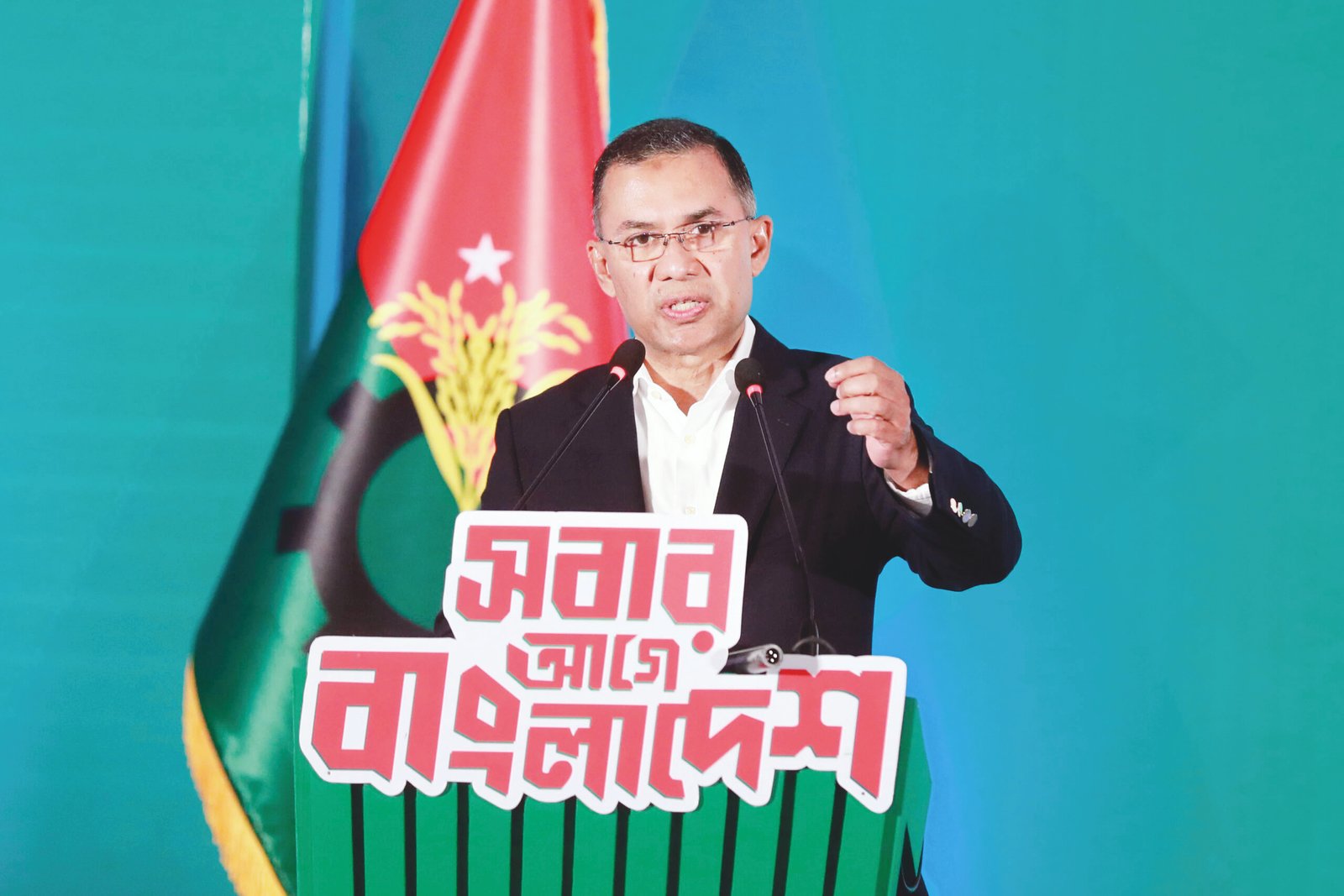
The new government is expected to assume office within days, with BNP Chairman Tarique Rahman likely to become prime minister. The administration has reportedly prepared sectoral reform plans, including for power and energy.
Its foremost challenge will be overcoming the primary energy deficit by boosting domestic exploration and optimizing resource use while scaling up renewables. At the same time, subsidies must be reduced through cost rationalization and improved coordination.
Ultimately, sustainable energy security—reliable, affordable, and high-quality supply—must guide policy. Without decisive action, economic growth and employment generation will remain at risk.
Download Cover Article As PDF/userfiles/EP_23_17_CA.pdf