Bangladesh will require an additional Tk 42,600 crore in subsidies for the oil, gas, electricity, and fertilizer sectors in the outgoing fiscal year (2025-26) due to the impact of ongoing conflicts in the Middle East and resulting volatility in global energy markets, Finance Minister Amir Khosru Mahmud Chowdhury told National Parliament on Tuesday. Report BSS
Responding to a question in the Jatiya Sangsad, the finance minister said rising international prices of fuel, LNG, and fertilizers have significantly increased the government’s subsidy burden and import costs.
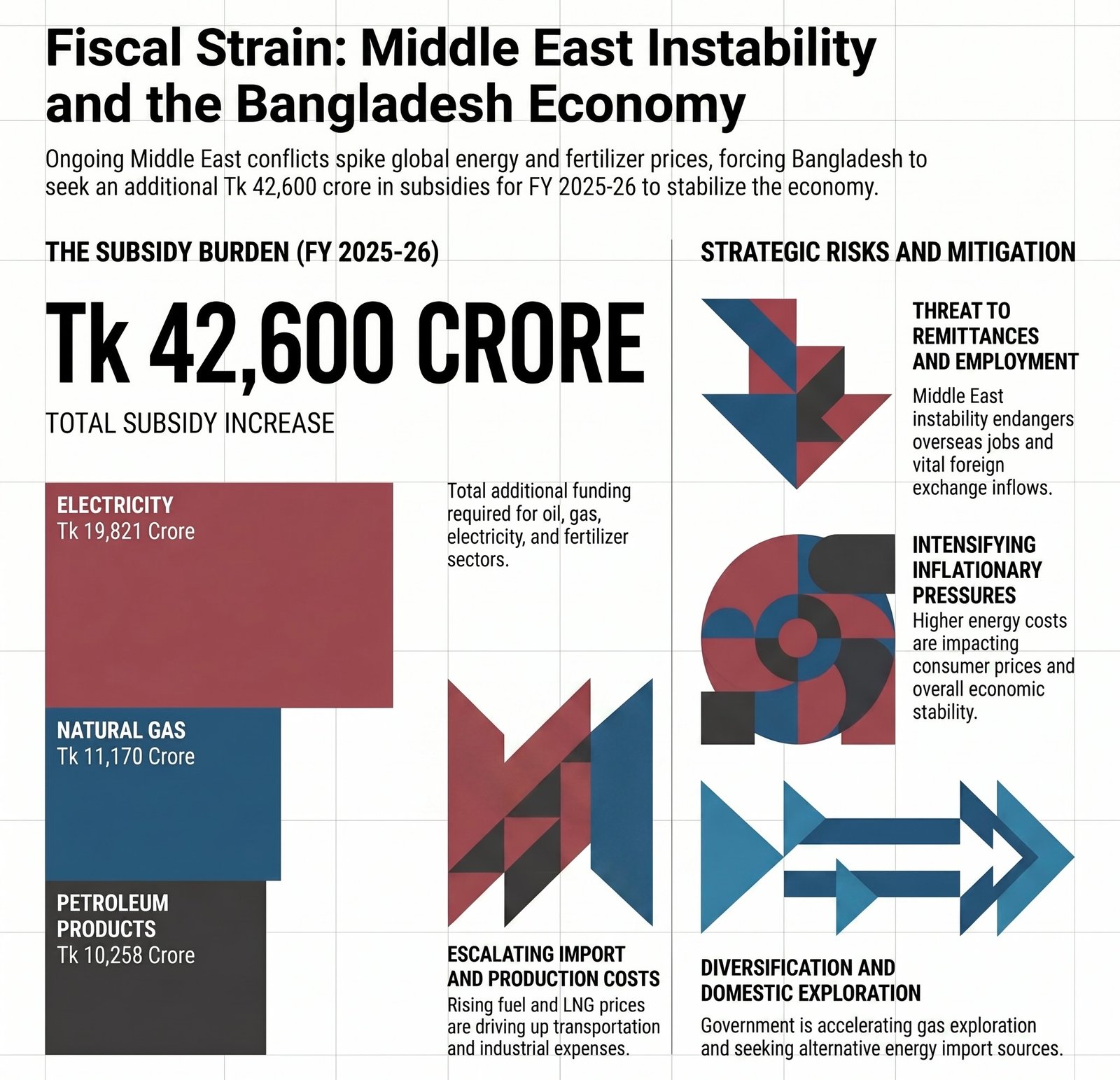
According to preliminary estimates, the additional subsidy requirement includes Tk 10,258 crore for petroleum products, Tk 11,170 crore for natural gas, Tk 19,821 crore for electricity, and Tk 1,350 crore for fertilizers.
Khosru warned that continued instability in the Middle East, including tensions involving Iran, poses both immediate and long-term risks to Bangladesh’s economy. The impacts are already being felt through higher fuel and fertilizer import costs, increased transportation and production expenses, inflationary pressures, and challenges in foreign exchange management.
He noted that higher energy prices could further raise costs across the power, transportation, agriculture, and industrial sectors, ultimately affecting consumer prices and economic stability.
The finance minister also expressed concern over potential risks to remittance inflows and overseas employment, as the Middle East remains one of the largest destinations for Bangladeshi migrant workers.
To mitigate the impact, the government is pursuing a range of measures, including diversifying energy import sources, accelerating domestic gas exploration, ensuring stable supplies of essential commodities, strengthening foreign exchange management, and exploring alternative overseas labor markets.
The additional subsidy burden underscores the vulnerability of Bangladesh’s energy-dependent economy to global geopolitical shocks and highlights the growing fiscal pressure created by fluctuations in international fuel markets.