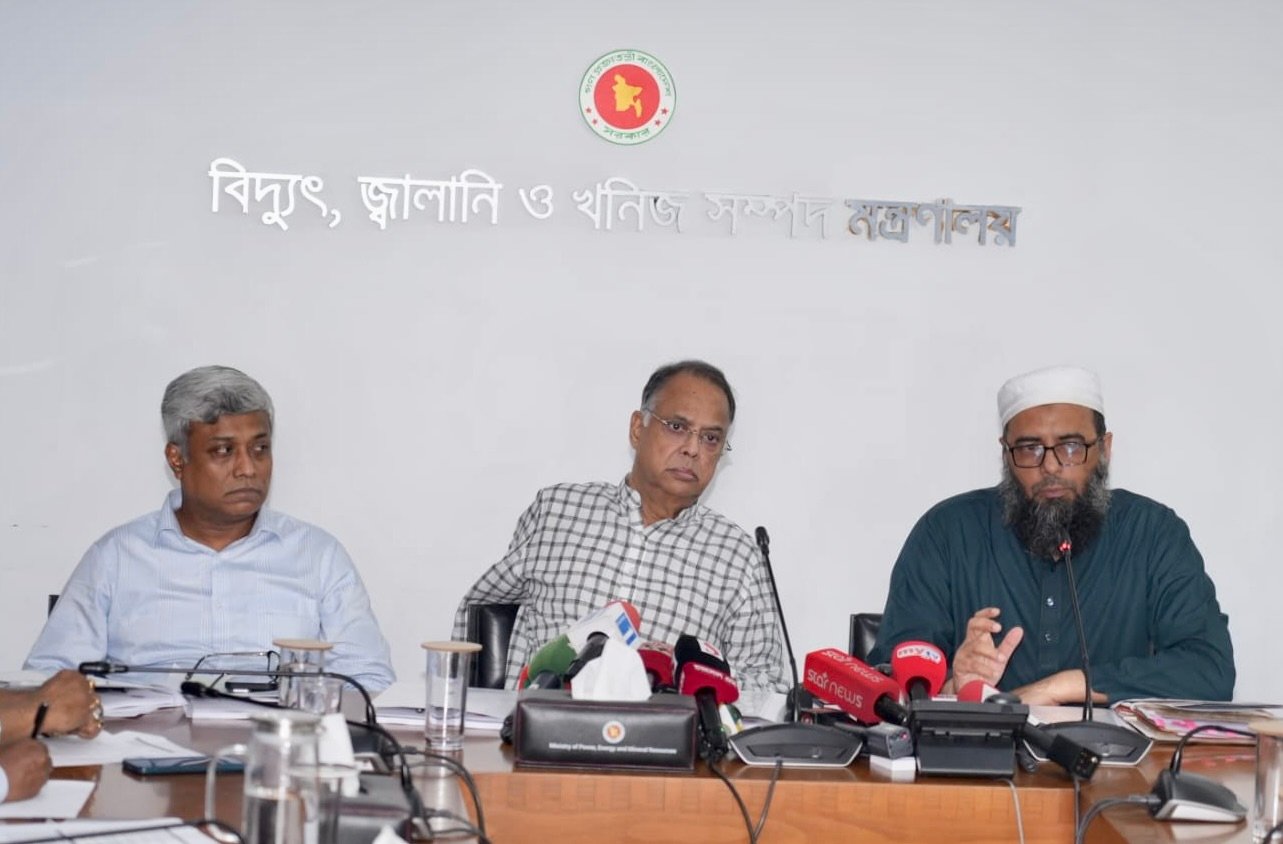
Power, Energy and Mineral Resources Adviser Iqbal Hassan Mahmood on Sunday said the government will ensure that Bangladesh’s national interests remain fully protected in all agreements signed under the Offshore Bidding Round 2026. Report UNB
“The BNP has always upheld nationalism as its core principle, and we are moving forward with this bidding round in that spirit so that Bangladesh does not suffer any loss or compromise its interests,” he said.
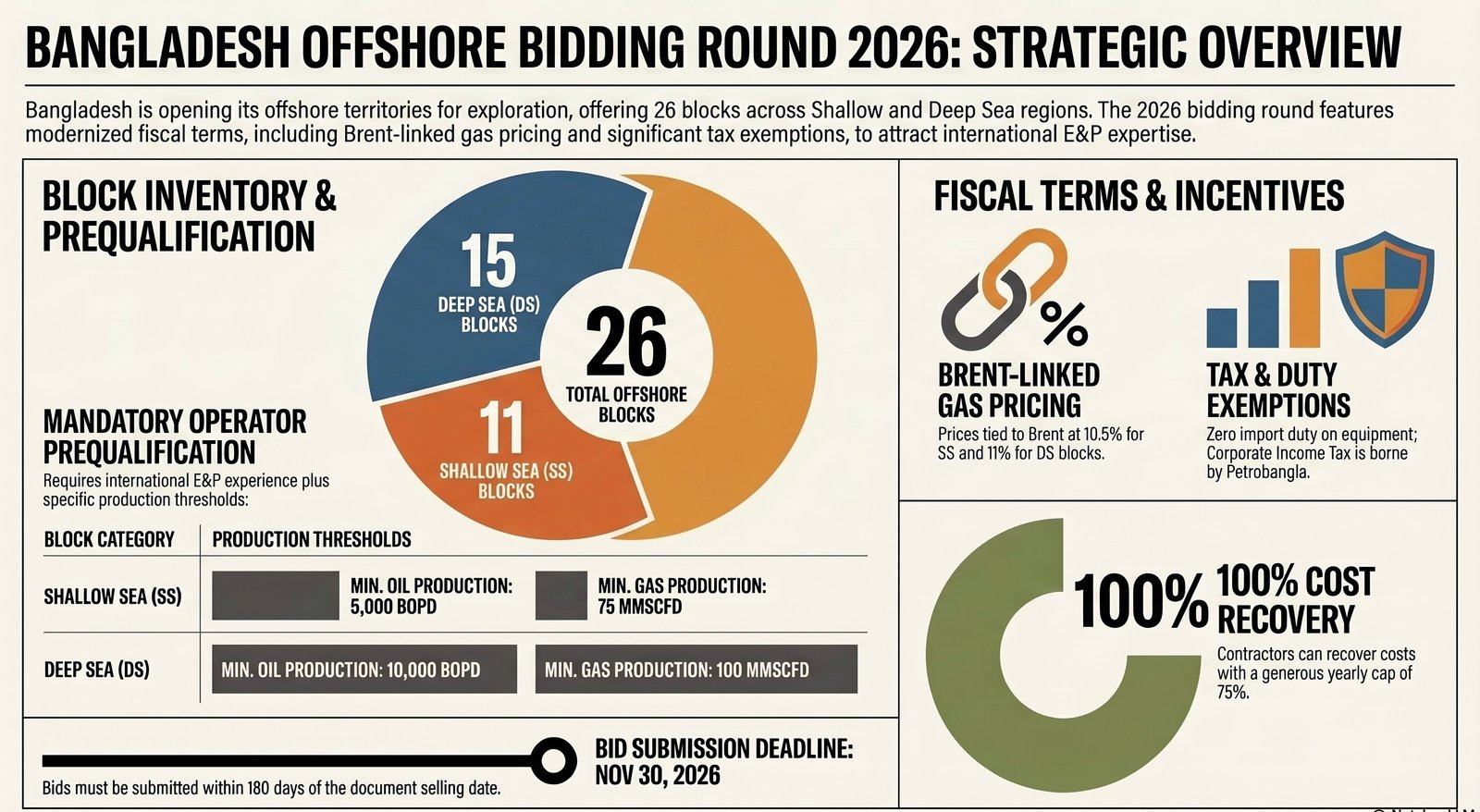
He made the remarks while addressing a press briefing at the ministry following the formal launch of the long-awaited Offshore Bidding Round 2026, aimed at attracting international oil companies (IOCs) to explore untapped oil and gas reserves in the Bay of Bengal.
The government hopes the initiative will strengthen the country’s long-term energy security and reduce dependence on imported fuel.
Iqbal Hassan Mahmood said the government would carefully examine international production-sharing contracts before finalizing any agreements with foreign companies.
Describing the new bidding round as the beginning of “a new chapter,” he said Bangladesh has long depended heavily on imported energy while vast offshore resources beneath the seabed remained unexplored.
“As a result, the country suffered significantly and pressure on foreign currency reserves increased,” he said.
Referring to the last major offshore bidding round held in 1993 during the government of former Prime Minister Khaleda Zia, he said some of the gas currently supplied from onshore fields originates from contracts signed during that period, particularly involving Chevron.

“After that, no meaningful offshore or onshore bidding round involving foreign companies was held,” he added.
The adviser said Bangladesh celebrated important maritime boundary victories in the Bay of Bengal over the past decade, but actual exploration activities did not receive adequate attention.
“Many spoke about the victory at sea, but perhaps forgot that resources also need to be extracted,” he said.
He claimed neighboring countries that previously disputed maritime boundaries with Bangladesh are already extracting gas from offshore blocks and exporting energy, while Bangladesh still lacks detailed knowledge about resources beneath its own seabed.
.jpeg)
The adviser said the government remains committed to strengthening Bangladesh Petroleum Exploration and Production Company Limited (BAPEX), although the company currently lacks the technical expertise and equipment required for deep-sea exploration.
“We have encouraged BAPEX to participate in the bidding process through joint ventures with foreign companies, and we have kept BAPEX involved in the overall process,” he said.
He also noted that the government initiated the offshore bidding process within 180 days of assuming office, fulfilling one of its election commitments.
“If Bangladesh can extract gas or oil from offshore areas in the future, it will become a major driver of national development,” he said.
Highlighting the importance of energy security, he said no country can sustain economic growth without ensuring a stable energy supply.
“When we assumed office, we found the energy sector in a very fragile condition. Since then, we have been working to establish long-term energy security, and the situation is now much better than before,” he said.
Responding to questions regarding potential reserve overlaps or maritime disputes, he said such issues would be resolved through bilateral negotiations if necessary.
The adviser revealed that several major international energy companies, including firms from the United States and China, have already expressed interest in participating in the bidding round.
“Many companies have directly communicated their interest to me. I hope the mistakes of the past will not be repeated this time and investors will participate actively,” he said.
Replying to another question on labor-related provisions in the bidding framework, particularly compliance and strike-related clauses, he said Bangladesh is obligated to follow international labor standards because it has signed around 70 international labor protocols.
“Bangladesh has signed one of the highest numbers of international labor conventions in the world, so we must honor those commitments,” he said.
Speaking at the event, State Minister for Power, Energy and Mineral Resources Anindya Islam Amit said the initiative aligns with the ruling Bangladesh Nationalist Party (BNP)-led government’s election manifesto, which pledged greater energy self-sufficiency through offshore and onshore exploration.
He said several provisions in the tender documents were revised to address shortcomings in previous bidding rounds and make the process more attractive to international investors while protecting Bangladesh’s interests.
“We will move forward while fully safeguarding Bangladesh’s national interests,” he said, seeking support from the media in promoting the initiative internationally.
Energy Secretary Mohammad Saiful Islam said the government held extensive consultations with international oil companies after the previous offshore bidding round failed to attract bids despite participation from seven firms in preliminary discussions.
He said a review committee was formed to determine why companies refrained from submitting final bids.
According to the secretary, the government spent more than a year consulting international experts, global energy companies including ExxonMobil, and local petroleum specialists to revise the Production Sharing Contract (PSC) framework.