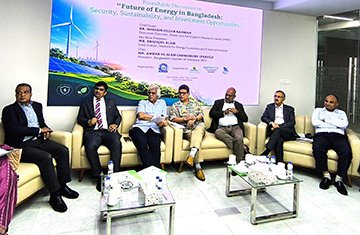
Bangladesh is not merely facing an energy crisis; it has become trapped in an energy lock-in driven by continued dependence on imported fuel and power, speakers said at a recent seminar.
They warned that unless the country uses its own energy resources in a planned way and adopts the right strategy for the energy transition, its efforts to achieve middle-income status could be put at risk.
The comments came at a seminar titled “Future of Energy in Bangladesh: Security, Sustainability and Investment Opportunities” organized by the Bangladesh Chamber of Industries (BCI).
Power and Participation Research Centre (PPRC) Executive Chairman and former caretaker government adviser Dr. Hossain Zillur Rahman said Bangladesh has many good energy policies, but the real challenge is to focus clearly on what the country wants to achieve.
He said the private sector must raise its voice to help the country break out of the energy trap, and public-private partnership must be strengthened to ensure proper monitoring and implementation of decisions.
BCI President Anwar-Ul-Alam Chowdhury Parvez said the government has formed a Tk 40,000 crore fund to restart closed industries, but such initiatives will not work unless energy supply to industry is secured.
He said LNG terminal installation, both floating and onshore, must be accelerated to increase gas supply, while domestic coal extraction and use should be ensured to reduce gas dependence in power generation.
Dr. Hossain Zillur Rahman said there is no alternative to new investment in industry if Bangladesh wants to boost exports and create employment.
He said a long-term price signal for energy and electricity is needed so entrepreneurs can plan future investments.