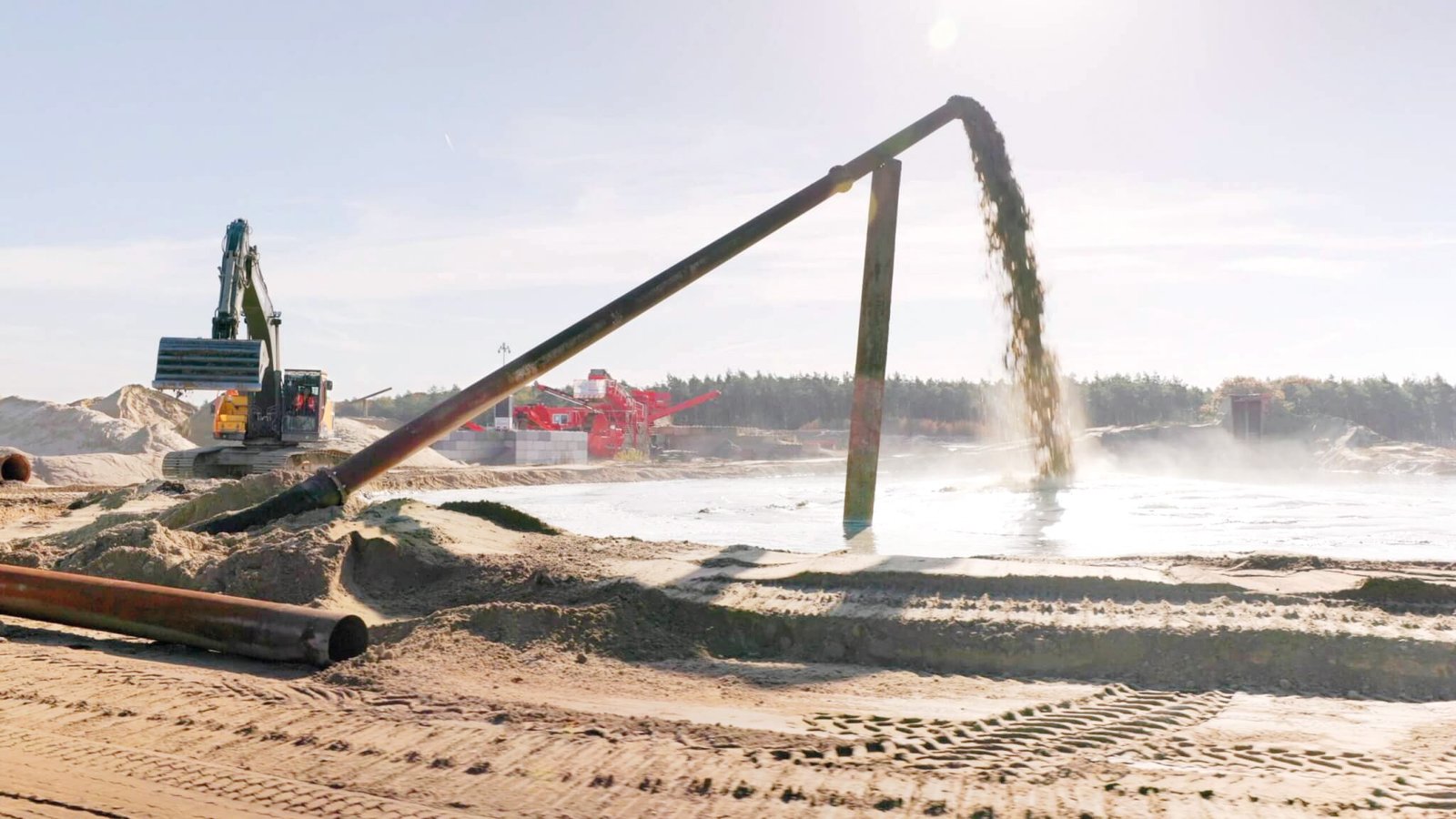
Across Bangladesh, rivers that once nourished entire communities are now being gouged and gutted for sand. What began as a source of raw construction material has spiralled into an environmental and social disaster. From the banks of the Padma to the Brahmaputra’s shifting channels, sand mining – much of it illegal and politically protected – has become one of the country’s most destructive industries.
Driven by the construction boom, thousands of dredgers work day and night, tearing into riverbeds and floodplains. The result is not just the deepening of rivers but the deepening of despair. Riverbanks are collapsing, homes are being swallowed, and ecosystems are vanishing. Despite clear laws under the Balu Mohal O Mati Bebosthapona Ain (Sand Fields and Soil Management Act) of 2010, amended in 2023, illegal sand extraction continues unchecked. Weak enforcement, political patronage, and profit-driven greed have made the law more of a formality than a safeguard.
In many cases, sand is extracted from unauthorized sites or in violation of lease terms for designated "Balumohal" (sand estates). Unscientific, aggressive methods like using "Bangla pump dredgers" worsen the ecological damage.
Sand mining is being practiced in Bangladesh, turning the river flow with very bad consequences. Excessive removal of sand may significantly distort the natural equilibrium of a stream channel. By removing sediment from the active channel bed, in-stream sand mines interrupt the continuity of sediment transport through the river system, disrupting the sediment mass balance in the river downstream and inducing channel adjustments (usually incision) extending considerable distances beyond the extraction site itself. The major effects of sand mining are listed below:
a) Extraction of bed material in excess of replenishment by transport from upstream causes the bed to lower (degrade) upstream and downstream of the site of removal.
b) Bed degradation can undermine bridge supports, pipelines, or other structures.
c) Degradation may change the morphology of the river bed, which constitutes one aspect of the aquatic habitat.
d) Degradation can deplete the entire depth of bed material, exposing other substrata, which could in turn affect the quality of aquatic habitat.
e) If a floodplain aquifer drains to the stream, groundwater levels can be lowered as a result of bed degradation.
f) Lowering of the water table can destroy riparian vegetation.
g) Flooding is reduced as bed elevations and flood heights decrease, reducing hazard for human occupancy of floodplains and the possibility of damage to engineering works.
h) The supply of overbank sediments to floodplains is reduced as flood heights decrease.
i) Rapid bed degradation may induce bank collapse and erosion by increasing the height of banks.
j) In rivers in which sediments are accumulating on the bed (aggrading) in undisturbed conditions, sand extraction can slow or stop aggradation, thereby maintaining the channel's capacity to convey flood waters.
k) The reduction in size or height of bars can cause adjacent banks to erode more rapidly or to stabilize, depending on the amount of sand removed, the distribution of removal, and the geometry of the particular bend.
l) Removal of sand from bars may cause downstream bars to erode if they subsequently receive less bed material than is carried downstream from them by fluvial transport.
Demand from Bangladesh’s construction industry for sand has led to a boom in unregulated and illegal mining from rivers. An estimated 60-70% of the mined sand in the country is assumed to be illegally mined, extracted from rivers nationwide without any environmental or hydrological considerations. Excessive sand mining is destroying the ecology of river systems as well as their biodiversity, and increasing the risk of river erosion. A 2010 law meant to keep sand mining in check has instead allowed the illegal industry to thrive, critics say, thanks to weak punishment, lax enforcement, and the involvement of politically connected players in the business.
As the country’s cities and towns grow on the back of solid economic growth over the past three decades, the construction industry has resorted to extracting sand from rivers nationwide. This sand flows into the country year-round through 57 transboundary rivers from India and Myanmar. In all, these waterways carry around 2.4 billion metric tons of sediment, including sand, clay, and silt.
Hotspots of illegal sand mining include districts in the Ganges River Basin and the Meghna River Basin. As a result of the unregulated extraction of sand, Bangladesh’s floodplains are sinking deeper, raising the probability of worsening floods and flood damage. And by altering the pattern of riverbeds and coastal areas, sand mining is responsible for causing harm to several species of flora and fauna.
Alongside natural causes, unplanned sand mining is one of the major causes of river erosion in Bangladesh. Extreme mining of sand causes the degradation of rivers and their channels. The mining process creates holes in the bed, which leads to riverbank erosion. In recent years, CEGIS has been monitoring erosion caused by three major rivers in Bangladesh: the Ganges, Brahmaputra, and Meghna. In 2019, it recorded 725 hectares (1,792 acres) of land swallowed by the Brahmaputra and 1,240 hectares (3,064 acres) lost to the Ganges (the lower stretch of which is known in Bangladesh as the Padma). In 2020, more land was lost to these rain-swollen rivers: 1,120 hectares (2,768 acres) to the Brahmaputra and 1,265 hectares (3,126 acres) to the Ganges. Roads, arable land, schools, health facilities, government and nongovernment establishments stood on this land that had been eroded.
The law permits local governments to declare a particular area a “sand quarry” based on the suggestions of a committee, without specifying the criteria for identifying a quarry. The law also doesn’t require miners to carry out an environmental impact assessment (EIA) before starting extraction activities. In neighboring India, the government has long required an EIA to be carried out for sand mining, and in 2016 extended that requirement to projects in areas smaller than 5 hectares (12 acres).
Because of the poor legal framework and the massive profits involved, influential people with political connections are increasingly getting into the sand mining business. Their presence makes it difficult and dangerous to speak out, environmental activists say.
Local government officials have been physically assaulted when trying to inspect allegations of illegal mining, as have journalists investigating the issue, according to local media. In 2012, three people were detained 2012 in a fabricated lawsuit filed by a sand mining company, according to a report by the Asian Human Rights Commission.
To get rid of the vicious circle of the continued unholy alliances in the sand mining industry, a new procedure for sand mining in Bangladesh should be evolved, replacing the present mafia-oriented, inefficient system. Sand is a substance consisting of different minerals and transformed to the present status after a long and arduous riverine journey from the places of origin to the rivers in Bangladesh. Sand is a mineral-oriented subject, and globally, it's regulated under the mining regulations. In Bangladesh, mining of sand has been a subject under the mining-related department, but sometimes back in the past, the issues have been taken over by the district administration. It has been an unfortunate decision because with the involvement of the regulatory persons not accustomed to the technical aspects of the sand deposits, it’s characteristics, and other inherent properties, the opportunist’s quarters can easily deceive the regulatory agencies and take advantage of the loopholes and go scot-free even after violating the set rules for sand mining, causing immense losses to the country. The present modus operandi of awarding sand blocks as Balu Mahal, along with auto-selecting local goons for mining sand with impoverished manpower, boats, dredgers, bulkheads, and associated unscientific equipment, needs to be abolished, and a new mechanism for sand mining needs to be established.
Mining is a controlled subject globally. In Bangladesh, also, special provisions are applied while awarding any block of land for mineral exploration and its subsequent development. Petrobangla is the State-Owned Enterprise that is legally responsible for any mining activity in the country. Petro Bangla has been conducting mining operations for Peat, Limestone, Coal, China Clay, White Clay, Silica Sand, Granite, etc. for a long and they have adequately trained Geologists, Mining and other related engineers and technicians, as well as established MoUs for foreign collaboration for conducting exploration and development of minerals in Bangladesh. Now, as it is being recommended that the mining operation for riverine sand in the rivers in Bangladesh be conducted by a specialized agency other than the incumbents, it is strongly recommended that Petrobangla should be selected as the Mining Operator for sand mining in Bangladesh.
Petrobangla should have a separate Sand Mining Division in the establishment which would be solely responsible for sand mining operation using the Placer Mining process and equip itself with necessary educated, trained and experienced manpower with the specialized machinery and equipment to conduct operations in the riverine atmosphere of Bangladesh as well as organize on land storage and distribution of sand at the consumers level at different locations of the country. Petrobangla may have foreign collaboration with any sources that have strong placer mining experiences so that the best utilization of the resources in the country is ensured.
At the same time, the Geological survey of Bangladesh along with Bureau of Minerals Development need to be more attentive to the subject of deposition of sand in Bangladesh and organize a Specialists Center to work with the water and river experts in Bangladesh especially with the relevant departments in Inland Water Transport Authority, River Research Institute, Institute of Water Management and BUET so that the trend and behavior of riverine water flow with special reference to sedimentation of sand in Bangladesh are closely monitored and location of sand deposits are carefully observed with a view to identify the new sand blocks which could be mined in future.
Not only are the rivers and their ecosystems damaged due to illegal sand mining, but thousands of people also lose their land and homes due to river erosion every year. This process of killing the rivers and pauperizing the rural population, while supplying sand for housing and infrastructure construction for the urban people, must be stopped immediately. It is not enough to seize the dredger machines and fine the sand lifters through occasional mobile court drives. Those who extract sand illegally and their political patronizers must be punished as well. If sand is mined illegally from any river, officials of the concerned local administration should be accountable.
To curb illegal sand mining in Bangladesh, suggestions include strengthening laws and enforcement, eliminating political influence, promoting sustainable alternatives, increasing public awareness, and improving monitoring and accountability. A combination of these strategies is needed to address the issue effectively.
Amendments to the Mines and Minerals Rules and the Sand Basin and Soil Management Act could address loopholes, such as vague criteria for identifying quarries and a lack of environmental impact assessments (EIAs). Stricter regulations on licensed miners are also needed to prevent extraction outside of designated areas.
Illegal sand extraction has emerged as one of the gravest forms of environmental plunder in recent years, and recent reports reveal the sheer scale of this destructive trade. This reflects deep-rooted collusion and a failure of governance and reveals not isolated lawlessness but an entrenched and lucrative black economy sustained by political muscle and administrative compromise. These practices must be stopped earliest.
Download Special Article As PDF/userfiles/EP_23_11_Special_Article.pdf
Md. Mosharraf Hossain, Former Chairman, BERC