One year after the blackout on April 28 in 2025, technical analyses and regulatory responses have reshaped the concept of security of supply in Spain’s electricity system, which has been undergoing rapid transformation since 2018 due to high levels of renewable penetration.
Far from being an isolated incident, expert reports – including those from the committee appointed by the Spanish government, Red Eléctrica, and ENTSO-E – conclude that the blackout resulted from a combination of operational and structural factors that exposed vulnerabilities in a system increasingly dominated by renewable technologies.
The event began with the sudden loss of approximately 15 GW of generation within seconds, triggering a cascading failure that led to a nationwide blackout. The sequence involved voltage deviations, frequency instability, and automatic shutdowns, underscoring the critical importance of real-time system control.
Among the main causes identified was insufficient voltage control capacity, linked to the reduced presence of synchronous generation.
In a system with high shares of non-synchronous renewables such as solar PV and wind, the provision of ancillary services – including inertia, frequency regulation, and reactive power – becomes more complex, limiting the system’s ability to absorb disturbances.
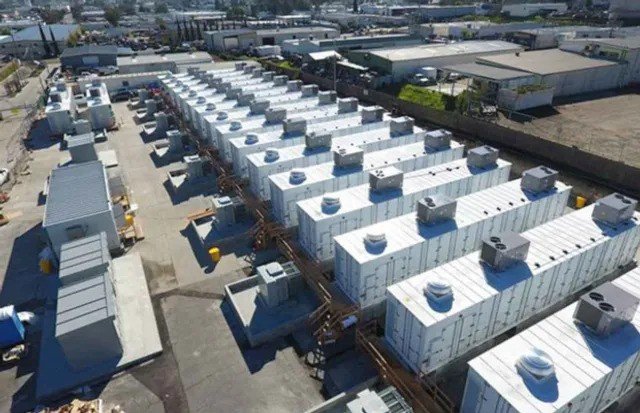
This was compounded by the limited deployment of energy storage – around 28 MW of batteries at the time – which constrained rapid-response capabilities, as well as low levels of interconnection with neighboring systems, thereby restricting external support.
The overall diagnosis points to a systemic failure rather than a single cause: a chain of conditions and events that exceeded the system’s resilience. This understanding has informed subsequent measures aimed at strengthening both operational management and long-term system planning.
Although installed battery storage capacity has grown by more than 500% since the blackout, Spain still ranks near the bottom in Europe, far behind countries such as Germany, Italy, and the United Kingdom.
According to Red Eléctrica, Spain had just 28 MW of installed battery capacity in April 2025. By April 2026, this had increased to 193 MW – representing year-on-year growth of 589%. At the same time, the pipeline of BESS projects expanded sharply, with project processing rising by 464% year-on-year.
Demand for storage in the self-consumption segment also surged. In 2025, capacity grew from 155 MWh to 339 MWh, a 119% increase, according to APPA Renovables. Residential installations rose by 155%, while commercial and industrial deployments increased by 95%, compared with virtually no capacity in this segment in 2023.
Outstanding challenges
Despite progress in renewable deployment, more than 70% of Spain’s total energy consumption still depends on fossil fuels. According to the Renewable Energy Foundation, imports of gas and oil alone cost more than €51 billion last year. Reducing reliance on gas and accelerating electrification across transport, industry, and heating remains a critical priority.
Grid constraints also remain a major issue. While 2025 saw strong renewable generation, it also highlighted saturation problems that forced curtailment. On average, 3.11% of renewable electricity could not be integrated into the grid, with peaks exceeding 10% in July. In total, 5,414 GWh of renewable electricity was curtailed.
At the same time, Spain recorded a new high in negative electricity prices, with 397 hours of negative pricing in the first quarter.